
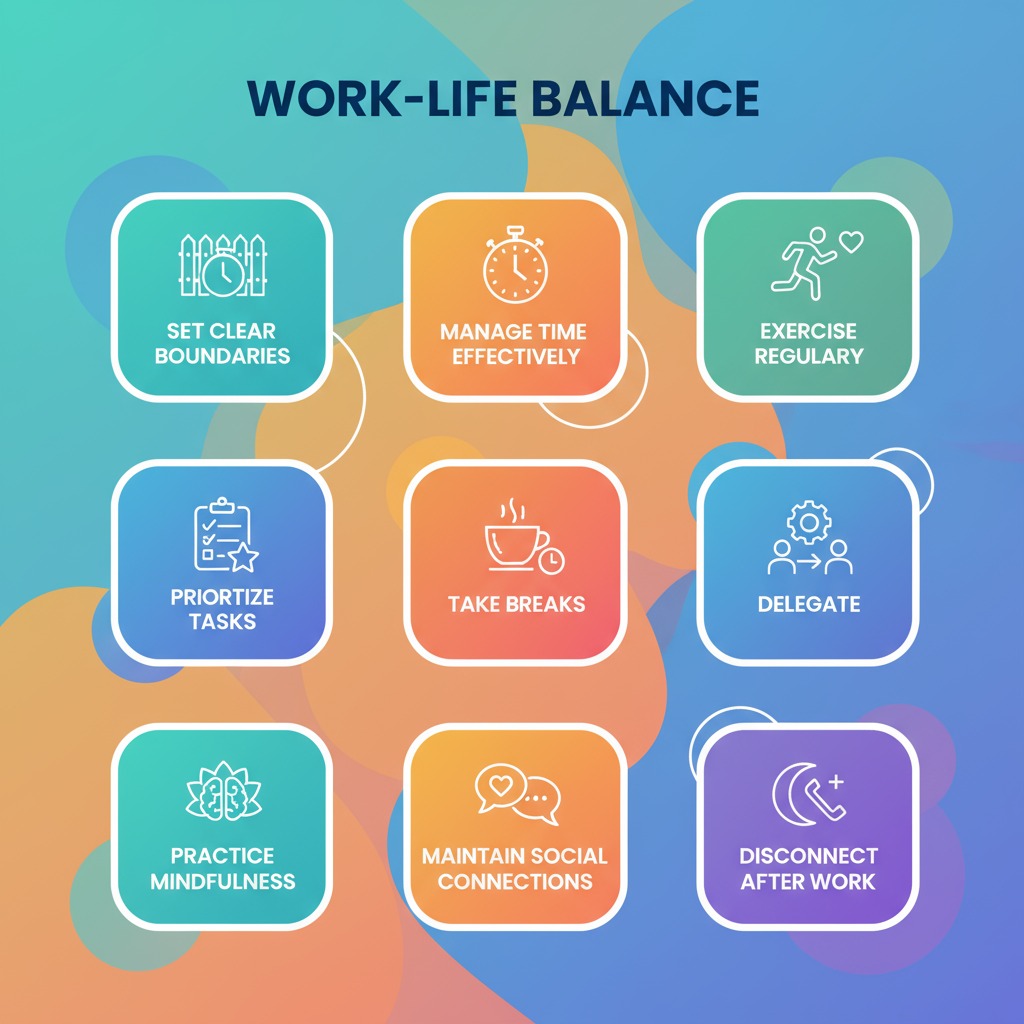
Table of Contents
1. Introduction
Work-life balance tips are becoming increasingly crucial in a world where professional demands and personal responsibilities often overlap. The modern workforce operates in an environment of constant connectivity, where digital tools make it possible to work from anywhere, but also harder to disconnect. Long working hours, unrealistic expectations, and the pressure to stay available at all times have blurred the line between work and personal life. Many professionals push themselves beyond limits, neglecting sleep, exercise, and personal relationships in the pursuit of productivity. However, the reality is that sustained overwork leads to emotional exhaustion, stress, and reduced mental efficiency.
The importance of adopting work-life balance tips lies in creating a lifestyle that promotes harmony between personal well-being and professional growth. Balance doesn’t mean working less—it means working smarter, with intention and structure. When individuals manage their time wisely and maintain boundaries, they achieve more with less stress. Healthy balance enhances motivation, creativity, and clarity of thought, which are essential for long-term success.
A well-balanced lifestyle allows people to perform effectively while still finding time for family, hobbies, and rest. It is not a luxury but a necessity for sustainable productivity, better health, and genuine happiness. It also prevents burnout—a condition increasingly recognized by the World Health Organization as a major occupational phenomenon.
2. Understanding Work-Life Balance
To apply effective work-life balance tips, one must first understand that balance is not about equal distribution of hours but about meaningful alignment of priorities. True balance involves creating a rhythm between professional obligations and personal rejuvenation. It’s about knowing when to engage fully in work and when to detach and focus on self-care or relationships. A balanced individual doesn’t necessarily work fewer hours but manages time, energy, and attention efficiently.
In many cases, imbalance arises not from workload alone but from a lack of boundaries. For instance, responding to emails late at night or skipping meals for deadlines are subtle signs of imbalance that accumulate stress. Setting firm boundaries—such as defined working hours or dedicated no-work weekends—helps maintain control. According to a Harvard Business Review study, professionals who regularly disconnect after work show 20% higher productivity the following week.
Balance also includes emotional and psychological alignment. When one’s goals and values are clear, it becomes easier to prioritize tasks that matter most. This mental clarity prevents unnecessary stress and creates room for activities that bring joy, rest, and self-development.
3. The Link Between Work-Life Balance and Mental Wellness
Mental wellness and work-life balance are deeply intertwined. When professional stress outweighs personal recovery, it directly affects emotional health, leading to fatigue, irritability, and loss of motivation. Research from the American Psychological Association found that nearly 60% of employees report work as a significant source of stress, often leading to sleep disorders and anxiety. Prolonged exposure to such stress can weaken the immune system, reduce concentration, and increase the risk of depression.
Adopting work-life balance tips can significantly improve mental wellness. Regular relaxation activities like meditation, journaling, or mindful breathing calm the nervous system and reduce cortisol levels—the body’s main stress hormone. Maintaining social connections, engaging in creative hobbies, or spending time in nature promotes emotional balance and positivity.
Moreover, mental wellness is essential for better work performance. A mentally healthy employee can think critically, solve problems efficiently, and adapt to challenges without feeling overwhelmed. Therefore, achieving work-life balance tips is not only about preventing stress but also about nurturing a clear, focused, and resilient mind.
4. Why Work Efficiency Depends on Balance
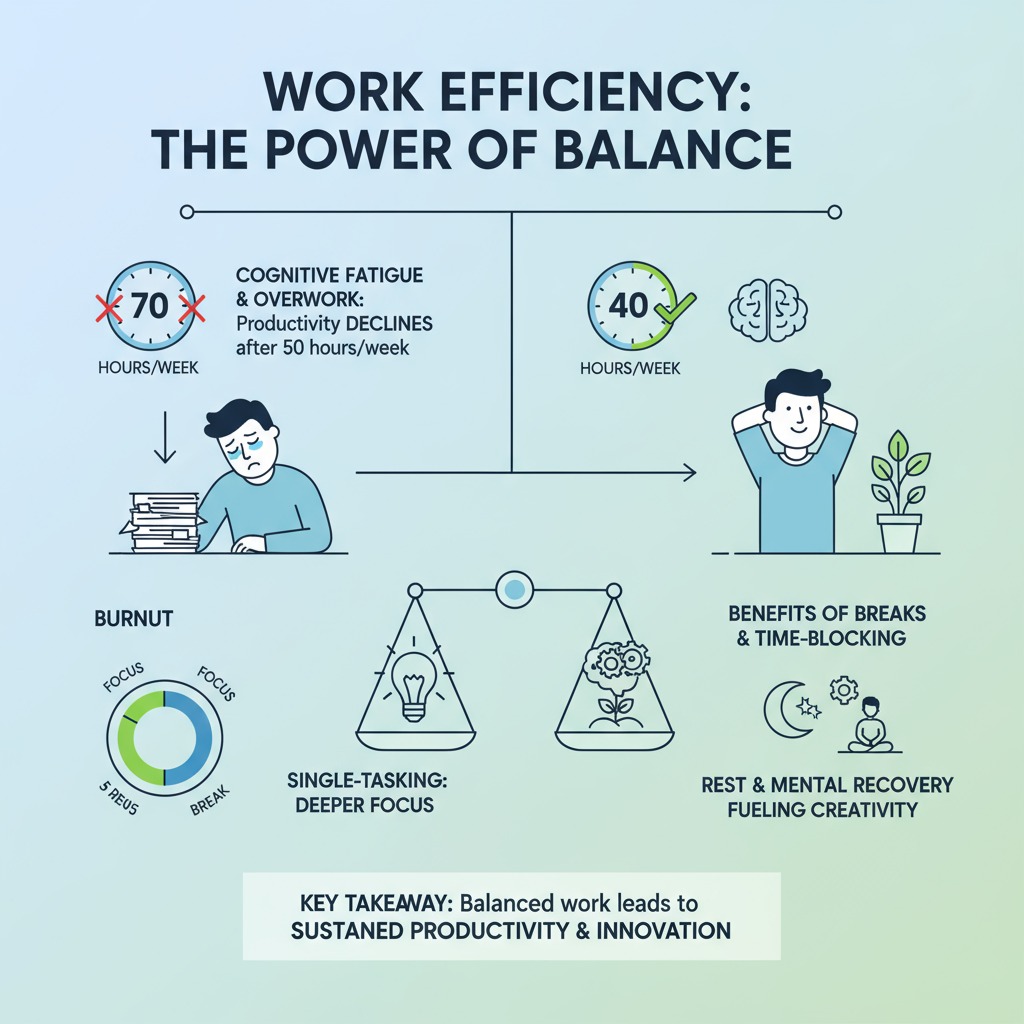
Work efficiency thrives when both the body and mind are well-rested and energized. Overworking leads to cognitive fatigue, slower processing speed, and poor decision-making. A Stanford University study revealed that employee productivity sharply declines after 50 hours of weekly work, and after 55 hours, the output nearly drops to zero improvement. This means that excessive work doesn’t translate to higher performance—it merely increases exhaustion.
Work-life balance tips like time-blocking, structured breaks, and goal-based work scheduling can drastically enhance efficiency. For example, following the Pomodoro Technique—25 minutes of focused work followed by a 5-minute break—can boost focus and reduce mental fatigue. Similarly, limiting multitasking improves task quality, as the brain performs best when focused on one activity at a time.
Balanced professionals tend to achieve better results in shorter durations because they prioritize rest, nutrition, and mental recovery. This balance supports creativity and innovation—traits that thrive in a healthy and calm environment. In essence, work efficiency is not about doing more work but doing smarter, meaningful work with a clear mind.
5. 9 Proven Work-Life Balance Tips for Productivity
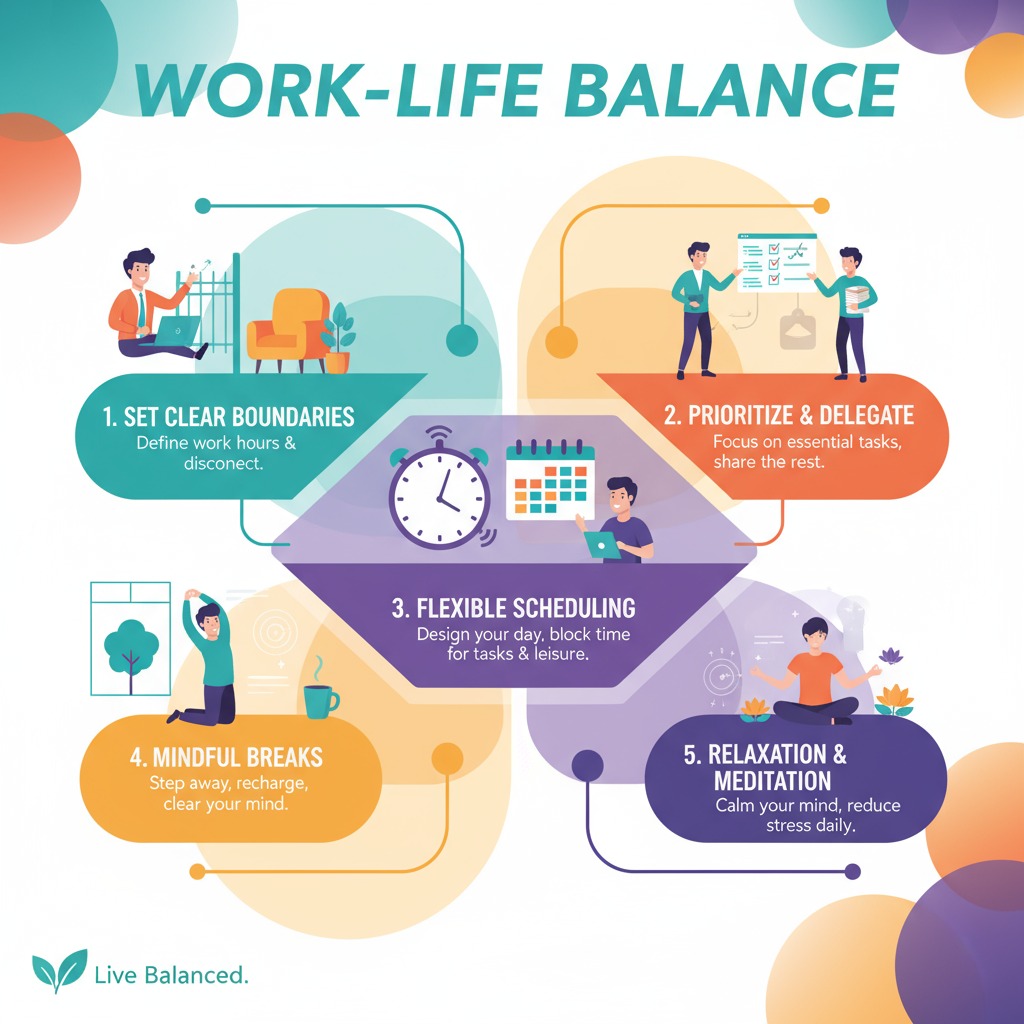
1. Set Clear Boundaries Between Work and Personal Life
One of the most effective work-life balance tips is to create clear boundaries between professional duties and personal time. In today’s digital era, emails, calls, and messages often continue beyond office hours, making it difficult to disconnect. Defining specific work hours and communicating them to colleagues or clients ensures predictability and control. For remote workers, maintaining a dedicated workspace and signaling the end of work—like shutting down the laptop or going for a short walk—helps the mind transition from work mode to rest mode. This separation reduces stress, improves focus, and enhances emotional recovery for the following day.
2. Prioritize and Delegate Tasks
Work-life balance tips emphasize effective prioritization to avoid burnout. Start each day by identifying high-priority tasks and focus energy on meaningful activities that drive results. Delegation is equally important, as entrusting less critical responsibilities fosters teamwork and efficiency. Tools like Asana, Trello, or ClickUp can organize tasks and deadlines, helping maintain consistent progress without feeling overwhelmed. Prioritization and delegation ensure that professional efforts remain productive while preserving mental wellness.
3. Adopt Flexible Scheduling and Time-Blocking
Time-blocking is a practical work-life balance tip that organizes the day into dedicated periods for work, exercise, family, and relaxation. For example, mornings can be reserved for high-concentration tasks, while afternoons handle collaborative or administrative duties. Flexibility within these blocks allows adaptation to unexpected challenges without derailing the day. Studies indicate that time-blocking increases focus and efficiency while reducing multitasking. This structured yet adaptable approach helps maintain productivity alongside personal well-being.
4. Take Mindful Breaks During Work
Regular breaks are essential for maintaining mental clarity and creativity. Continuous work can lead to decision fatigue and decreased efficiency. Short breaks of 5–10 minutes every 60–90 minutes—such as stretching, deep breathing, or short walks—refresh the mind and sustain energy. Many companies, including Google and Microsoft, encourage micro-breaks to boost focus and problem-solving ability. Mindful pauses ensure employees return to tasks energized, reducing stress while improving work quality.
5. Practice Relaxation Exercises or Meditation
Incorporating relaxation techniques is a crucial work-life balance tip for emotional and cognitive health. Practices such as yoga, guided meditation, or progressive muscle relaxation for 10–15 minutes daily can lower stress, enhance focus, and regulate emotions. Apps like Headspace or Calm provide beginner-friendly sessions. Regular relaxation exercises improve mental resilience, helping individuals approach work calmly and maintain positivity throughout the day.
This image illustrates five key work-life balance tips: set clear boundaries for work hours, prioritize and delegate tasks, adopt flexible scheduling, take mindful breaks to recharge, and practice relaxation or meditation daily to reduce stress. These habits help create a healthier, more balanced lifestyle.
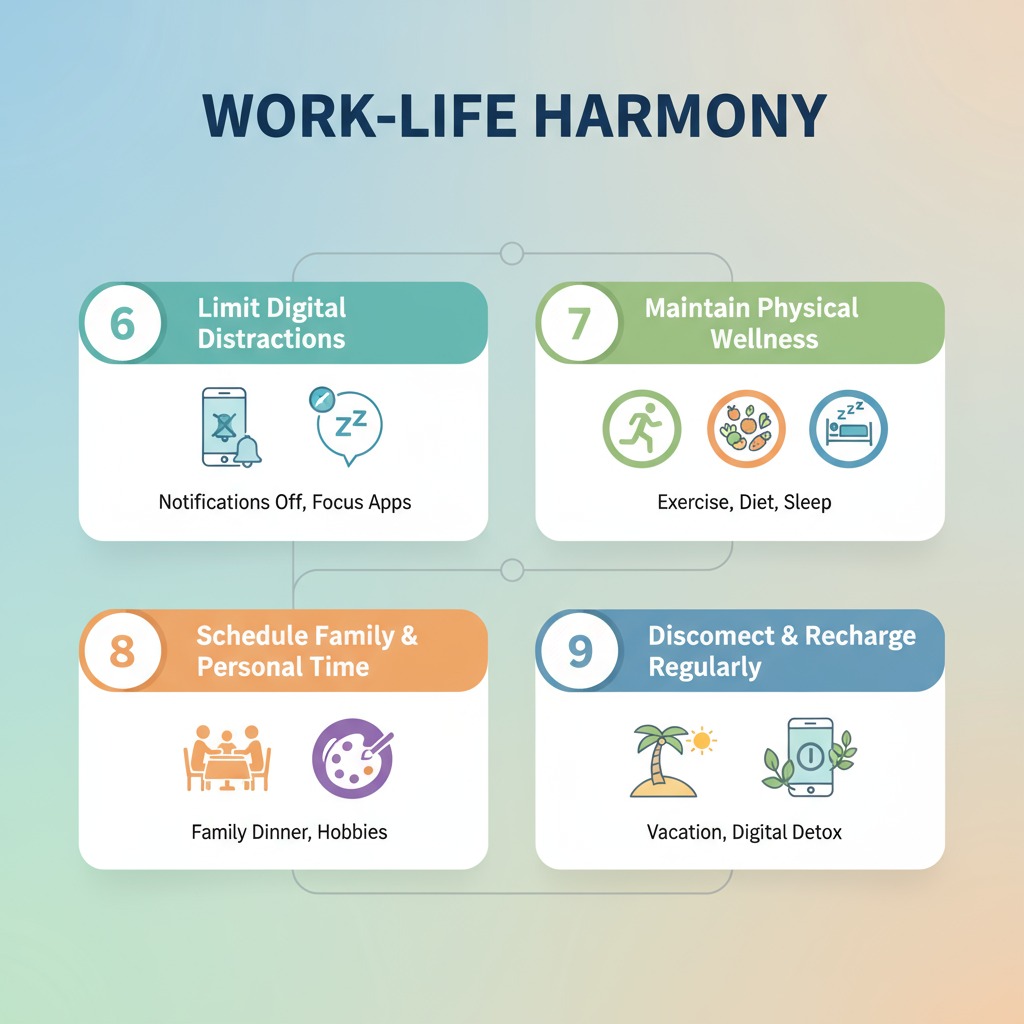
6. Limit Digital Distractions
Digital interruptions are major obstacles to balance. Notifications, social media, and multitasking drain attention and reduce efficiency. Work-life balance tips include turning off non-essential alerts, scheduling specific times to check emails, and using focus apps like Forest or Freedom. Reducing screen time not only enhances concentration but also improves sleep quality and allows more meaningful personal interactions. Limiting digital distractions ensures that professional and personal time are both productive and fulfilling.
7. Maintain Physical Wellness (Exercise, Diet, Sleep)
Physical health supports mental clarity and emotional stability. Regular exercise releases endorphins, improves circulation, and reduces stress. A balanced diet rich in proteins, fruits, and whole grains fuels cognitive function. Adequate sleep—typically 7–8 hours for adults—ensures recovery and sustained energy. Neglecting these aspects leads to fatigue, decreased efficiency, and mood disturbances. Maintaining physical wellness is a foundational work-life balance tip that strengthens productivity, focus, and overall health.
8. Schedule Family and Personal Time Intentionally
Time for loved ones and personal hobbies is critical for emotional well-being. Scheduling activities such as family dinners, weekend outings, or creative hobbies ensures relationships remain strong. Gallup research shows that meaningful social interactions increase happiness and resilience. Prioritizing personal connections helps individuals manage professional stress, recover emotionally, and cultivate satisfaction in both personal and work life.
9. Disconnect and Recharge Regularly
Regular disconnection from work is essential for long-term creativity and mental restoration. Taking vacations, weekend breaks, or digital detox periods allows the mind to reset. Even brief screen-free evenings reduce eye strain, anxiety, and fatigue. Many high-performing professionals schedule downtime to prevent burnout and maintain innovation. Deliberate rest enhances memory, problem-solving, and overall productivity, proving that stepping back is a key work-life balance tip for sustainable performance.
6. Daily Practices to Sustain Work-Life Balance
Work-life balance tips work best when integrated into consistent daily routines. Building structured habits allows balance to become an effortless part of everyday life rather than an occasional correction. Beginning the day with grounding activities—such as meditation, stretching, reading, or light exercise—sets a calm and focused tone. This morning stability prepares the mind for productivity while protecting it from early stress. Setting daily priorities through task lists or planners ensures focus on what truly matters, preventing unnecessary rush or distractions later in the day.
Midday routines also influence overall balance. Taking short breaks between meetings, eating healthy meals on time, and stepping outdoors for fresh air keeps energy and motivation steady. Practicing simple mindfulness activities like deep breathing or short body scans during work hours can reduce tension and increase alertness. Small self-care actions such as maintaining good posture, staying hydrated, and limiting caffeine intake also support long-term wellness.
The way one ends the day matters just as much as how it begins. Reflecting on daily progress, writing a short gratitude note, or journaling achievements helps release mental clutter. Avoiding screens at least an hour before sleep improves sleep quality and allows the brain to rest fully. Reading, light stretching, or calming music can be great substitutes for digital entertainment. Over time, these nightly rituals enhance emotional stability and help create a clear boundary between work and rest.
Digital tools can make implementing work-life balance tips easier. Calendar reminders for breaks, wellness tracking apps, or digital journals can help maintain accountability and encourage consistency. These micro-habits may seem small but, when repeated daily, they form a sustainable rhythm of productivity and relaxation. Eventually, work-life balance tips stops being an effort—it becomes a natural lifestyle built on awareness, routine, and intentional living.
7. Common Barriers and How to Overcome Them
Despite understanding the importance of maintaining harmony, many individuals struggle to apply work-life balance tips consistently due to personal, professional, and societal pressures. One of the most significant barriers is the glorification of busyness—believing that being constantly occupied equals success. In reality, overworking without recovery leads to burnout, reduced creativity, and emotional exhaustion. Redefining success to include happiness, rest, and well-being allows individuals to prioritize health alongside achievements.
Another common challenge lies within workplace culture. Some organizations still reward employees for longer hours rather than effective output. To overcome this, workers should initiate open conversations about flexible hours, realistic deadlines, and mental health support. Employers can also help by introducing wellness programs, hybrid work options, and recognition for balanced performance. Research by Gallup shows that employees in supportive environments are 41% more likely to stay motivated and loyal to their organizations.
Digital dependency is another major obstacle to achieving effective work-life balance tips. Constant exposure to screens and notifications keeps the brain in a continuous state of alertness, leading to restlessness and poor focus. Implementing work-life balance tips like digital detox sessions, screen-free evenings, or app timers can significantly reduce stress. Creating “no-screen zones” in bedrooms or family areas also helps restore mental calm.
A subtle yet powerful barrier is self-imposed guilt. Many people feel unproductive when taking breaks, but numerous studies have proven that rest enhances focus and long-term output. Reframing rest as a performance tool rather than wasted time is essential for sustainable productivity. Lack of planning is another factor that often causes imbalance. Using organizational tools, setting weekly goals, and practicing time-blocking can prevent overwhelm and improve workflow management. Overcoming these barriers requires self-discipline, awareness, and commitment to the philosophy behind work-life balance tips—that wellness and success are equally important pillars of life.
8. Long-Term Benefits of Practicing Work-Life Balance Tips
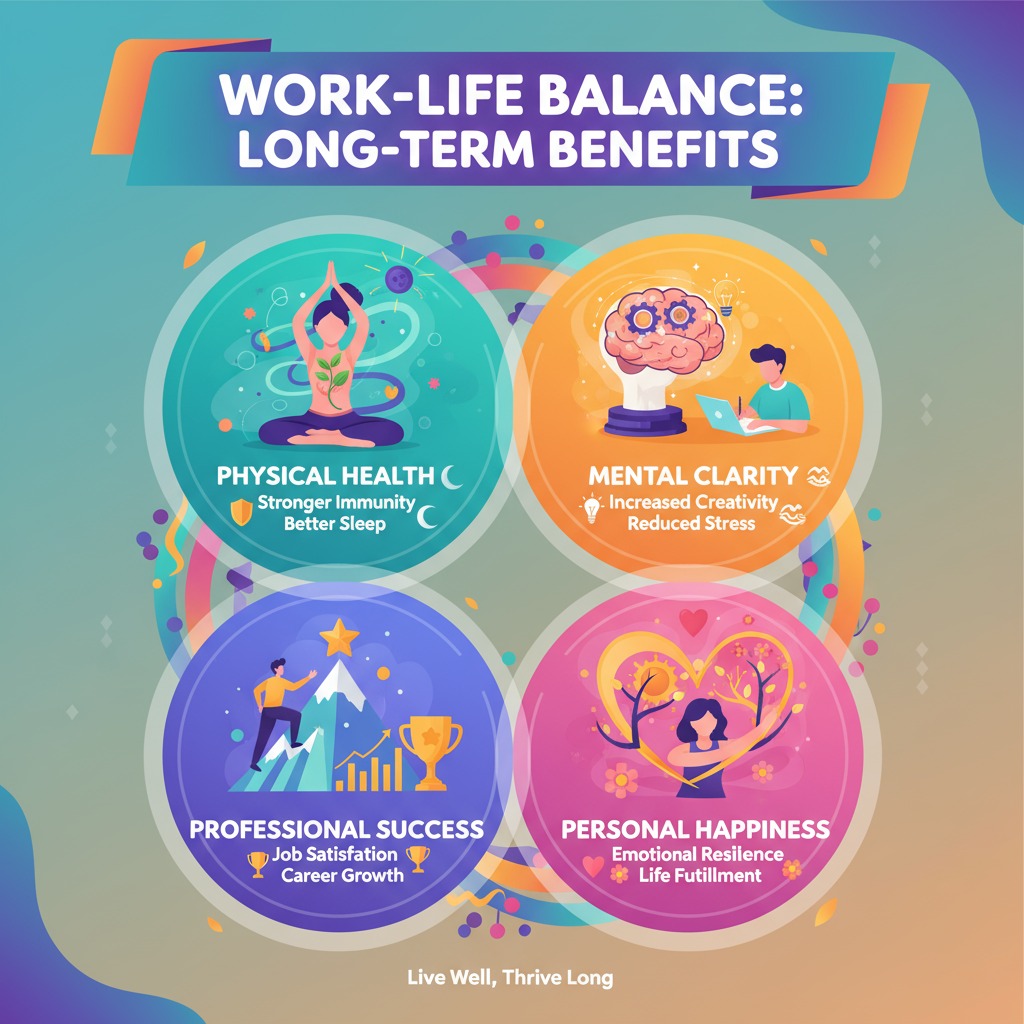
Consistent use of work-life balance tips creates transformative long-term benefits that shape both personal and professional well-being. Physically, it strengthens the immune system, regulates hormones, and stabilizes sleep patterns. Balanced individuals enjoy higher energy levels, fewer illnesses, and better concentration. Studies from the American Psychological Association suggest that people who maintain consistent work-rest schedules reduce their risk of chronic diseases like hypertension by nearly 35%. They also tend to adopt healthier diets, exercise regularly, and experience improved metabolism and vitality throughout life.
Mentally, the benefits of practicing work-life balance tips are even more significant. Regular rest sharpens memory, boosts creativity, and enhances emotional intelligence. A Harvard Business Review analysis revealed that employees who take regular breaks and practice mindfulness are 23% more efficient in solving complex problems. Balanced living also promotes emotional resilience—the ability to remain calm under pressure and adapt effectively to change. By allowing time for self-reflection and recovery, individuals sustain motivation and prevent burnout.
Professionally, maintaining balance boosts innovation, collaboration, and job satisfaction. Organizations that encourage employees to follow work-life balance tips enjoy measurable advantages, including higher retention and productivity. A 2023 Deloitte study found that workplaces prioritizing employee well-being witnessed a 22% rise in performance, 30% lower absenteeism, and stronger team engagement. Balanced professionals show greater loyalty, confidence, and creativity, driving both personal and organizational success.
On a personal level, consistent balance nurtures deep emotional fulfillment. Spending time with loved ones, pursuing hobbies, or engaging in volunteer activities brings joy and a sense of meaning. Work-life balance tips emotional connections formed through these activities serve as protective buffers against stress. People who consistently apply work-life balance tips report stronger family bonds, greater life satisfaction, and better overall happiness. Studies have also shown that individuals with balanced lifestyles tend to live longer, healthier, and more optimistic lives, proving that true success extends beyond career achievements.
9. Conclusion
Work-life balance tips are more than just self-improvement strategies—they are essential guidelines for leading a fulfilling and sustainable life in today’s demanding world. With constant digital connectivity and increasing work expectations, individuals often overlook the importance of rest, reflection, and personal time. Balance restores that lost harmony, helping people stay productive without compromising mental and physical wellness. Establishing boundaries, setting priorities, and valuing personal time are the key pillars that make balance achievable.
Achieving equilibrium doesn’t mean reducing ambition; it means channeling energy wisely. The world’s most successful professionals understand that true productivity comes from aligning focus with recovery. Applying simple work-life balance tips such as daily mindfulness practice, structured scheduling, or screen-free hours enhances clarity and reduces stress. These conscious choices gradually reprogram the brain for sustainable success, making individuals more composed and confident in all aspects of life.
Ultimately, practicing work-life balance tips leads to sustainable growth and inner peace. It cultivates clarity, gratitude, and purpose, aligning ambition with serenity. When practiced over time, balance evolves into a lifestyle—a steady rhythm where productivity and relaxation coexist. This harmony not only enhances performance but also enriches life itself, showing that long-term happiness is built upon the foundation of balance and mindful living.
The path to work-life balance tips balance begins with awareness and small, deliberate actions. By observing personal triggers, managing workloads smartly, and taking regular breaks, individuals cultivate emotional stability and resilience. These practices not only improve performance but also deepen life satisfaction. Balanced living nurtures relationships, builds empathy, and allows individuals to contribute meaningfully both at home and in the workplace.
Ultimately, embracing work-life balance tips unlocks a lifestyle of fulfillment and peace. It teaches that success isn’t just about achieving more—it’s about living with intention, contentment, and control. When people align their professional goals with their well-being, they experience a lasting sense of harmony and purpose. Work-life balance tips creates a life where achievement and joy coexist, proving that true success is living fully—with energy, gratitude, and balance.