
Table of Contents
1. Introduction
How to develop a growth mindset is an increasingly vital skill in today’s dynamic and competitive environment, where rapid changes, technological advancements, and high expectations demand adaptability and resilience. Cultivating a growth mindset allows individuals to perceive challenges not as obstacles but as opportunities to learn, innovate, and evolve. It is the understanding that abilities, intelligence, and skills are not fixed traits but can be developed through consistent effort, dedication, and strategic learning. Unlike a fixed mindset, which views talent and intelligence as static, a growth mindset empowers individuals to embrace learning, persist through difficulties, and approach life with curiosity and optimism.
People with a growth mindset approach failures and setbacks as learning experiences rather than personal shortcomings. For example, a student who struggles with a difficult subject sees it as a chance to improve problem-solving skills and deepen understanding, rather than an indicator of inability. Similarly, professionals encountering challenges at work can use these experiences to develop creative solutions, acquire new competencies, and strengthen resilience skills. In contrast, individuals with a fixed mindset may avoid difficult tasks, fearing judgment or failure, which limits personal growth and inhibits long-term success.
Adopting a growth mindset also has profound effects on mental and emotional well-being. Those who cultivate this mindset tend to experience lower stress levels, reduced anxiety, and enhanced emotional resilience because they view challenges as manageable and temporary rather than insurmountable threats. By fostering curiosity and openness, growth-minded individuals remain flexible in the face of change, learning to adapt rather than resist. This adaptability not only promotes personal growth but also enhances social interactions, collaboration, and leadership abilities.
Moreover, understanding how to develop a growth mindset encourages continuous self-reflection and self-improvement. It instills the habit of seeking constructive feedback, analyzing performance critically, and taking deliberate actions for improvement. Individuals begin to measure progress based on effort, learning, and perseverance rather than solely on outcomes or comparisons with others. This shift in perspective strengthens intrinsic motivation, nurtures self-confidence, and cultivates a sense of fulfillment that is sustainable over the long term.
Ultimately, learning how to develop a growth mindset equips individuals with the cognitive and emotional tools needed to thrive in personal, academic, and professional arenas. It transforms the way people respond to challenges, perceive their abilities, and navigate uncertainty, fostering a mindset of lifelong learning and growth. By embracing challenges, valuing effort, and cultivating resilience, individuals create a foundation for meaningful achievement, enhanced mental wellness, and holistic personal development.
2. Understanding Growth Mindset
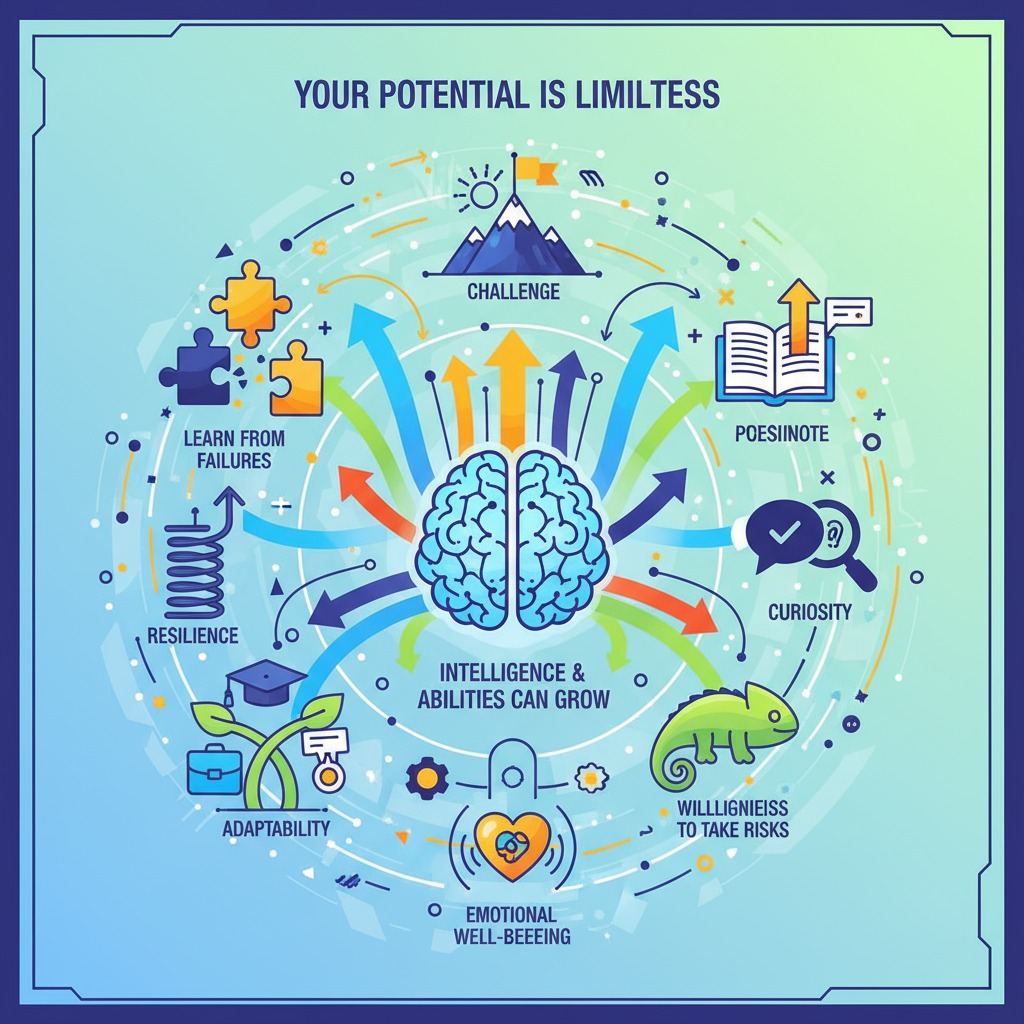
How to develop a growth mindset begins with a clear and deep understanding of what it truly means. How to develop a growth mindset involves recognizing that intelligence, skills, and abilities are not fixed traits but can be enhanced through effort, learning, and persistence. Individuals with a growth mindset embrace challenges, remain curious, and see failures as opportunities to learn and improve. Key characteristics of a growth mindset include resilience in the face of adversity, openness to feedback, a willingness to take risks, adaptability, and the understanding that consistent practice leads to personal and professional growth.
In contrast, individuals with a fixed mindset believe their abilities are predetermined and unchangeable. This perspective often leads to avoiding challenges, giving up easily, and perceiving constructive feedback as criticism. A fixed mindset emphasizes proving oneself rather than improving oneself, which can limit growth, reduce motivation, and weaken resilience. Understanding this distinction is essential because mindset shapes how individuals perceive obstacles, setbacks, and opportunities. How one responds—either with fear or with curiosity—directly influences personal development, learning outcomes, and long-term success.
How to develop a growth mindset is not limited to professional or academic achievements; it also plays a crucial role in emotional well-being and personal development. Students with a growth mindset approach difficult subjects with curiosity, improving problem-solving skills and enhancing learning outcomes. Professionals who adopt a growth mindset are more likely to accept challenges, innovate, and develop new competencies in their careers. Emotionally, a growth mindset allows individuals to adapt to change, recover from setbacks faster, and maintain motivation during difficult times.
Furthermore, how to develop a growth mindset encourages continuous self-reflection and conscious learning. It helps individuals identify strengths and weaknesses, seek feedback, and implement strategies for improvement. By prioritizing effort, learning, and personal development over immediate success or external validation, people build confidence, resilience, and long-term satisfaction. How to develop a growth mindset is not merely a cognitive strategy—it is a transformative approach to thinking that converts challenges into opportunities, setbacks into lessons, and potential into meaningful growth.
3. The Importance of a Growth Mindset for Personal Achievement
How to develop a growth mindset is essential for personal achievement because mindset fundamentally shapes how individuals approach goals, overcome obstacles, and pursue long-term success. People who cultivate a growth mindset perceive challenges not as threats but as opportunities to learn, adapt, and improve. This perspective encourages persistence, curiosity, and active engagement in tasks, allowing individuals to remain motivated even when faced with setbacks. A growth mindset transforms difficulties into stepping stones for growth rather than barriers to achievement.
The connection between a growth mindset, perseverance, and resilience skills is particularly profound. Individuals with a growth mindset understand that failure is not a reflection of personal inadequacy but a source of valuable feedback and insight. This perspective strengthens resilience by enabling people to recover quickly from setbacks, analyze what went wrong, and implement better strategies for future success. For example, a young entrepreneur experiencing repeated business failures can view each setback as a lesson, using the experience to refine strategies, improve decision-making, and increase the likelihood of future achievements. This ability to bounce back and maintain focus is a defining characteristic of those with a growth mindset.
How to develop a growth mindset also has a direct impact on motivation, self-esteem, and confidence. When effort is valued over innate talent, individuals feel empowered to push their limits, embrace challenges, and take calculated risks. This ongoing pursuit of improvement fosters self-efficacy—the belief in one’s capacity to succeed through dedication and hard work. Over time, this mindset cultivates emotional stability, encourages innovative thinking, and enhances adaptability in both personal and professional contexts.
Additionally, a growth mindset nurtures long-term personal development and fulfillment. Individuals with this mindset are more likely to embrace continuous learning, seek feedback, and reflect on experiences to enhance their abilities. By focusing on progress rather than perfection, they cultivate patience, persistence, and a sense of purpose. Ultimately, learning how to develop a growth mindset empowers individuals to achieve meaningful goals, build confidence, and maintain resilience, forming the foundation for lifelong growth and well-being.
4. 5 Steps to Develop a Growth Mindset
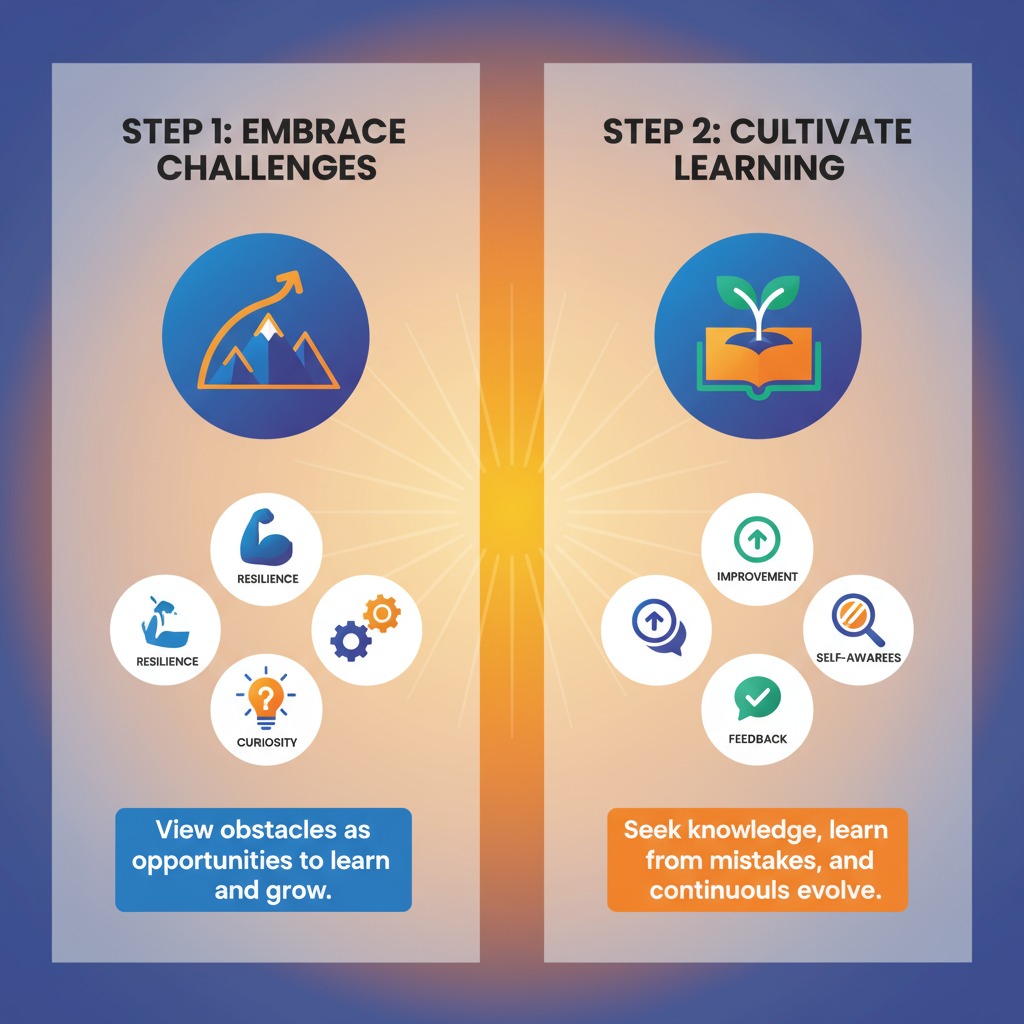
Step 1: Embrace Challenges as Opportunities
How to develop a growth mindset begins with embracing challenges instead of avoiding them. Challenges are not obstacles to success; they are opportunities for learning, growth, and skill development. Individuals with a growth mindset recognize that discomfort often accompanies progress, and rather than fearing failure, they approach challenges as a chance to expand their knowledge, improve abilities, and build resilience. Cultivating curiosity, creativity, and a proactive problem-solving attitude ensures that challenges become avenues for personal and professional development rather than sources of stress.
For example, a software developer faced with a complex coding problem might initially feel intimidated. However, by viewing it as a chance to learn a new algorithm or improve problem-solving skills, they not only resolve the issue but also strengthen their technical expertise. Similarly, a student struggling with a difficult subject can experiment with multiple study strategies, seek guidance from mentors, and practice consistently until mastery is achieved. Reframing challenges as opportunities enhances mental toughness, strengthens analytical thinking, and increases confidence. How to develop a growth mindset through this approach ensures that obstacles transform into valuable learning experiences, preparing individuals for long-term success and adaptability in every area of life.
Step 2: Learn from Criticism and Feedback
How to develop a growth mindset also involves embracing criticism and feedback as essential tools for improvement. Individuals with a fixed mindset often perceive feedback as personal judgment or criticism, which can discourage effort and limit growth. In contrast, those committed to a growth mindset view constructive feedback as guidance to identify weaknesses, refine strategies, and enhance performance over time.
For instance, a manager receiving feedback about leadership style can use it to improve communication, delegate responsibilities more effectively, and foster a collaborative team environment. Similarly, a student receiving comments on an assignment can analyze mistakes, adjust study methods, and strengthen understanding. By valuing feedback and applying it actively, individuals enhance self-awareness, adaptability, and resilience. Learning how to develop a growth mindset through feedback allows individuals to transform potential setbacks into opportunities for learning and continuous personal development, creating a cycle of ongoing improvement and achievement.
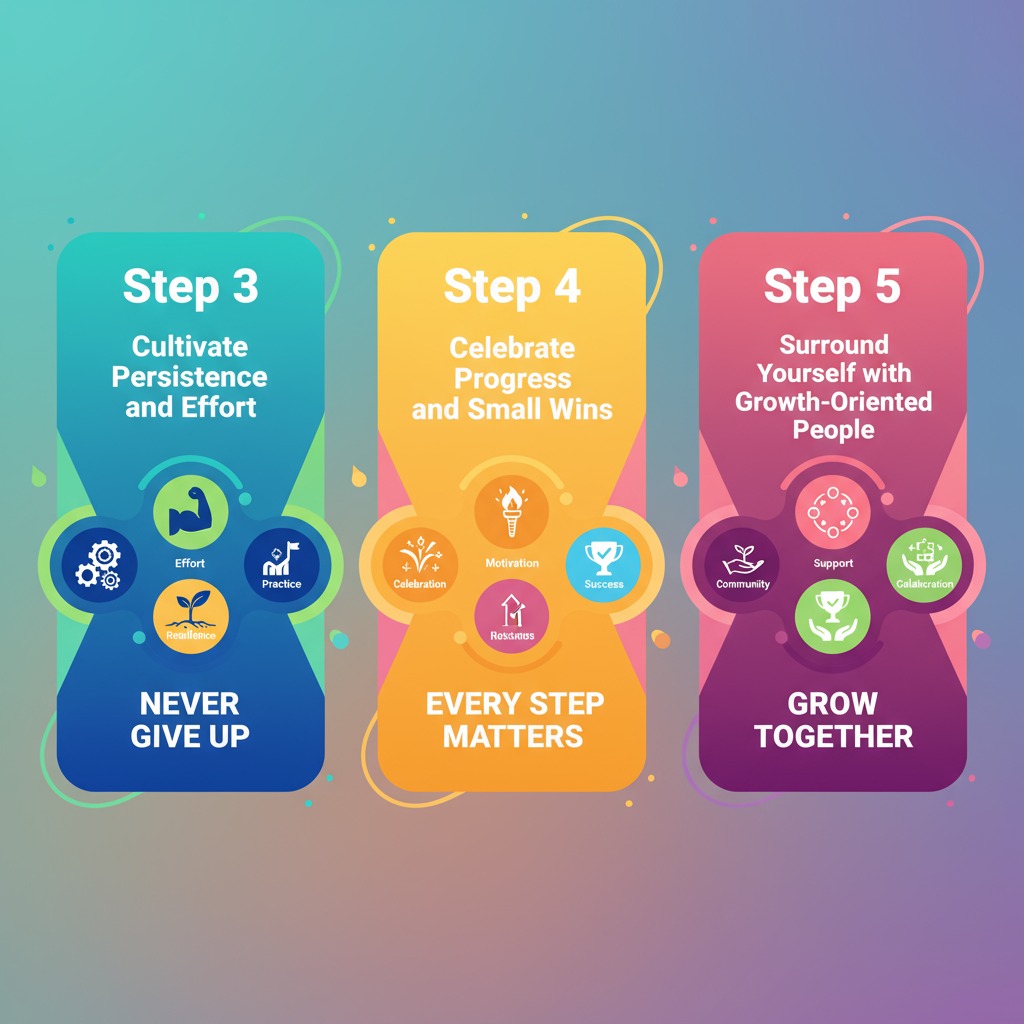
Step 3: Cultivate Persistence and Effort
Persistence and consistent effort are central to learning how to develop a growth mindset. Natural talent alone rarely leads to lasting success; sustained effort, deliberate practice, and dedication are the true drivers of mastery. Individuals with a growth mindset understand that abilities are cultivated over time and that consistent practice strengthens skills, confidence, and resilience.
Building resilience skills through persistence ensures that challenges and obstacles do not derail progress. Breaking large objectives into smaller, actionable tasks and following structured routines helps maintain motivation and focus. For example, an aspiring musician practicing daily will steadily enhance technical skills, musicality, and confidence. Similarly, a professional consistently working on leadership, technical, or creative skills develops competence and adaptability over time. Cultivating persistence reinforces the mindset that effort leads to growth, turning challenges into manageable opportunities and instilling a long-term vision for achievement. Learning how to develop a growth mindset requires embracing effort as a core principle, ensuring steady and meaningful progress toward goals.
Step 4: Celebrate Progress and Small Wins
How to develop a growth mindset also requires recognizing and celebrating progress, no matter how small. Acknowledging incremental achievements reinforces positive behaviors, boosts motivation, and encourages ongoing engagement with learning and growth. Celebrating small wins creates momentum, helping individuals pursue larger and more complex objectives with confidence.
For example, a student mastering a portion of a challenging course or completing a segment of a long-term project should consciously acknowledge their success. Similarly, a professional achieving milestones in a complex assignment can reflect on their growth, reinforcing motivation for future tasks. Focusing on progress rather than perfection nurtures persistence, resilience, and a positive mindset. Incorporating this practice into daily life strengthens belief in one’s abilities and sustains commitment to continuous learning. Learning how to develop a growth mindset through small wins ensures that individuals maintain enthusiasm and motivation throughout their personal and professional journeys.
Step 5: Surround Yourself with Growth-Oriented People
Finally, learning how to develop a growth mindset is significantly influenced by the environment and social connections. Surrounding oneself with growth-oriented individuals provides support, inspiration, and accountability. Mentors, peers, and communities committed to learning, resilience, and self-improvement foster a culture that reinforces growth-focused thinking and behavior.
Positive social influences encourage collaboration, knowledge sharing, and exposure to diverse perspectives. For instance, joining professional networks, study groups, or skill-building communities allows individuals to exchange ideas, learn new strategies, and remain motivated. Engaging with like-minded, growth-oriented people accelerates personal and professional development, strengthens accountability, and sustains long-term motivation. A supportive environment reinforces resilience, encourages consistent effort, and creates opportunities for continuous learning. Learning how to develop a growth mindset in a community of growth-focused individuals maximizes potential, inspires innovation, and enhances overall personal and professional success.
5. Conclusion
How to develop a growth mindset is a transformative journey that goes far beyond achieving short-term goals; it reshapes how individuals perceive challenges, failures, and opportunities for learning. At its core, a growth mindset is about viewing life as a continuous process of improvement rather than a series of fixed outcomes. Individuals who adopt this mindset actively seek growth in every aspect of their lives, recognizing that setbacks are not failures but valuable lessons that provide insight, skill development, and resilience.
By embracing challenges, learning from constructive feedback, cultivating persistence, celebrating incremental progress, and surrounding themselves with growth-oriented people, individuals build emotional strength, self-confidence, and adaptability that influence both personal and professional success. This mindset transforms obstacles into stepping stones, fostering a sense of purpose, curiosity, and proactive problem-solving.
A growth mindset fundamentally enhances mental and emotional well-being. Individuals who understand how to develop a growth mindset approach stress and challenges differently—they are less likely to feel defeated by obstacles and more likely to remain calm, resourceful, and solution-oriented. Viewing mistakes as learning experiences reduces anxiety, discourages self-blame, and encourages resilience. For instance, a student struggling with a difficult subject who embraces a growth mindset will analyze mistakes, adjust strategies, and persist until mastery is achieved.
Similarly, a professional facing a challenging project can approach it as an opportunity to learn, improve, and innovate rather than as a threat to competence. This perspective strengthens perseverance, self-efficacy, and the ability to maintain motivation despite setbacks, which ultimately contributes to long-term personal and professional development.
Moreover, how to develop a growth mindset has profound effects on relationships, collaboration, and leadership. Individuals with a growth-oriented perspective tend to be more empathetic, patient, and open to understanding others’ viewpoints. They approach interpersonal challenges thoughtfully, communicate effectively, and build trust through supportive, constructive interactions. In professional environments, this mindset encourages innovation, teamwork, and shared learning, as growth-minded individuals inspire and motivate those around them. The ripple effect extends to communities, workplaces, and social networks, fostering cultures of continuous improvement, accountability, and mutual respect. By modeling growth-focused behaviors, individuals positively influence their surroundings and contribute to collective success and emotional well-being.
Developing a growth mindset is not a finite achievement but a lifelong practice. It requires ongoing self-reflection, conscious effort, and the willingness to learn from both successes and failures. By valuing effort over innate talent, prioritizing learning over validation, and embracing challenges instead of avoiding them, individuals cultivate resilience, emotional intelligence, and a sustained sense of purpose. Growth becomes more than a goal—it becomes a habitual way of thinking and acting that empowers individuals to thrive in every aspect of life, from personal development and career advancement to emotional health and social interactions.
In addition, how to develop a growth mindset strengthens adaptive thinking and creative problem-solving skills. Individuals learn to embrace uncertainty, explore alternative solutions, and develop innovative approaches to overcome challenges. This flexibility enhances decision-making, critical thinking, and strategic planning. People who consistently practice a growth mindset are better equipped to face complex situations with confidence, quickly recover from setbacks, and maintain focus on long-term objectives. Over time, this mindset fosters a heightened ability to manage emotions, build resilience, and approach life with optimism and clarity.
Finally, understanding how to develop a growth mindset empowers individuals to reach their fullest potential across every dimension of life. It nurtures continuous learning, strengthens self-awareness, and encourages proactive personal and professional growth. Embedding growth-oriented practices into daily routines creates a cycle of improvement, emotional balance, and purpose-driven living. The mindset cultivates not only personal achievements but also the ability to inspire, lead, and uplift others. It becomes a guiding principle for living a meaningful, fulfilling, and resilient life.