
Table of Contents
1. Introduction – Understanding the Psychology of Procrastination
The psychology of procrastination reveals one of the most common struggles in human behavior — the tendency to delay important tasks despite knowing their value. It is not simply laziness or carelessness; it is a deep mental conflict between desire and resistance. Everyone, at some point, experiences that tug-of-war between wanting to act and choosing to wait. The psychology of procrastination explores why our minds choose short-term comfort over long-term benefit, and how emotions often overpower logic in those moments.
The psychology of procrastination is deeply linked to emotional regulation. It happens when we associate tasks with discomfort, fear, or stress, and our brains instinctively avoid them to protect emotional balance. This avoidance offers temporary relief but builds guilt and anxiety over time. The cycle repeats until procrastination becomes a habit that affects mental wellness, self-confidence, and overall productivity. Understanding this cycle is the first step toward breaking it.
In the modern world, where distractions are everywhere, the psychology of procrastination has become more powerful and more harmful. It drains energy, blurs focus, and increases self-doubt. However, the same mind that creates delays can also create discipline. By combining motivation improvement with time discipline, individuals can learn to manage emotions, strengthen habits, and transform hesitation into purposeful action. The psychology of procrastination, when understood deeply, becomes the key to personal freedom and emotional clarity.
2. The Psychological Roots of Procrastination
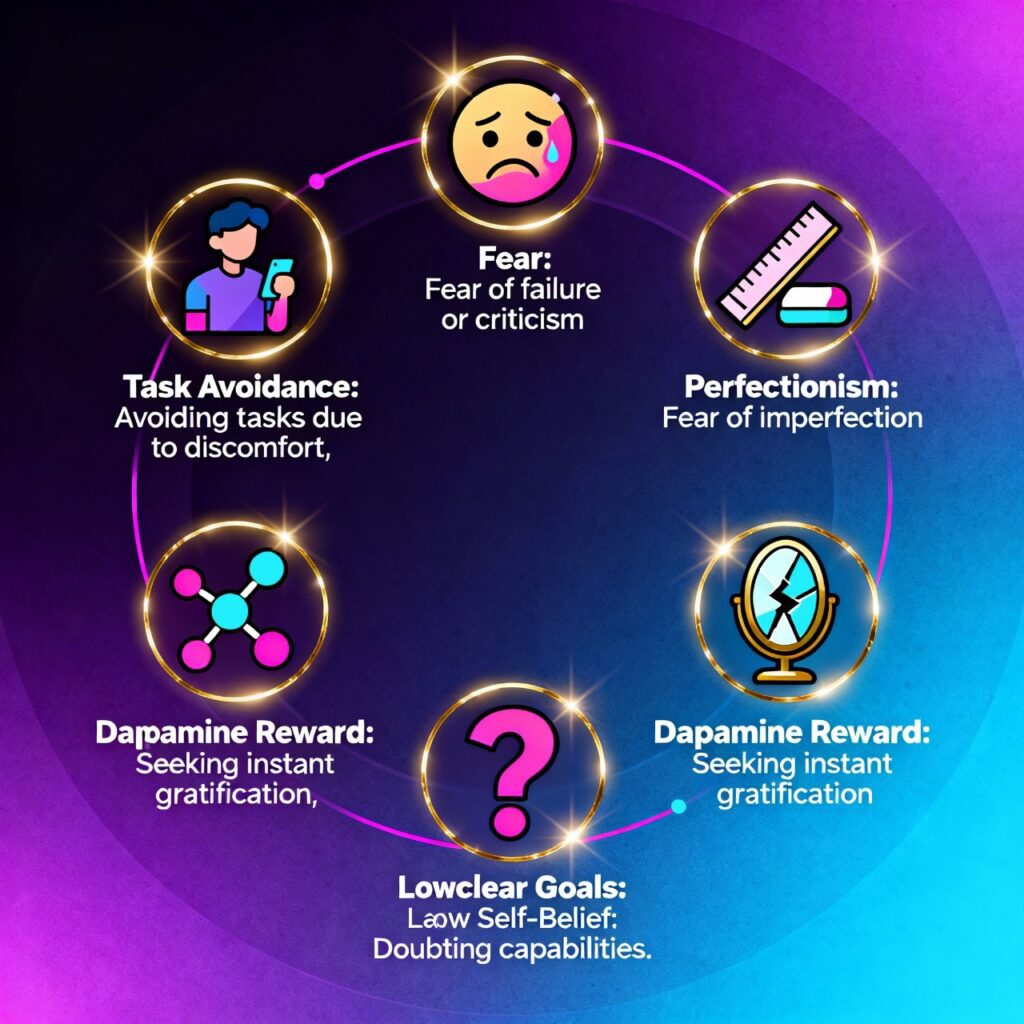
The psychology of procrastination begins with how our minds handle discomfort and reward. Our brains are designed to seek pleasure and avoid pain. When a task appears difficult, uncertain, or emotionally demanding, the brain interprets it as a threat and diverts attention to something that feels safer — like checking social media, daydreaming, or doing smaller, easier tasks. This behavior is called “task avoidance,” and it’s not about laziness; it’s about emotional protection.
One of the most common roots of the psychology of procrastination is fear — fear of failure, fear of judgment, or even fear of success. People often postpone action because they don’t want to face the possibility of not being good enough. Another major factor is perfectionism. Perfectionists tend to believe that if something cannot be done flawlessly, it’s better not to do it at all. This mindset paralyzes progress and increases anxiety.
The psychology of procrastination also highlights the role of instant gratification. The human brain’s reward system releases dopamine when we experience pleasure. Quick rewards — such as entertainment, food, or rest — trigger dopamine immediately, whereas long-term goals provide delayed satisfaction. This neurological preference explains why people often choose momentary comfort over meaningful achievement.
Moreover, lack of clarity and direction can feed procrastination. When goals are vague, the brain struggles to organize effort, leading to mental fatigue and avoidance. Similarly, low self-belief makes individuals doubt their capacity to succeed, creating a loop of hesitation and negative self-talk. Understanding these roots helps individuals recognize that procrastination is not a personal flaw but a psychological pattern that can be retrained with awareness and structured action.
3. The Emotional and Behavioral Impact
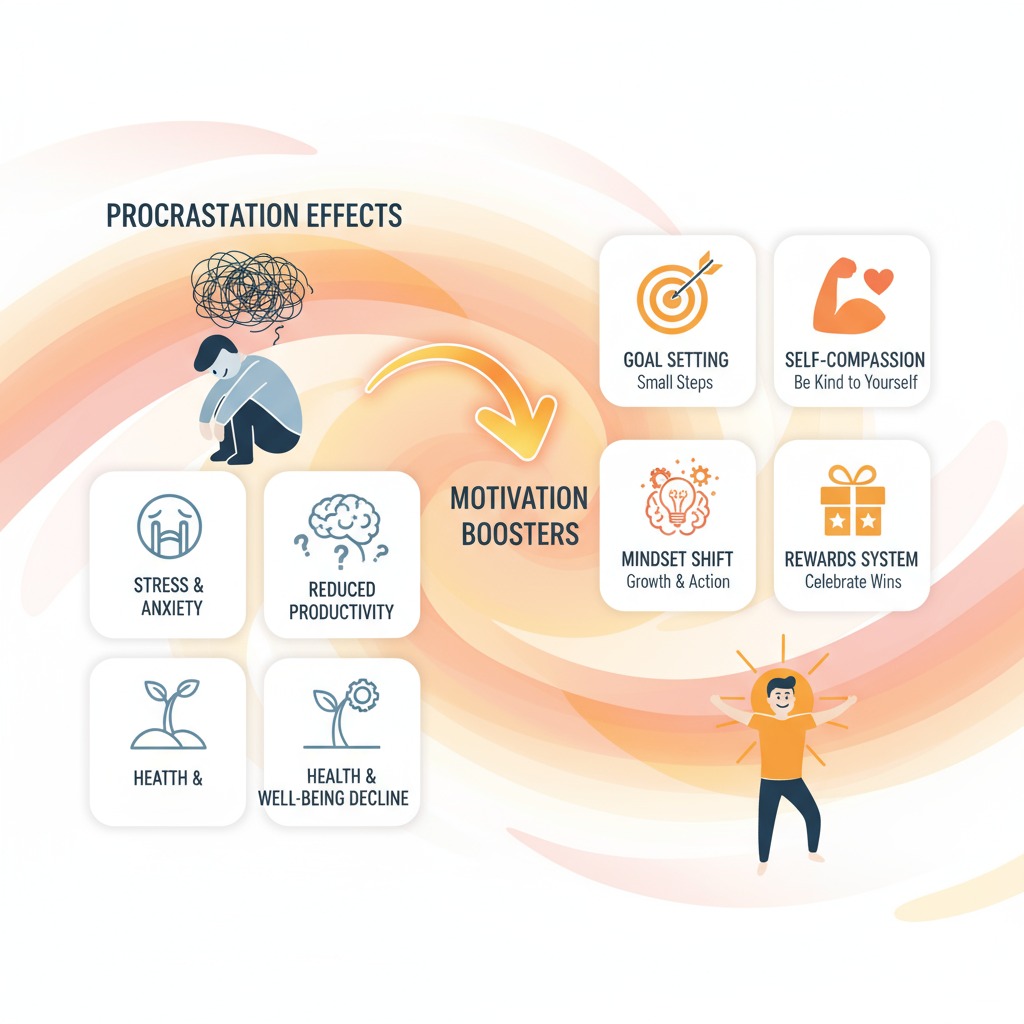
The psychology of procrastination not only explains why we delay but also how it affects our emotional and behavioral well-being. Procrastination creates a sense of internal conflict — a quiet guilt that lingers every time we avoid something important. Over time, this guilt transforms into anxiety, frustration, and even self-criticism. People start labeling themselves as “lazy” or “undisciplined,” which damages self-esteem and motivation further. The emotional cost becomes heavier than the task itself.
Behaviorally, chronic procrastination disrupts daily life. It leads to missed deadlines, unfinished goals, last-minute stress, and poor time management. Each failure to follow through strengthens the brain’s association between effort and discomfort. Eventually, procrastination becomes automatic — an unconscious habit that operates even when the person truly wants to work. This disconnection between intention and action is one of the most painful outcomes of prolonged delay.
The psychological stress caused by the psychology of procrastination often extends into physical health as well. Studies in mental wellness suggest that constant avoidance increases cortisol levels, affecting sleep, focus, and energy. People may feel trapped in a cycle of overthinking, exhaustion, and guilt, where even small tasks feel overwhelming. The longer this continues, the harder it becomes to regain self-trust and confidence.
However, the psychology of procrastination also provides hope. Once individuals understand that procrastination is a form of emotional coping, not a lack of discipline, they can approach it with compassion instead of criticism. Emotional healing becomes the first step toward behavioral change. By forgiving themselves for past delays and focusing on small, consistent actions, people can begin to rebuild a positive relationship with work, time, and self-worth.
4. Motivation Improvement – The Power to Start
The psychology of procrastination proves that motivation is not something we wait for; it is something we create. Motivation improvement begins when we connect our actions to meaningful reasons. When you clearly understand why a task matters to your personal growth, your brain becomes more willing to engage. The problem is that many people rely on external motivation — deadlines, pressure, or fear — rather than developing internal drive. Internal motivation, rooted in purpose, lasts longer and feels lighter.
One effective way to improve motivation is through goal clarity. When goals are specific and realistic, they appear achievable, reducing emotional resistance. Instead of saying, “I have to finish everything today,” it’s better to say, “I will work for one focused hour.” Small, measurable goals make action less intimidating and more satisfying. The psychology of procrastination shows that even minimal progress creates dopamine release, which boosts mood and reinforces effort.
Visualization is another powerful tool for motivation improvement. Imagining the relief and pride of completing a task helps the brain associate work with positive feelings instead of pressure. This emotional shift transforms hesitation into eagerness. Similarly, rewarding yourself after completing tasks builds momentum and enjoyment. Rewards don’t have to be material; they can be as simple as relaxation, music, or time with loved ones.
The psychology of procrastination also reminds us that motivation grows from consistency. The more you act, the more motivated you become. Waiting for inspiration often keeps people stuck, while small actions trigger mental energy. Every time you push through discomfort and finish a task, your brain learns that effort brings reward. Over time, this rewires your mindset from avoidance to action, proving that motivation is built, not found.
5. Time Discipline – Building Productive Habits
The psychology of procrastination teaches that while motivation helps you begin, time discipline keeps you moving. Time discipline means creating structure in your day that protects your focus and energy. It’s not about strict control or punishment — it’s about alignment between your priorities and your actions. People who lack time discipline often feel overwhelmed because their time is scattered across distractions and unplanned tasks.
Time discipline begins with intentional planning. When you schedule tasks with clear start and end times, your mind perceives them as commitments rather than options. This small mental shift builds accountability. Consistency strengthens discipline, and discipline eventually becomes freedom. The psychology of procrastination shows that the more predictable your schedule becomes, the less energy your brain wastes on decision-making.
Creating a focused environment is another cornerstone of time discipline. The human mind is highly sensitive to its surroundings. A cluttered or noisy space invites distraction, while a calm, organized environment promotes clarity. By removing unnecessary interruptions — such as notifications, random browsing, or multitasking — you create mental stillness that supports productivity.
Routines also enhance time discipline. Waking up, working, and resting at regular times helps the body and mind synchronize. This rhythm builds reliability, and reliability builds confidence. Over time, even difficult tasks feel easier because your brain associates certain hours with concentration. Time discipline also encourages reflection. Reviewing what you accomplished at the end of each day helps you recognize progress and refine your habits.
Ultimately, time discipline is about self-respect. It means valuing your time as the most important resource you have. When you treat time with seriousness, procrastination loses its control. The psychology of procrastination demonstrates that the real enemy is not the task itself but the chaos around it. When order replaces chaos, action becomes natural.
6: 7 Practical Ways to Overcome Procrastination
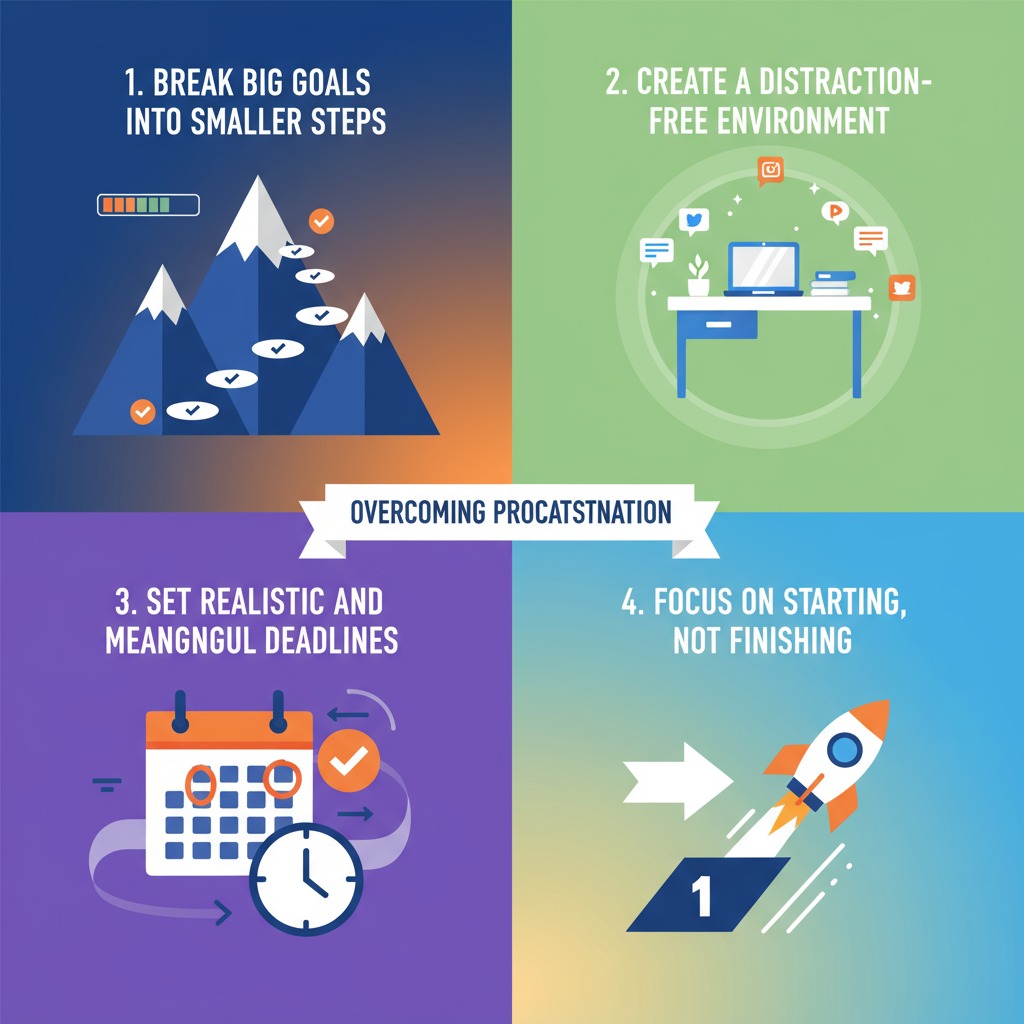
Way 1: Break Big Goals into Smaller Steps
The psychology of procrastination begins with how the human mind perceives difficulty. When a goal appears too large or undefined, it triggers the brain’s threat response. This emotional discomfort leads to avoidance — not because the task is impossible, but because it feels emotionally draining. Breaking large goals into smaller, measurable parts reduces that psychological burden.
For instance, if your goal is to write a report, start with outlining the introduction or collecting references. Each completed mini-task signals progress and releases dopamine, the brain’s reward chemical. This reward reinforces motivation, making it easier to continue. Over time, small, consistent steps replace anxiety with a sense of mastery. By turning mountains into molehills, your brain learns to associate progress with pleasure, not fear.
Way 2: Create a Distraction-Free Environment
According to the psychology of procrastination, distractions are not harmless; they are powerful triggers for delay. Each time your attention shifts — whether to a phone notification, background noise, or clutter — your brain must refocus, wasting mental energy. Creating an environment that supports focus is essential for overcoming this. Start by organizing your workspace. Remove unnecessary items, silence notifications, and keep only tools that help you work.
A clean environment communicates clarity to your subconscious mind. Additionally, setting physical or time boundaries, such as using noise-canceling headphones or scheduling “focus hours,” reinforces discipline. When your surroundings are free from competing stimuli, your mind naturally aligns with the task. The fewer distractions you battle, the stronger your ability to sustain deep, meaningful concentration.
Way 3: Set Realistic and Meaningful Deadlines
The psychology of procrastination also reveals that our brains interpret open-ended tasks as low priority. Without structure, the mind drifts toward short-term comfort rather than long-term achievement. Setting realistic deadlines provides a sense of urgency that directs mental focus. However, these deadlines must be achievable; otherwise, they produce anxiety rather than motivation.
For example, setting a deadline to complete a 2000-word article in one day may feel impossible, but spreading it over three days — planning, writing, and editing — creates balance. It’s equally important that deadlines hold personal meaning. When you connect a task to your values or goals — such as professional growth, health, or self-respect — you transform a date on a calendar into a purpose-driven milestone. Pairing each deadline with small rewards further conditions the brain to associate effort with satisfaction. This balance of urgency, realism, and reward builds sustainable productivity.
Way 4: Focus on Starting, Not Finishing
The psychology of procrastination emphasizes that hesitation grows stronger when we think about finishing instead of starting. The idea of completing an entire project can feel heavy and intimidating, which triggers avoidance. To bypass this, reframe your approach by telling yourself, “I’ll just start for five minutes.” This method, known as the five-minute rule, tricks the brain into action by lowering perceived effort.
Once you begin, your focus often strengthens naturally because the hardest part — initiating — is over. Starting creates psychological momentum; as you make progress, your brain’s reward system activates, keeping you engaged longer than expected. This simple shift transforms the act of beginning into a tool of empowerment. By focusing on micro-starts instead of perfect finishes, you replace dread with curiosity and discover how action itself can defeat delay.
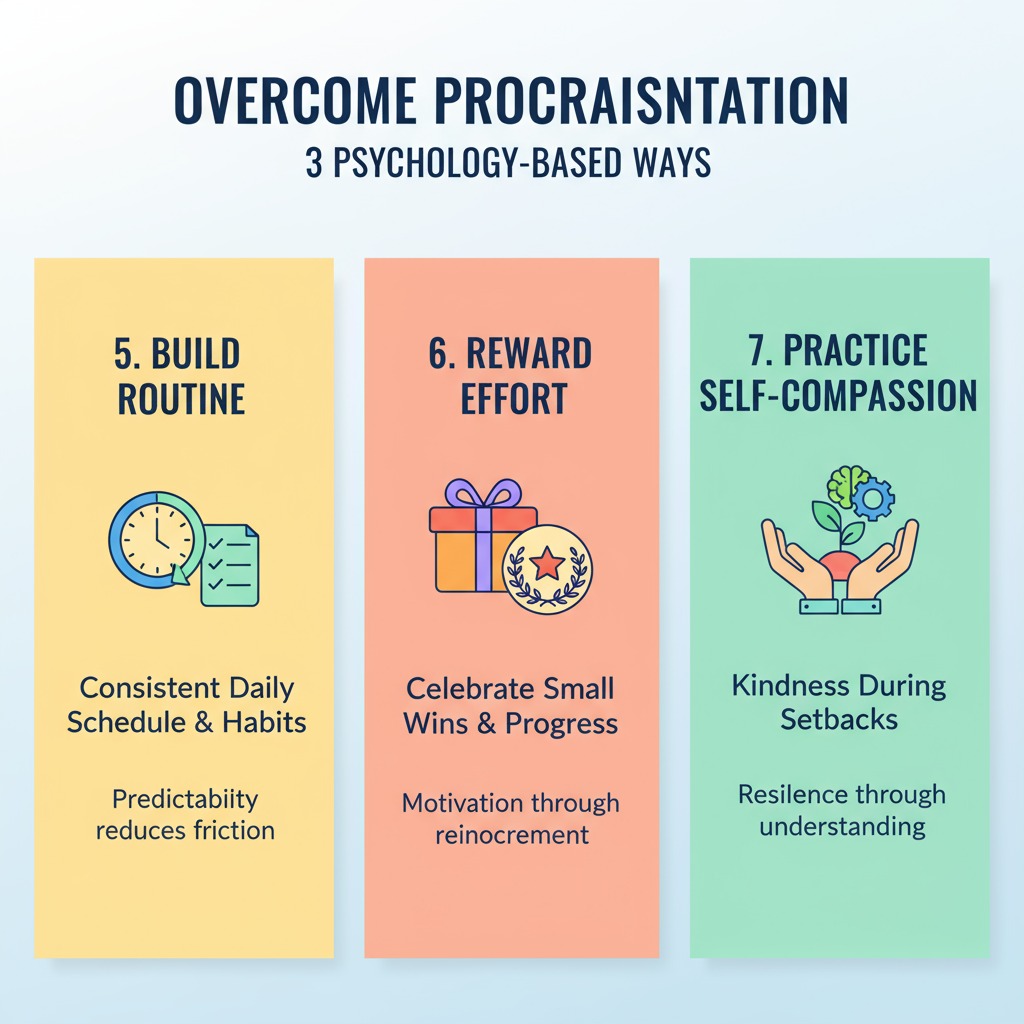
Way 5: Build a Consistent Daily Routine
Consistency is one of the most powerful antidotes to procrastination. The psychology of procrastination explains that when your day lacks structure, your brain spends energy deciding what to do next — a phenomenon known as decision fatigue. This constant mental negotiation drains willpower and invites distraction. Building a daily routine eliminates this friction. A predictable schedule — waking up, exercising, working, relaxing, and sleeping at fixed times — programs your brain for efficiency.
When you repeat behaviors regularly, they become automatic, requiring less motivation. Over time, discipline transforms into habit. It’s also helpful to anchor productive habits to existing ones; for example, review your goals right after your morning coffee or reflect on progress before bedtime. These consistent cues strengthen the link between intention and action. The steadier your daily rhythm, the easier it becomes to sustain focus, balance, and emotional stability.
Way 6: Reward Effort, Not Just Results
The psychology of procrastination teaches that humans often delay action because they seek instant gratification. Big goals usually offer delayed rewards, which feel too far away to motivate the present self. That’s why it’s essential to create short-term rewards that celebrate effort rather than only outcomes. After finishing a study session or completing part of a task, take a brief walk, listen to music, or enjoy a favorite snack.
These small pleasures train your brain to link productivity with positive emotions. Over time, this rewiring strengthens intrinsic motivation — the desire to act for self-satisfaction rather than external pressure. Moreover, acknowledging your own progress cultivates self-trust. You begin to view yourself as someone capable of consistent effort, even when results take time. Celebrating small wins nurtures a healthy relationship with work, one that is grounded in progress, patience, and pride.
Way 7: Practice Self-Compassion During Setbacks
Among all lessons from the psychology of procrastination, self-compassion may be the most transformative. Many individuals believe that criticizing themselves for delay will spark change, but guilt often deepens avoidance. Harsh self-talk triggers emotional pain, lowering motivation further. In contrast, practicing self-compassion helps you recover faster and rebuild momentum. When you miss a deadline or lose focus, acknowledge your humanity instead of condemning yourself. Reflect on what went wrong, learn from it, and restart with kindness.
This approach activates a growth mindset, shifting focus from failure to improvement. Research shows that self-compassionate individuals are more resilient, disciplined, and persistent over time because they view mistakes as part of learning, not proof of inadequacy. Remember, progress is not perfection — it’s persistence. By treating yourself with the same empathy you would offer a friend, you transform procrastination into an opportunity for growth and renewal.
7. Conclusion – Turning Procrastination into Progress
The psychology of procrastination reminds us that delay is not a weakness but a reflection of how the human mind processes discomfort and fear. Every time we postpone a task, it’s often because our brain is protecting us from emotional strain — fear of failure, fear of imperfection, or simply the exhaustion of constant pressure. By understanding this inner mechanism, we stop fighting ourselves and begin to work with our mind, not against it. Awareness transforms judgment into empathy, and empathy turns hesitation into gentle action. When we replace the question “Why can’t I start?” with “What emotion am I avoiding?” we gain the insight needed to move forward.
The psychology of procrastination also highlights that progress is built on consistency, not intensity. Many people expect sudden transformation, but true change happens in small, repeated actions. When you learn to start even when you don’t feel ready, you break the emotional chain that binds you to delay. Every step, no matter how small, rewires your mind to value progress over perfection. Over time, these small actions accumulate into powerful habits that create both productivity and peace. Consistency becomes your anchor — the quiet strength that keeps you moving through self-doubt, distraction, and emotional fatigue.
Through motivation improvement, we rediscover purpose. Motivation isn’t about constant excitement; it’s about remembering why something matters even when it feels hard. Connecting your tasks to deeper values — like growth, contribution, or personal pride — gives meaning to every effort. The psychology of procrastination shows that people act more decisively when they align their actions with identity. When you tell yourself, “I am someone who finishes what I start,” your behavior gradually rises to match that belief. This alignment between who you are and what you do becomes the foundation of inner discipline.
Time discipline complements motivation by giving structure to your energy. Managing your time is not about squeezing more hours into the day; it’s about protecting what truly matters. Scheduling moments of focus, rest, and reflection turns life into a balanced cycle rather than a constant chase. Time discipline creates freedom — the freedom to act intentionally instead of reactively. When you combine motivation improvement with time discipline, procrastination no longer dominates your choices. Instead, you guide your time with clarity, self-awareness, and purpose.
Ultimately, the psychology of procrastination teaches that the real victory is not in doing more, but in understanding yourself better. Each moment of delay carries information about your fears, priorities, and limits. When you listen to those signals without guilt, you uncover a deeper wisdom about how your mind operates. Progress begins when you honor your humanity — when you allow effort to be imperfect yet consistent. Overcoming procrastination is not just about productivity; it’s about emotional growth and self-trust. The moment you take that first intentional step, you transform hesitation into movement, confusion into clarity, and time into opportunity.
Procrastination, then, is not your enemy but your mirror — reflecting the parts of yourself that need patience, healing, and belief. By embracing awareness, practicing time discipline, and nurturing motivation, you can rewrite your inner story from avoidance to action. The psychology of procrastination becomes a guide — not to eliminate delay, but to master it through understanding and balance. When you begin to see procrastination as a signal for self-awareness, not self-blame, you take control of your life in the truest sense. Progress is not about speed; it’s about direction — and every conscious step forward is a victory worth celebrating.