
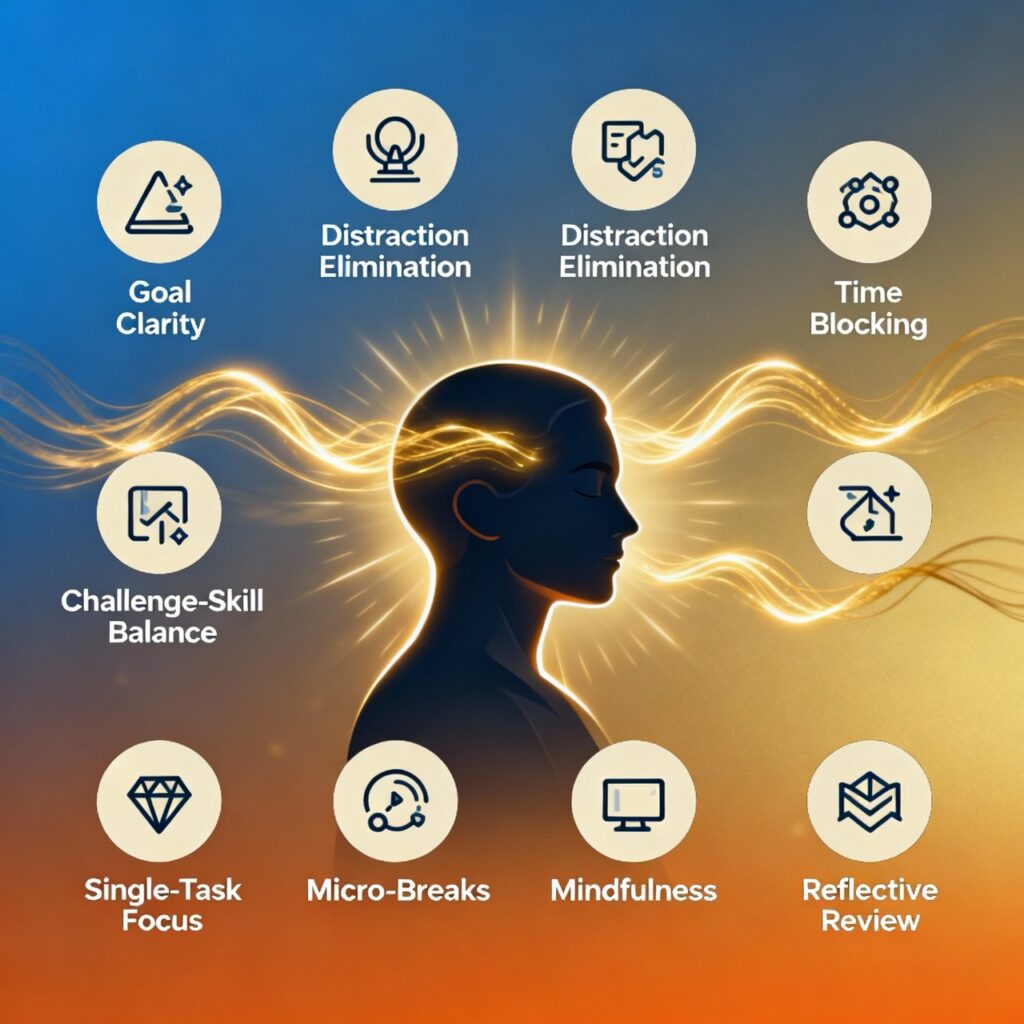
Table of Contents
1. Understanding the Psychology of Flow
The psychology of flow, introduced by Mihaly Csikszentmihalyi, describes a mental state of complete absorption, focus, and engagement in an activity. In this immersive state, individuals lose track of time, distractions fade away, and tasks are performed with enhanced creativity and precision. It’s more than just productivity —also promotes emotional satisfaction, self-growth, and overall mental wellness by aligning effort with genuine passion and intrinsic motivation.
When you experience your skills and challenges align perfectly. Too little challenge brings boredom, while too much pressure leads to anxiety. The balance between the two creates what Csikszentmihalyi calls the “sweet spot” — where your abilities are stretched just enough to create engagement, enjoyment, and mastery. This state keeps you motivated and energized rather than drained.
Research in the reveals that frequent flow experiences increase happiness, resilience, and life satisfaction. People who often enter this state report feeling more purposeful, productive, and fulfilled in both professional and personal settings. This happens because flow reinforces positive emotions, boosts confidence, and strengthens one’s sense of control over life’s challenges.
The psychology of flow isn’t a random experience; it’s something that can be cultivated through deliberate practice. By identifying your peak focus hours, minimizing distractions, and engaging in meaningful work, you can train your brain to enter flow more consistently. Over time, you’ll find it easier to achieve that deep, sustained focus where your best ideas and performance emerge naturally.
Intrinsic motivation is the driving force behind. When you genuinely enjoy what you’re doing, your brain releases dopamine and endorphins, which deepen engagement and make the process itself rewarding. This internal feedback loop keeps you motivated without needing external rewards or validation.
Ultimately, the psychology of flow teaches that true happiness and mastery come from being fully present. When you immerse yourself completely in your work, time dissolves, and the act itself becomes deeply fulfilling — turning effort into enjoyment and productivity into personal growth.
2. The Science Behind Flow and Productivity Psychology
The psychology of flow connects deeply with the science of Deep Work and Productivity Psychology, both of which explore how focused attention and mental clarity lead to exceptional results. Cal Newport’s concept of Deep Work — performing high-value tasks in distraction-free focus — perfectly aligns with the conditions necessary for entering flow. Both rely on the brain’s ability to sustain deep engagement.
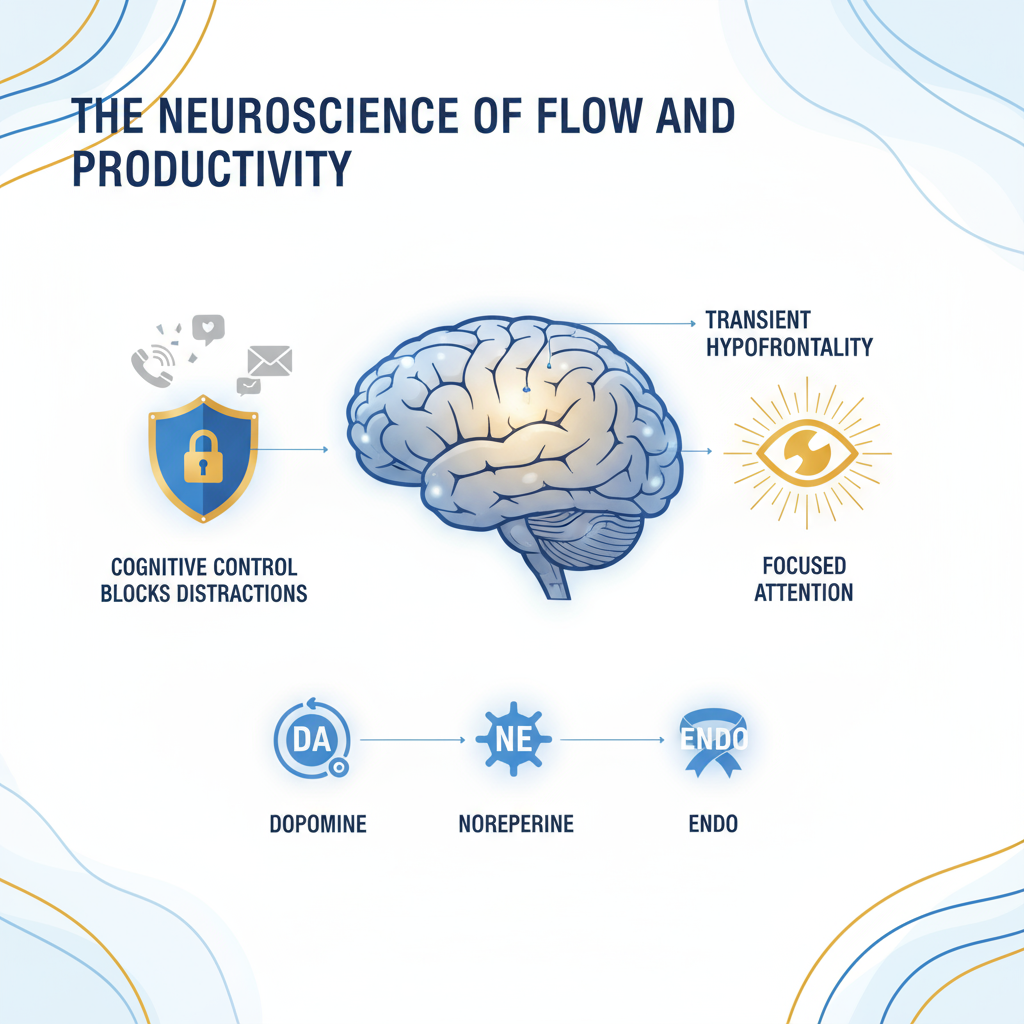
Scientific studies on the show that our attention is limited and easily depleted. When we multitask or switch contexts frequently, productivity drops and creativity suffers. During flow, however, the prefrontal cortex — responsible for self-monitoring and time awareness — quiets down through a process called “transient hypo frontality.” This neurological shift allows thoughts to flow freely, helping ideas connect more fluidly and reducing overthinking.
The brain’s chemistry also plays a central role in the. Dopamine, norepinephrine, and endorphins work together to heighten focus, motivation, and enjoyment. These neurochemicals reward effort and make complex or demanding tasks feel more engaging, allowing individuals to stay in the zone longer without mental fatigue.
Cognitive control, another element in the, helps regulate attention and block distractions. As this control strengthens through practice, people find it easier to maintain focus and enter flow more quickly. This is why elite performers — athletes, writers, or musicians — often describe being “in the zone” during peak performance.
From a productivity standpoint, the redefines efficiency. It’s not about working longer hours but about engaging deeply during shorter, high-focus sessions. When skill and challenge align, output increases while mental strain decreases — creating a rhythm of effortless productivity that’s both satisfying and sustainable.
Ultimately, the bridges neuroscience and personal experience, explaining why deep focus feels rewarding and why it leads to breakthroughs in creativity and performance. Understanding this process empowers you to build daily habits that naturally guide you toward your optimal mental state.
3. Building the Right Environment for Focus
Creating the right environment is essential for achieving the psychology of flow. The human brain functions best in spaces that promote order, clarity, and minimal distraction. Your surroundings influence how easily you can reach a state of deep focus, and small adjustments can make a big difference in maintaining flow.
A cluttered space can disrupt attention and block the smooth experience of the. A tidy, well-organized workspace helps reduce mental noise and signals your brain that it’s time for focused effort. Keep only essential tools nearby, and remove anything that doesn’t contribute to your current task.
Digital distractions are one of the biggest barriers to the. Constant notifications, emails, or social media interruptions break concentration and make it harder to regain deep focus. Using focus timers, productivity apps, or scheduled “no-device” periods helps protect your attention and conserve mental energy for meaningful work.
Environmental comfort also supports the. Proper lighting, temperature, and ergonomics reduce physical discomfort, allowing your brain to stay in focus longer. Natural light, comfortable seating, and an organized layout create the mental and physical stability needed for immersion.
Clarity of purpose is another crucial aspect of sustaining the. Before starting a task, set clear goals and desired outcomes. Specific objectives guide your mind toward structured progress and prevent wandering thoughts. You can also use sensory cues — like calm background music or familiar scents — to signal your brain that it’s time to concentrate.
Ultimately, the thrives in environments that are both calm and intentional. When you consciously design your workspace, remove distractions, and establish rituals of focus, your mind becomes conditioned to enter flow naturally. This alignment between environment and mindset transforms everyday work into a deeply engaging and rewarding experience.
4. 8 Practical Steps from the Psychology of Flow to Enter Peak Focus Effortlessly
The psychology of flow offers a powerful roadmap for achieving effortless productivity and deep mental engagement. It teaches that flow is not a coincidence but a trainable state — one that emerges when focus, motivation, and environment align perfectly. By applying these eight science-backed strategies inspired by Deep Work and Productivity Psychology, you can consistently guide your mind into peak focus and sustained creative performance.
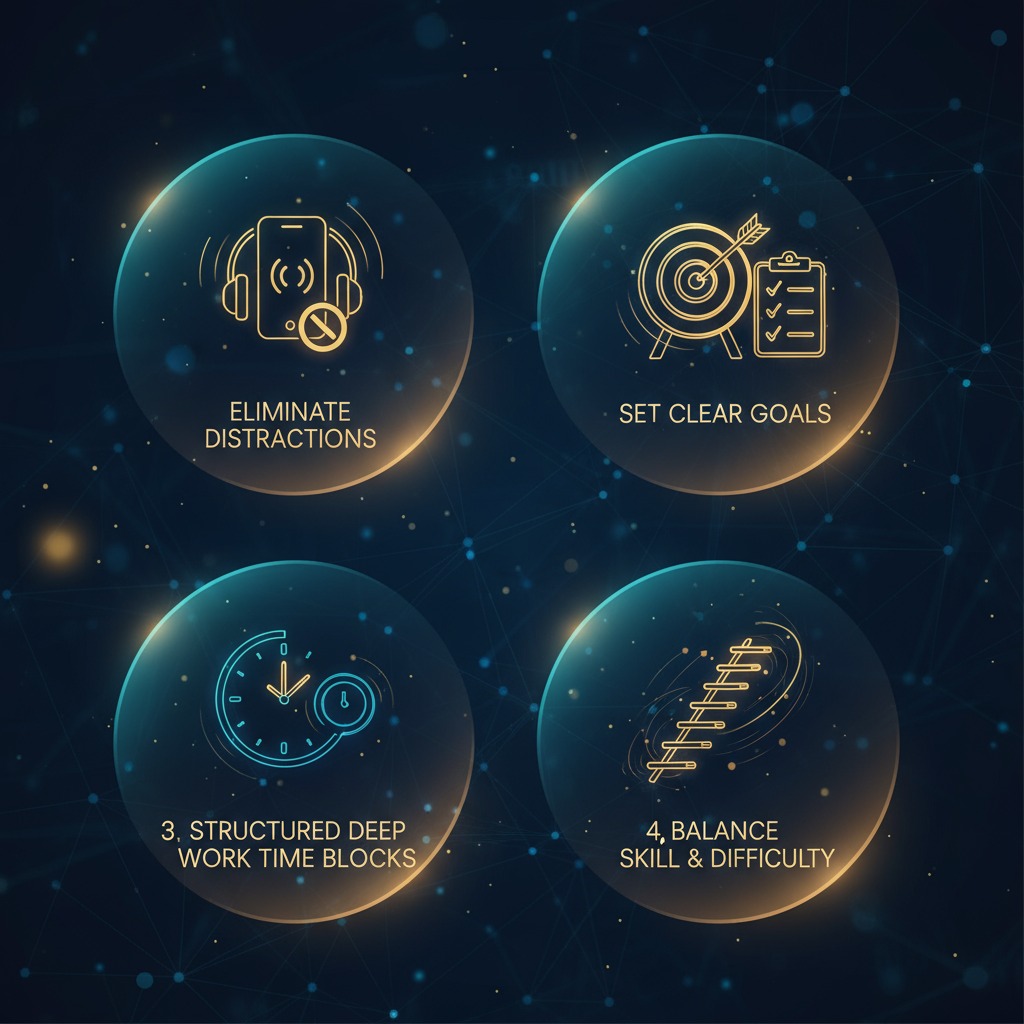
1. Eliminate Distractions and Create a Focus Zone
The first and most crucial step in the psychology of flow is protecting your attention. Distractions — whether digital, environmental, or mental — fragment focus and prevent full immersion. Turn off unnecessary notifications, close irrelevant tabs, and create a workspace dedicated only to your most meaningful tasks. You can also use tools like website blockers, noise-canceling headphones, or focus music to signal your brain that it’s time to work deeply.
When your environment supports concentration, your brain no longer wastes energy switching between tasks. This singular direction of attention helps trigger the flow state, where focus feels natural and effortless. A well-structured workspace not only increases productivity but also conditions your mind to associate that space with deep concentration.
2. Set Clear, Challenging, and Achievable Goals
The psychology of flow emphasizes the importance of clarity and challenge balance. Before starting any task, define what success looks like — clear goals help guide your attention and reduce uncertainty. Each objective should be specific enough to provide direction but challenging enough to keep you engaged.
When goals are too simple, you risk losing interest. When they’re too complex, stress and self-doubt can take over. The key lies in finding that middle ground where your skills are tested but not overwhelmed. This sweet spot keeps your brain stimulated, alert, and fully immersed — the foundation of the flow experience.
3. Practice Deep Work Through Structured Time Blocks
According to both Deep Work principles and the psychology of flow, focus strengthens through consistent practice. Set aside 60–90 minutes of uninterrupted time for complex, high-value work. During these blocks, eliminate all external stimuli and direct your attention entirely to one task.
Short breaks between sessions allow your brain to recharge and consolidate information, preventing fatigue. Over time, this rhythm of concentrated effort followed by rest builds mental endurance. The brain learns to enter flow more easily, turning deep work into a natural, repeatable routine rather than a rare occurrence.
4. Balance Skill with Difficulty
A core principle in the psychology of flow is the alignment between your abilities and the challenge at hand. Flow thrives when you’re operating just beyond your comfort zone — where you’re neither bored nor overwhelmed.
To apply this, gradually increase task difficulty as your skills improve. Break large projects into smaller, manageable challenges that push you to grow. This balance keeps motivation alive while maintaining confidence. It’s the psychological equivalent of progressive training — stretching your capacity one step at a time while maintaining engagement and enjoyment.
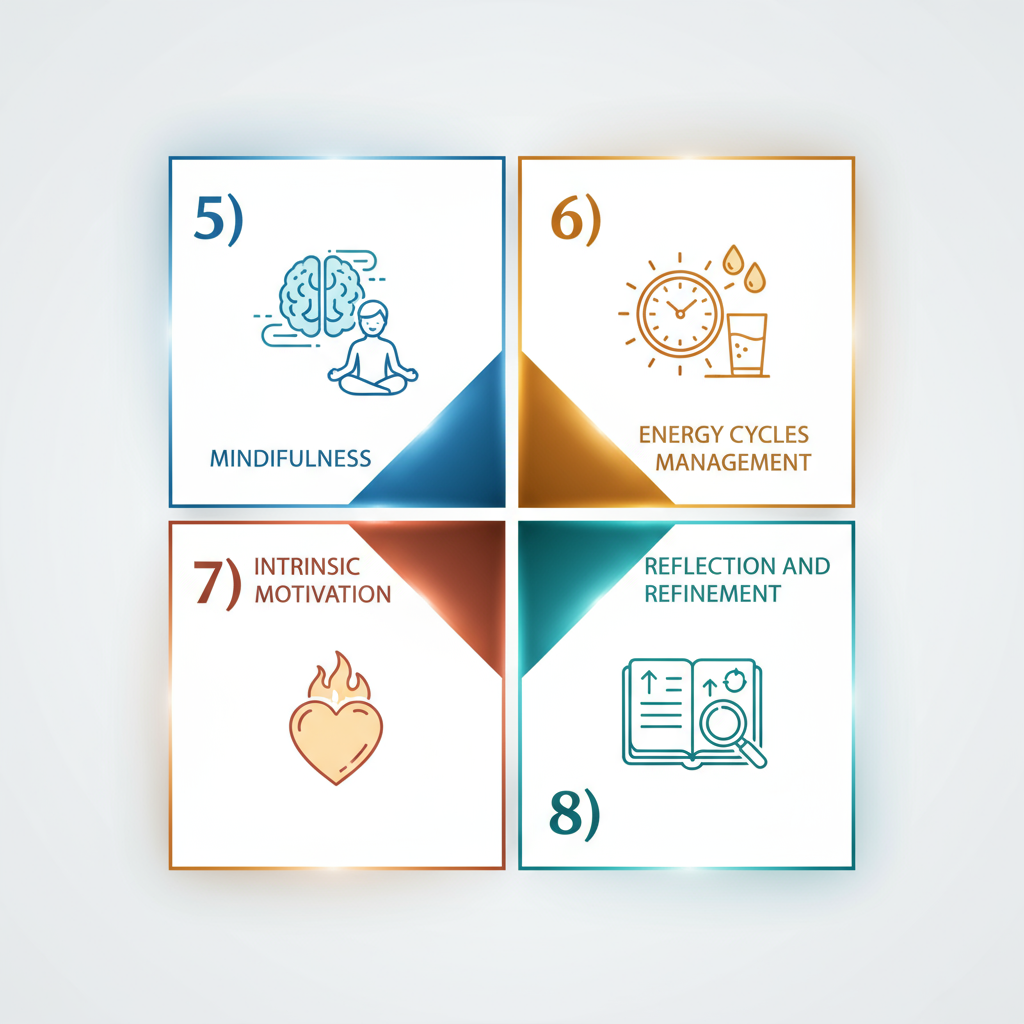
5. Use Mindfulness to Strengthen Attention Control
Mindfulness is one of the most effective tools for achieving flow. A calm and present mind can focus deeply without being pulled by distractions or intrusive thoughts. Practicing short mindfulness sessions before work — such as focused breathing, meditation, or even mindful journaling — can center your attention and prepare your brain for deep engagement.
The psychology of flow recognizes mindfulness as a mental warm-up for focus. It improves self-awareness, stabilizes attention, and reduces the mental noise that disrupts concentration. Even five minutes of mindful breathing before starting work can significantly enhance your ability to sustain flow for longer periods.
6. Manage Energy Cycles for Consistent Focus
Sustaining flow requires not just focus but also proper energy management. The psychology of flow acknowledges that peak performance depends on aligning work intensity with your natural energy rhythms. Identify when you’re most alert — morning, afternoon, or evening — and schedule your most demanding tasks accordingly.
Stay hydrated, eat brain-fueling foods, and take short, intentional breaks to restore mental energy. Micro-breaks involving stretching or short walks help reset attention and prevent burnout. When your body and mind are in sync, entering flow becomes smoother, and focus feels less forced.
7. Cultivate Intrinsic Motivation and Purpose
Flow flourishes when you work from a place of genuine interest and meaning. The psychology of flow highlights that internal motivation — doing something for its own sake — is more powerful than external rewards. Engage in tasks that resonate with your values, passions, or sense of purpose.
When you care deeply about the outcome, effort transforms into enjoyment. You stop working for deadlines and start working for mastery. This shift in motivation fuels long-term engagement, creativity, and satisfaction, allowing you to experience flow more frequently and naturally.
8. Reflect and Refine Your Flow Routine
Reflection is the bridge between experience and improvement. After each deep work session, take a few minutes to assess what worked and what didn’t. Did you get distracted? Was the environment supportive? What specific conditions helped you focus the longest?
The psychology of flow suggests that self-reflection helps you identify patterns and adjust your approach for better consistency. Over time, you’ll refine your own personalized flow formula — a mix of environment, routine, and mindset that helps you enter peak focus effortlessly.
5. Deep Work as a Flow Catalyst
Deep Work plays a crucial role in activating the psychology of flow. It is the disciplined practice of engaging in focused, distraction-free work that challenges your intellect and creativity. When you commit to Deep Work, your brain gradually adapts to sustained concentration, increasing its ability to focus deeply without being easily distracted. Over time, this training rewires your attention system — making it easier and faster to slip into the flow state where focus feels effortless and productivity peaks.
The psychology of flow emphasizes that Deep Work is not just about working harder, but about working with clarity and purpose. During these intense periods of undistracted effort, your cognitive resources are fully directed toward one meaningful goal. This focused engagement enhances problem-solving, creativity, and performance quality. Moreover, Deep Work creates a sense of fulfillment and satisfaction, reducing stress and mental fatigue because your attention aligns with your intentions.
Another essential aspect of Deep Work within the psychology of flow is the elimination of shallow work — tasks that demand minimal concentration but consume valuable mental energy. By reducing time spent on such low-value activities and prioritizing cognitively demanding tasks, you create the mental bandwidth required for deep engagement. This shift allows your brain to operate at its full potential, strengthening the neural pathways associated with focus, persistence, and creative insight.
Deep Work also enhances the quality of learning and skill mastery. When you enter a flow state through sustained concentration, your brain processes information more efficiently, improving memory retention and problem-solving speed. Consistent practice of Deep Work therefore accelerates growth in both intellectual and creative domains. It’s the foundation upon which expertise and excellence are built, turning focused attention into measurable progress over time.
Incorporating Deep Work into your daily schedule helps you build a mental rhythm that supports consistency and depth. Start with shorter focus sessions — around 60 to 90 minutes — and gradually extend them as your concentration strengthens. Over time, this structure becomes a powerful foundation for flow, allowing you to perform complex tasks with ease and achieve greater results in less time. Ultimately, Deep Work transforms focus into a habit, turning the psychology of flow into a sustainable daily experience rather than a rare mental state.
6. The Role of Mindfulness and Mental Clarity
The psychology of flow is deeply connected to mindfulness, as both rely on full presence and mental clarity. Mindfulness is the practice of being completely aware of your thoughts, emotions, and surroundings without judgment. It helps calm mental noise and strengthens your ability to remain anchored in the present moment — an essential requirement for achieving flow. When you are mindful, distractions lose their grip, and your focus becomes more stable and precise, enabling deeper immersion in your work.
Practicing mindfulness trains the mind to observe distractions rather than react to them. This awareness prevents habitual multitasking and reactive attention shifts, which are major barriers to the flow state. Even short mindfulness exercises such as conscious breathing, guided meditation, or body scanning can significantly enhance focus before engaging in Deep Work. These techniques slow down cognitive clutter, helping your brain transition smoothly into a state of effortless concentration.
In the psychology of flow, mindfulness also supports emotional balance and mental clarity, both of which sustain long periods of engagement. When the mind is clear and centered, creative ideas flow more freely, and challenges are approached with calm persistence instead of stress. Regular mindfulness practice not only sharpens attention but also enhances emotional intelligence, allowing you to navigate complex work with composure. By combining mindfulness with focused Deep Work, you create the perfect mental environment for achieving consistent and sustained flow — where focus feels natural, purposeful, and deeply satisfying.
Mindfulness further helps cultivate self-awareness, which is vital for recognizing when you drift away from flow. By staying conscious of your attention patterns, you can quickly redirect your focus back to the present task. This awareness strengthens your ability to recover from distractions and maintain deep engagement. Over time, mindfulness becomes a tool for real-time self-regulation, allowing you to sustain high-quality concentration with less effort.
Finally, the integration of mindfulness into the psychology of flow nurtures a balanced and peaceful mental state. When combined with structured focus practices, mindfulness transforms work from a stressful activity into a mindful experience. You no longer chase productivity through pressure — instead, you achieve it through presence and awareness. This harmony between calmness and focus is the essence of flow, where peak performance and inner peace coexist naturally.
7. Energy, Motivation, and Focus Sustainability
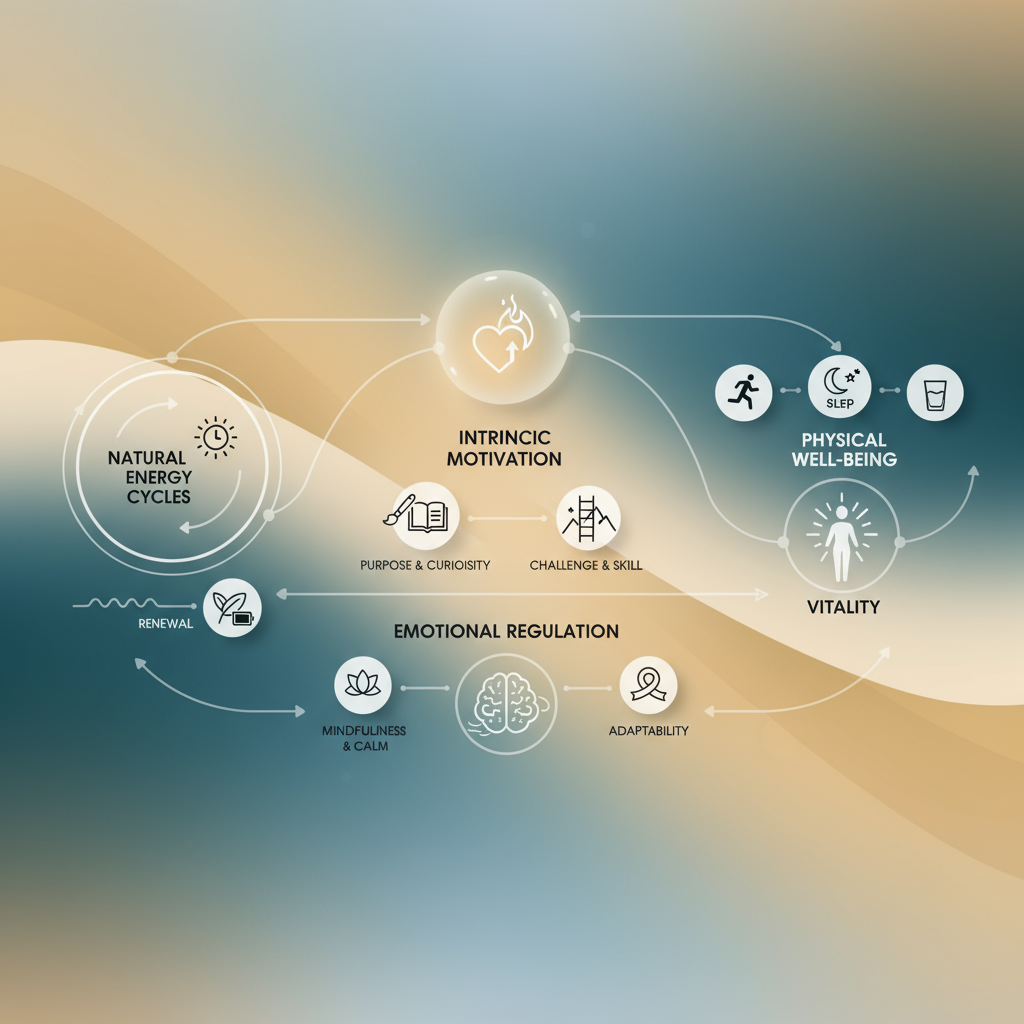
The psychology of flow teaches that sustainable focus depends on the alignment of mental energy, motivation, and task engagement. Entering and maintaining flow requires understanding your natural energy cycles and optimizing them for peak performance. Most people experience their highest cognitive alertness in the morning or after a period of rest. By scheduling demanding or creative tasks during these peak times, you allow your brain to operate at maximum efficiency, increasing the likelihood of entering a deep state of concentration.
The psychology of flow also highlights the importance of intrinsic motivation — the internal drive that comes from doing something meaningful or personally rewarding. When you work out of genuine interest or passion rather than external pressure, your focus becomes effortless and self-sustaining. This intrinsic motivation fuels curiosity and persistence, allowing you to stay engaged for longer periods without fatigue. It transforms work from an obligation into an enjoyable challenge, one that naturally sustains attention and creativity.
Sustaining flow also depends heavily on physical well-being. The psychology of flow recognizes that mental performance is deeply tied to body health. Regular exercise, proper sleep, hydration, and balanced nutrition provide the brain with the energy it needs for deep cognitive engagement. When these physical needs are neglected, attention wanes, motivation drops, and flow becomes harder to achieve. By maintaining a healthy lifestyle, you create the foundation for consistent high performance and mental clarity.
Another important element in sustaining flow is emotional regulation. Stress, anxiety, or frustration can quickly disrupt concentration. Practicing mindfulness or simple relaxation techniques can help stabilize emotions and maintain mental balance. The psychology of flow suggests that emotional stability allows smoother transitions into focus states by reducing internal resistance. When your mind is calm and your body energized, focus becomes natural, sustained, and deeply fulfilling.
Ultimately, the psychology of flow encourages a holistic approach to productivity — one that integrates energy management, intrinsic motivation, and emotional balance. When you align your body, mind, and purpose, focus no longer feels forced. Instead, it becomes a natural rhythm of effortless engagement where creativity and performance thrive together. This harmony is what sustains long-term motivation and prevents burnout, allowing you to work smarter, feel better, and achieve more with clarity and joy.
8. Conclusion – Redefining Productivity Through Flow
The psychology of flow redefines productivity as a mindful and fulfilling experience rather than a race against time. It shifts the emphasis from working harder to working with purpose, clarity, and presence. When you apply the principles of flow, Deep Work, and Productivity Psychology, you move beyond distraction-driven effort toward a state of deep immersion where performance feels effortless and meaningful. This transformation changes not only how you work but also how you think — replacing stress and overload with calm confidence and sustained engagement.
The psychology of flow emphasizes that real productivity is not about constant motion but about conscious focus. By aligning your energy, managing distractions, and nurturing intrinsic motivation, you can consistently operate in states of high concentration and creativity. Protecting your attention becomes a form of self-respect — an acknowledgment that your best work emerges from stillness and deliberate focus, not chaos or urgency. Over time, this approach cultivates a balanced rhythm between effort and recovery, allowing long-term success without burnout.
The psychology of flow also invites you to find meaning in your work. When your daily activities align with your passions and values, focus comes naturally, and fulfillment follows. This alignment transforms ordinary tasks into purposeful experiences, helping you see productivity not as pressure but as a pathway to self-expression. As you master this mindset, even challenging projects feel engaging, and achievement feels like a natural extension of your passion and curiosity.
Another powerful insight from the psychology of flow is that mastery develops through consistency, not intensity. Entering flow regularly trains your brain to access deep concentration more easily. Each session strengthens your ability to block distractions, regulate emotions, and sustain mental clarity. With time, this creates a compounding effect — your work becomes more efficient, your creativity more fluid, and your satisfaction deeper. Flow thus becomes both the process and the reward, turning effort into enjoyment and progress into fulfillment.
Ultimately, the psychology of flow teaches us that true success is not measured by how much we do, but by how deeply we engage with what we do. When you embrace flow as a lifestyle, productivity transforms into purpose, and focus becomes a natural expression of joy. By living and working in this state, you unlock your highest potential — achieving excellence with ease, creativity with calm, and success with genuine inner peace.