
Table of Contents
1. Introduction – The Power of Habit Stacking for Peak Efficiency
Habit stacking is a simple way to build strong daily routines that support focus, discipline, and success in life. It works by linking a new habit to something you already do every day, so the new action feels natural and automatic. This method is very powerful because it reduces pressure and removes confusion. Instead of forcing yourself to remember new habits, your brain follows a natural flow, which makes life easier and keeps you consistent without stress.
In the world today, distractions pull our attention from every side. Notifications, social media, work pressure, and constant information make it hard to stay focused. Many people try to become productive by planning big changes or creating complex routines, but they often fail because they start too big. Habit stacking solves this problem by starting small and growing slowly. When habits become part of your daily rhythm, your mind feels calm and your day feels more organized.
Think of your daily life like a chain of actions. You already brush your teeth, drink tea or coffee, bathe, check your phone, and perform many tasks without thinking. It uses these natural habits as anchors. For example, after your morning tea, you can spend two minutes doing deep breathing or reading one page of a book. Over time, your mind treats both actions as one like they belong together, which builds consistency without struggling.
The strength of is that it does not demand intense willpower. You do not need long planning sessions or huge lifestyle changes. You simply build on habits you already have. When you attach one small action to another, your day becomes smoother and more productive automatically. This saves time, reduces mental effort, and increases discipline, which is the foundation of long-term success.
With time, these small habits build powerful momentum. Just like a drop of water fills a bucket, tiny actions lead to big results. Whether you want to become more productive, improve physical health, stay mentally strong, or grow emotionally, makes every goal achievable step by step. You do not rush or force results. You simply move forward every day with ease and clarity.
In the end, real success is not about doing everything perfectly in one day. It is about doing the right small things every day. Habit stacking gives you a system to build success slowly, naturally, and consistently. It turns daily life into a growth process where your routines support your goals, your habits build your identity, and your progress becomes sustainable and enjoyable.
2. Understanding Habit Stacking – How Small Actions Build Big Results
Habit stacking means taking a habit that already exists in your routine and attaching a new habit right after it so your brain connects both. This technique makes new behaviors easy to follow because they do not feel like extra work. For example, after you close your laptop at the end of the day, you can write three things you achieved routines become smooth, and you build discipline without forcing yourself.
Many people struggle with building habits because they start with huge goals like waking up at 5 AM, working out for one hour, reading 50 pages, or quitting all bad habits suddenly. These big changes cause pressure, and when motivation drops, they quit. Habit stacking teaches you to begin with small actions that fit inside your real life. When you succeed with small steps, you feel confident, and slowly you add more habits without stress.
Habit stacking also uses the power of association. The brain understands patterns very easily. When you repeat two actions together daily, your brain believes they belong together. For example, after brushing your teeth, drinking a glass of water becomes natural. After sitting at your work desk, planning your top tasks becomes automatic. This reduces mental friction and makes growth simple.
Another strength of is that it saves time and energy. When you know exactly what to do next, you do not waste minutes thinking or planning. This removes confusion and supports a productive mindset. Even if your day gets busy, your small stacked habits keep you grounded and help you stay in routine. That is how you build consistency even on rushed days.
As one habit becomes effortless, you can add another. After evening tea, you journal. After journaling, you practice gratitude. After gratitude, you plan tomorrow. Slowly, these actions turn into a powerful chain that shapes your identity. You stop wishing for productivity and start living it every day through small steps that feel natural.
In the long run, changes your lifestyle. You do not depend on motivation or moods. You depend on structure and rhythm. This method trains your mind to stay disciplined, take action, and improve daily. And over weeks and months, these simple routines turn into strong habits that lead to big achievements and long-lasting personal growth.
3. The Science Behind Habit Formation and Consistency
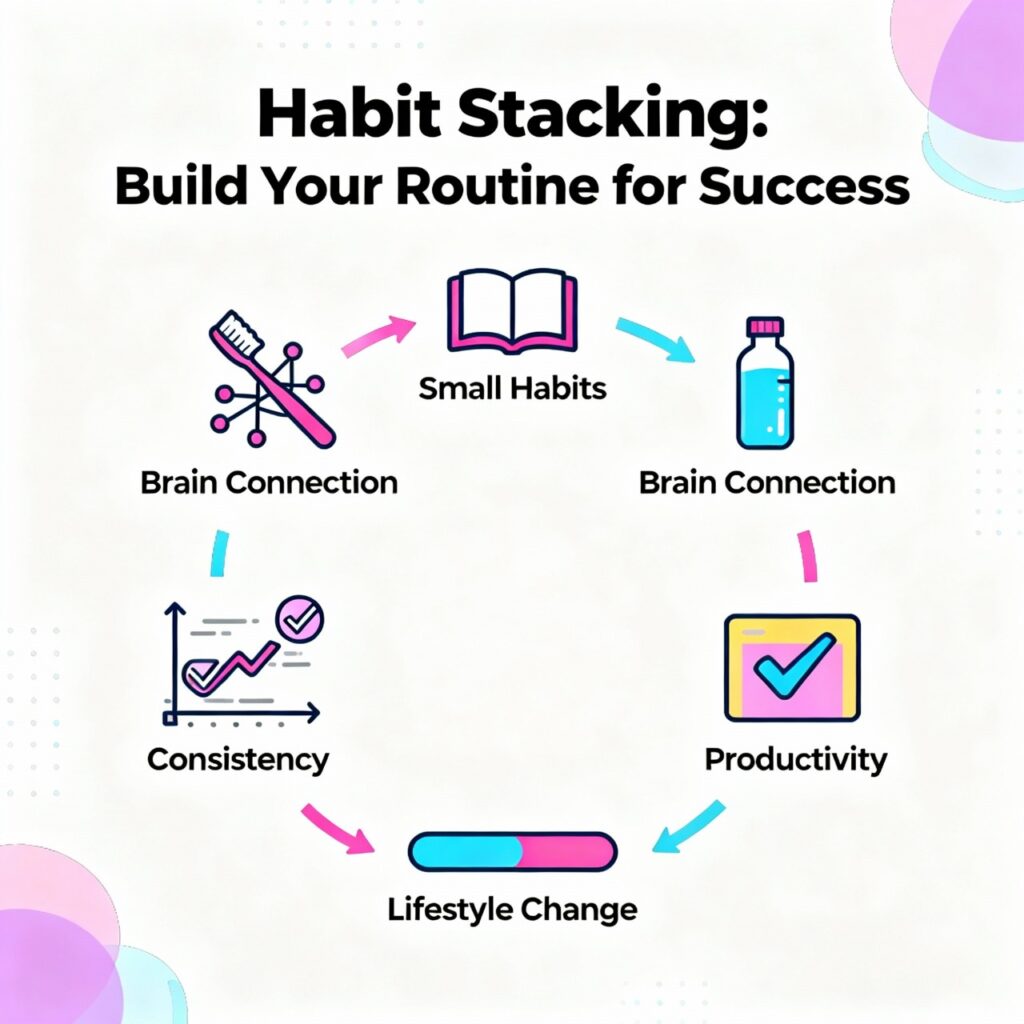
Habit stacking works deeply in the brain because it uses the natural habit formation loop: cue, routine, and reward. The cue triggers the behavior, the routine is the habit, and the reward gives a sense of completion. When this loop repeats many times, the brain saves the pattern and turns it into automatic behavior. It uses an existing cue so you do not need to search for motivation or remind yourself constantly.
For example, when you wake up and brush your teeth, that is already a habit. If you attach drinking water right after brushing, the cue becomes waking up and brushing, and the routine becomes hydrating. Slowly, the brain connects them as one chain. It builds new neural pathways by attaching new actions to old ones. This is why it becomes natural with time.
The biggest enemy of productivity is decision fatigue. When you spend energy deciding what to do next, your brain gets tired. It removes this burden. You always know what comes next, so your mind feels relaxed and clear. This simple method frees mental energy for more important work like thinking, creating, or learning.
Consistency is the heart of habit success. Even small habits become powerful when repeated daily. It supports consistency because the actions are tiny, easy, and anchored to your current routine. When habits are simple and connected, you do not skip them. Over time, your brain expects the habit and completes it naturally, which makes discipline automatic instead of forced.
Habit stacking also protects your mental health. When routines are predictable, your mind feels stable and safe. You feel more in control of your life and less overwhelmed. This calm structure gives a sense of achievement every day. Even completing a one minute habit builds self-respect and trust in yourself. Slowly, your confidence grows because your daily actions match your goals.
In the long run, trains your brain to become organized, focused, and strong. You no longer struggle to build discipline because your system does the work for you. Your habits become your strength. And when habits support your dreams, success becomes simple, peaceful, and lasting.
4. 7 Peak Efficiency Strategies to Master Habit Stacking
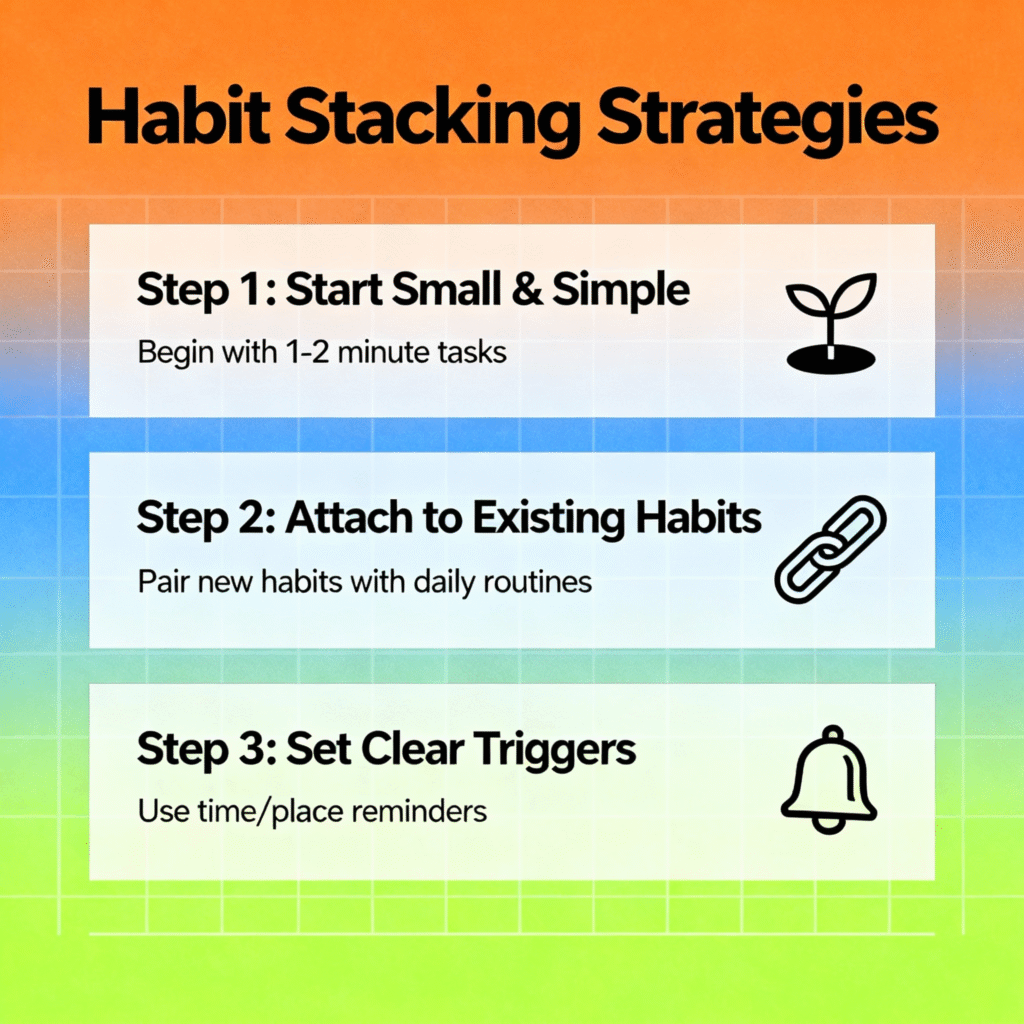
1. Start Small and Simple
Habit stacking works best when you begin tiny and build slowly. Starting with small actions removes pressure and makes it easy to stay consistent. When a habit only takes a minute or two, your brain does not resist it. For example, writing one line in a gratitude journal after making coffee feels light and simple, yet it creates a powerful routine over time. Small wins build confidence and help you believe you can do more, so you stay on track without feeling overwhelmed.
Habit stacking also becomes stronger when you avoid forcing big changes too fast. Many people quit habits because they try to do too much at once. Instead, when you link a small action with something you already do daily, your brain naturally accepts it. After that tiny step becomes automatic, you can add another small habit to grow your routine. This slow and steady approach creates lasting habits and long-term productivity without stress.
2. Attach New Habits to Existing Ones
Habit stacking relies on using your current habits as anchors. You already have routines like brushing your teeth, having breakfast, or sitting at your work desk. When you attach a small habit to these actions, it becomes easier to remember and follow through. For example, stretching for one minute after brushing your teeth is simple and smooth. You do not need reminders because your existing habit becomes the cue.
Habit stacking becomes powerful when you choose habits that fit naturally together. If your goal is to become more mindful, you can sit and breathe deeply for a minute right after making your morning tea. If you want to learn more daily, read one page after lunch. When habits flow naturally, you avoid friction and create routines that feel effortless, helping you stay productive without force.
3. Set Clear Triggers
Habit stacking succeeds when your triggers are clear and specific. If you say you will meditate “sometime today,” your brain may delay or forget. But when you say, “After I shower, I will meditate for five minutes,” it becomes a clear and automatic signal. This reduces confusion and saves mental energy by telling your brain exactly when to act.
Habit stacking also improves decision making because you remove uncertainty. When you already know what to do and when to do it, you avoid procrastination and excuse-making. Clear triggers turn your habits into routines that run on autopilot, making your day structured and smooth. With time, you feel more in control and productive because your actions follow a planned rhythm.
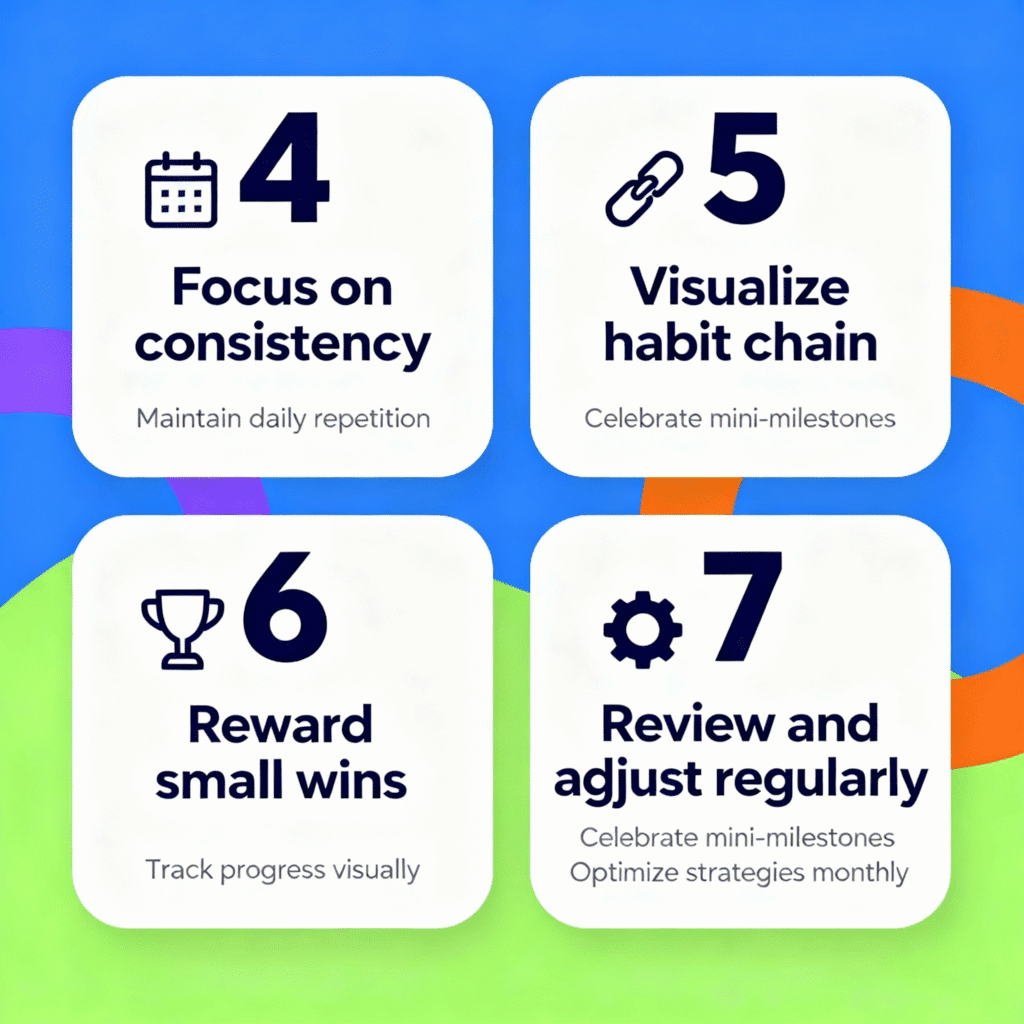
4. Focus on Consistency, Not Perfection
Habit stacking builds strong habits through repetition, not perfection. Missing a day does not mean you failed. The goal is to return quickly and stay consistent. When you accept small mistakes and keep going, your habits become part of your identity, not just something on your checklist. This mindset protects motivation and builds self-discipline.
Habit stacking teaches you that progress is more important than perfect streaks. Even if you complete a habit for only one minute on a busy day, it still counts. Showing up again and again strengthens your belief in yourself and trains your brain to stay disciplined. Over time, consistent effort creates solid routines and long-term success.
5. Visualize Your Habit Chain
Habit stacking becomes more motivating when you track and visualize your routines. Writing your habits in a notebook, using a habit app, or creating a habit calendar makes your progress visible. Seeing completed days gives a sense of achievement and encourages you to continue. Visual reminders keep your goals in focus and stop your habits from fading away.
Habit stacking also becomes more enjoyable when you can see your growth. When you check your progress every evening or every week, you can notice how far you have come. This builds confidence and makes you feel proud of your efforts. A visual habit chain is like proof that you are improving daily, and that feeling pushes you to stay consistent.
6. Reward Small Wins
Habit stacking becomes stronger when you add rewards. Celebrating small wins releases positive feelings in your brain and builds motivation. It can be something simple like smiling and saying “Good job,” enjoying your favorite tea after completing your habit, or taking a short mindful break. Small rewards encourage your mind to repeat the habit again next time.
Habit stacking uses rewards to connect effort with satisfaction. When your brain sees that completing a habit results in a pleasant feeling, it starts craving that behavior. Over time, the habit itself becomes enjoyable, and you no longer need big rewards. You stay motivated naturally, and habits become part of your lifestyle rather than forced tasks.
7. Review and Adjust Regularly
Habit stacking becomes more effective when you review your routines. Over weeks, your goals, schedule, and energy may change, so reviewing helps you stay aligned. Sometimes a habit may need adjustment, or a new habit may feel more useful. Checking your stacks every few weeks makes sure your routine stays meaningful and efficient.
Habit stacking gives you flexibility to grow. When you adjust habits based on your needs, they feel fresh and exciting instead of boring or forced. You can remove habits that do not help, strengthen ones that matter, or add new habits to level up. This regular review keeps your routines strong and supports long-term personal and professional improvement.
5. How Habit Stacking Builds Peak Efficiency in Daily Life
Habit stacking helps remove unnecessary thinking from your routine. When you already know what comes next, your mind feels lighter and more focused. You do not wake up feeling confused or overwhelmed about your tasks. Instead, your habits guide you step by step, which saves energy and helps you stay calm. This makes your day smoother, because you are not wasting mental power trying to decide your next move.
With habit stacking, time management becomes easier because each action naturally connects to another. When one task triggers the next, you avoid distractions and reduce wasted minutes. For example, waking up, drinking water, stretching for a minute, and then checking your goals creates a steady rhythm. These small steps take very little effort but build strong morning momentum that sets the tone for the rest of the day.
Habit stacking also strengthens your ability to focus. Most distractions happen when the brain has idle space or no clear direction. But when your habits are linked, your mind stays anchored. You are less likely to check your phone, overthink, or waste time. This gives your brain more clarity, making it easier to complete important tasks and stay consistent with your goals.
Emotionally, habit stacking creates stability. When you follow a familiar routine, your mind feels safe and balanced. Small habits like deep breathing, gratitude journaling, or stretching can reduce stress and help you stay positive throughout the day. Over time, these practices build emotional strength and make you more resilient when life feels busy or unpredictable.
Another powerful benefit is that discipline becomes effortless. Instead of forcing yourself to work, your habits carry you forward. Even if you feel tired or unmotivated, the routine still pulls you into productive action. This is where habit stacking truly shines — you rely on structure instead of mood. Success becomes steady and automatic, not dependent on motivation.
In the long run, habit stacking creates a lifestyle where small actions bring big results. You stay organized, save time, and feel in control of your day. The more you follow your pattern, the more natural it becomes. Your productivity rises not because you do more, but because you do things with clarity, flow, and purpose.
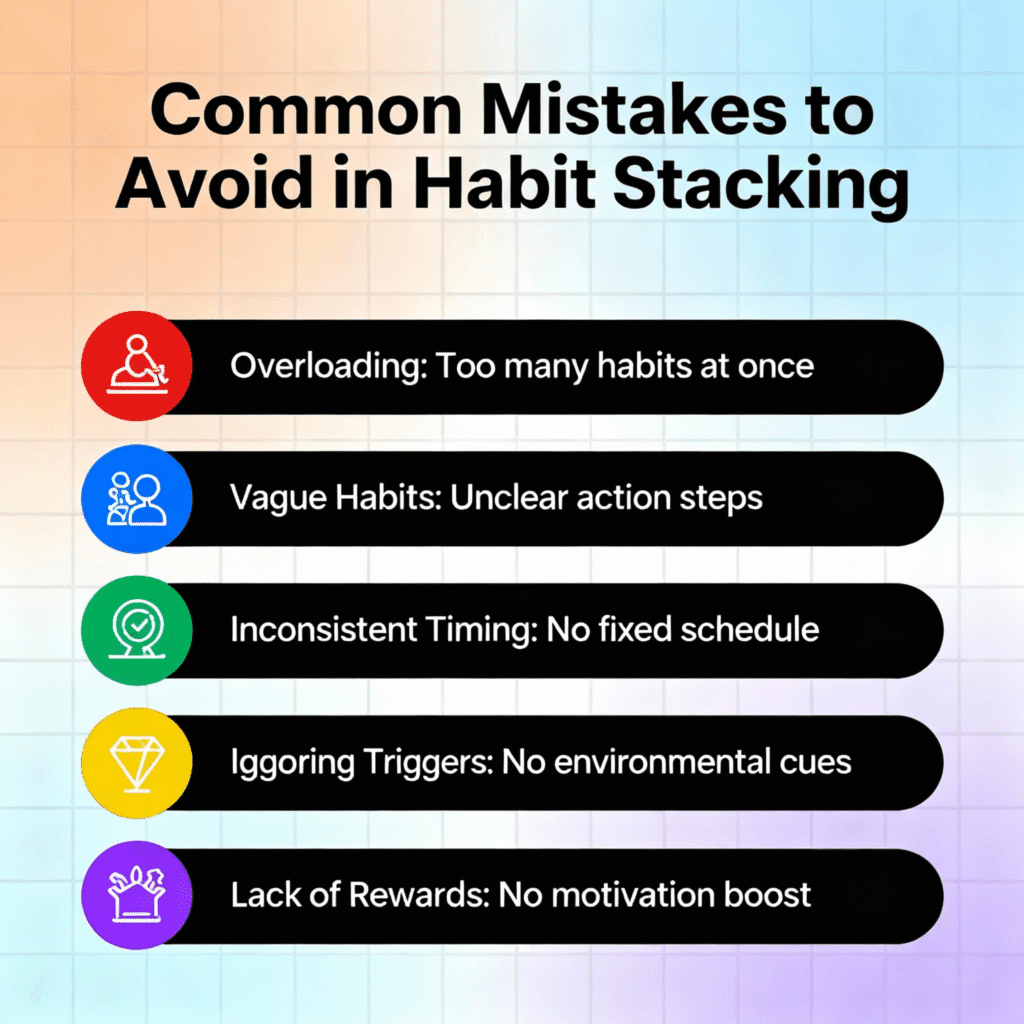
6. Common Mistakes to Avoid in Habit Stacking
One common mistake people make is trying to add too many habits at once. When you start big, you feel excited at first, but it quickly becomes stressful. The brain responds better to slow, steady changes. Begin with one simple habit, master it, and then add the next. This small-step approach builds strong, lasting routines without pressure.
Another mistake is choosing triggers that are not solid or regular. Habit stacking only works when the cue already exists in your daily life. For example, brushing your teeth, eating breakfast, or sitting at your desk are strong triggers. But if you attach a new habit to something inconsistent, like “whenever I feel like it,” the routine will break easily. The trigger must be reliable for the stack to succeed.
Tracking is also important, and many people ignore it. Without tracking, it’s easy to forget your habits or lose motivation. A simple notebook, calendar, or reminder app helps your brain stay aware of your progress. When you see your streak growing, you feel more motivated to continue. Tracking turns invisible effort into visible success.
Some people expect fast results and get disappointed. Habit stacking is not a shortcut — it is a slow, powerful building process. Every repetition strengthens the behavior in your brain. Instead of rushing, trust the process. Even if the progress feels small, it compounds with time. Patience creates lasting habits, and lasting habits create long-term success.
Another mistake is choosing habits that don’t match your lifestyle. If a habit feels forced or unnatural, your mind will resist. Your routine should feel comfortable and realistic. Forget “perfect” habits — choose what fits your energy, schedule, and personality. When habits feel natural, they stay longer and work better.
Perfection thinking is also a habit-killer. Missing one day does not mean failure. What matters is returning the next day. Habit stacking gives you structure, but flexibility keeps it alive. Life is not perfect — habits do not need to be either. What matters most is consistency over time, not strict perfection.
7. Conclusion – Building an Effortless System for Success
Habit stacking is a lifestyle tool that helps you grow without stress or pressure. Instead of forcing big changes, you build success through small actions that fit into your day naturally. Over time, these small actions create big transformation. It is a gentle and steady way to improve focus, productivity, and emotional strength.
This method teaches you that progress does not come from sudden motivation. It comes from consistent habits that support your goals. When you link new habits to daily routines, your life gains structure and direction. You begin your day focused, move through tasks with clarity, and end feeling satisfied with your actions.
Habit stacking also helps you stay mentally calm. Routine reduces stress and gives your mind a sense of control. You no longer feel overwhelmed by tasks because they are broken into small steps. Your brain enjoys patterns, so once a habit chain forms, you feel balanced and confident following it each day.
This approach builds discipline naturally. You do not fight with yourself or rely on willpower. Your routine becomes automatic, and your habits guide you forward. With time, you become someone who follows through, stays committed, and keeps growing — even when the motivation is low.
Another powerful thing about habit stacking is flexibility. As your goals change, you can adjust and grow your routine. You add habits that support your new dreams and remove ones that no longer fit. This keeps your daily system fresh, strong, and aligned with your purpose.
Success becomes easier not because life changes, but because your system changes. Habit stacking helps you build a life where progress happens naturally. One small step at a time, your habits become your strength, your routine becomes your support, and your growth becomes unstoppable.