

Table of Contents
1. Introduction – Understanding Brain Fog and Its Impact on Daily Life
Brain fog is a term many people use casually, yet very few truly understand how deeply it can affect everyday life. It does not describe a single medical condition. Instead, it refers to a group of cognitive symptoms that make thinking feel slow, unclear, and mentally exhausting. People experiencing it often say their mind feels cloudy, heavy, or disconnected. Even simple daily tasks begin to feel mentally demanding and require more effort than usual.
Brain fog affects how the brain processes information and responds to everyday situations. Concentration becomes weaker, thoughts feel scattered, and mental sharpness drops noticeably. Multitasking becomes difficult, and focusing for long periods feels almost impossible. The brain struggles to stay alert, causing mental tiredness to build throughout the day. This constant mental strain can make a person feel exhausted even without doing heavy work.
Brain fog can strongly interfere with work performance and academic learning. Productivity decreases because the brain cannot stay engaged or focused for long. Learning new information becomes harder, memory feels unreliable, and problem solving slows down. Tasks that once felt easy now require repeated effort. This often leads to stress, self doubt, and fear of underperforming, especially for people who were previously confident in their mental abilities.
Brain fog also impacts emotional balance and personal relationships. When the mind feels unclear, patience becomes low and emotional reactions feel stronger than normal. Misunderstandings increase because communication feels more difficult. People may withdraw socially because conversations feel mentally tiring. Over time, this emotional strain can affect mood, confidence, and the quality of relationships.
Brain fog is closely connected to mental clarity and overall brain health. A clear mind supports better decision making, emotional regulation, creativity, and motivation. When clarity is missing, mental wellness suffers deeply. Understanding It is the first step toward restoring focus, balance, and long term cognitive health. Recognizing its impact helps individuals take action before it affects quality of life further.
Brain fog is closely linked to mental clarity and overall brain health. A clear mind supports better decisions, emotional regulation, creativity, and motivation. When clarity is missing, mental wellness suffers deeply. Understanding It is the first step toward restoring focus, balance, and long term cognitive health.
2. What Brain Fog Really Feels Like
Brain fog feels different for everyone, but the core experience is mental sluggishness and reduced clarity throughout the day. Many people struggle to focus during conversations or lose track of what they were saying mid sentence. Thoughts feel slower than usual, and recalling simple information takes extra effort. Even when trying to concentrate, the mind feels distracted and unfocused. The brain often feels tired and heavy even when the body feels physically rested.
Brain fog often shows up as frequent forgetfulness and weak concentration. You may forget names, dates, tasks, or simple instructions more often than before. Reading the same paragraph again and again becomes common because information does not register easily. Attention drifts quickly, making it hard to complete tasks without breaks. Planning, organizing, or thinking ahead feels mentally exhausting and overwhelming.
Brain fog includes symptoms such as confusion, low motivation, slow thinking, and constant mental fatigue. Unlike normal tiredness, proper sleep or rest does not always solve the problem. Even after a full night of sleep, the brain may still feel dull and unrefreshed. This creates frustration because the mind does not feel sharp despite resting. Many people begin to worry about their mental health due to this ongoing foggy feeling.
Brain fog can also reduce mental speed and reaction time in daily life. Simple decisions take longer, and processing information feels delayed. Responding during conversations or completing mental tasks requires more effort than usual. The brain struggles to keep up with normal demands, creating a feeling of being mentally behind. This often leads to self doubt and hesitation in everyday activities.
Brain fog strongly affects emotional processing and mood stability. When thinking feels unclear, emotions become harder to control and regulate. Small problems start to feel bigger, patience becomes lower, and anxiety increases easily. Emotional reactions may feel stronger and more intense than necessary. This emotional imbalance adds to mental exhaustion and stress.
Brain fog can slowly lower confidence and self trust over time. People may begin to question their intelligence, abilities, or memory. Fear of making mistakes increases, leading to avoidance and hesitation. This reduces motivation and willingness to take action. Over time, self esteem may drop as mental clarity continues to feel unreliable.
If brain fog continues for long periods, emotional exhaustion may develop. People may blame themselves or think they are becoming lazy or incapable. In reality, it is a signal that the mind needs care, balance, and recovery. Recognizing how it truly feels is an important step toward mental clarity and long term cognitive health.
3. How Brain Fog Affects Mental Clarity and Cognitive Health
Brain fog directly interferes with mental clarity by reducing the brain’s ability to process information efficiently. Mental clarity allows the mind to think clearly, stay focused, and make sound decisions. When it is present, thoughts feel scattered and disorganized. Attention shifts easily, focus breaks quickly, and mental effort increases even for simple tasks. This makes everyday thinking feel slow and frustrating.
Brain fog also affects cognitive health, which includes memory, learning ability, reasoning skills, and emotional control. Over time, prolonged mental fog reduces neural efficiency, meaning the brain struggles to communicate smoothly within itself. Learning new information becomes harder, memory recall feels weak, and decision making slows down. While this does not cause permanent damage, it signals that the brain is under constant mental strain.
Brain fog weakens problem solving and logical thinking. Tasks that require planning, analysis, or creativity feel mentally heavy. People may avoid mentally demanding work because it feels exhausting. This avoidance can slowly reduce confidence and motivation. The brain starts operating below its true potential, not because of lack of intelligence, but because clarity is compromised.
Brain fog can affect professional growth and academic performance significantly. Work efficiency drops, mistakes increase, and deadlines feel overwhelming. Students may struggle to understand concepts they once found easy. Over time, people begin doubting their intelligence or abilities, even though the real issue is reduced mental clarity, not lack of capability.
Brain fog impacts long term cognitive health when ignored. Restoring clarity requires addressing both mental and physical factors that influence brain function. Proper rest, emotional balance, nutrition, and mental recovery allow the brain to regain efficiency. When mental clarity returns, confidence, learning capacity, and cognitive strength naturally improve.

4. The Mind–Body Connection Behind Brain Fog
Brain fog rarely exists without a cause because the brain and body function as a single connected system. Every physical habit, emotional response, and lifestyle choice directly affects brain performance. When the body experiences imbalance, the brain reacts by slowing down mental processes. This slowdown is not failure, but a protective response to overload and exhaustion.
Brain fog often develops when the nervous system remains in a constant state of stress for long periods. Chronic stress keeps the body in survival mode, releasing stress hormones like cortisol repeatedly. High cortisol levels interfere with memory formation, focus, and emotional regulation. Over time, this creates mental fatigue, confusion, and difficulty thinking clearly.
Brain fog is closely linked to sleep quality and physical recovery. Sleep is essential for clearing toxins from the brain and restoring neural pathways. Poor sleep disrupts this recovery process, leaving the brain feeling heavy and unfocused. Even if sleep duration is long, poor sleep quality can prevent full mental restoration.
Brain fog is also influenced by nutrition and physical health. The brain requires steady glucose levels, essential fats, vitamins, and hydration to function properly. Poor diet, dehydration, or irregular eating patterns deprive the brain of fuel. This lack of nourishment directly reduces focus, memory, and mental energy.
Brain fog should be viewed as meaningful feedback rather than a personal weakness. It signals that the mind and body need balance, rest, and support. When stress levels decrease, sleep improves, emotions are processed, and nutrition becomes balanced, mental clarity begins to return. The brain slowly regains focus, sharpness, and cognitive strength.
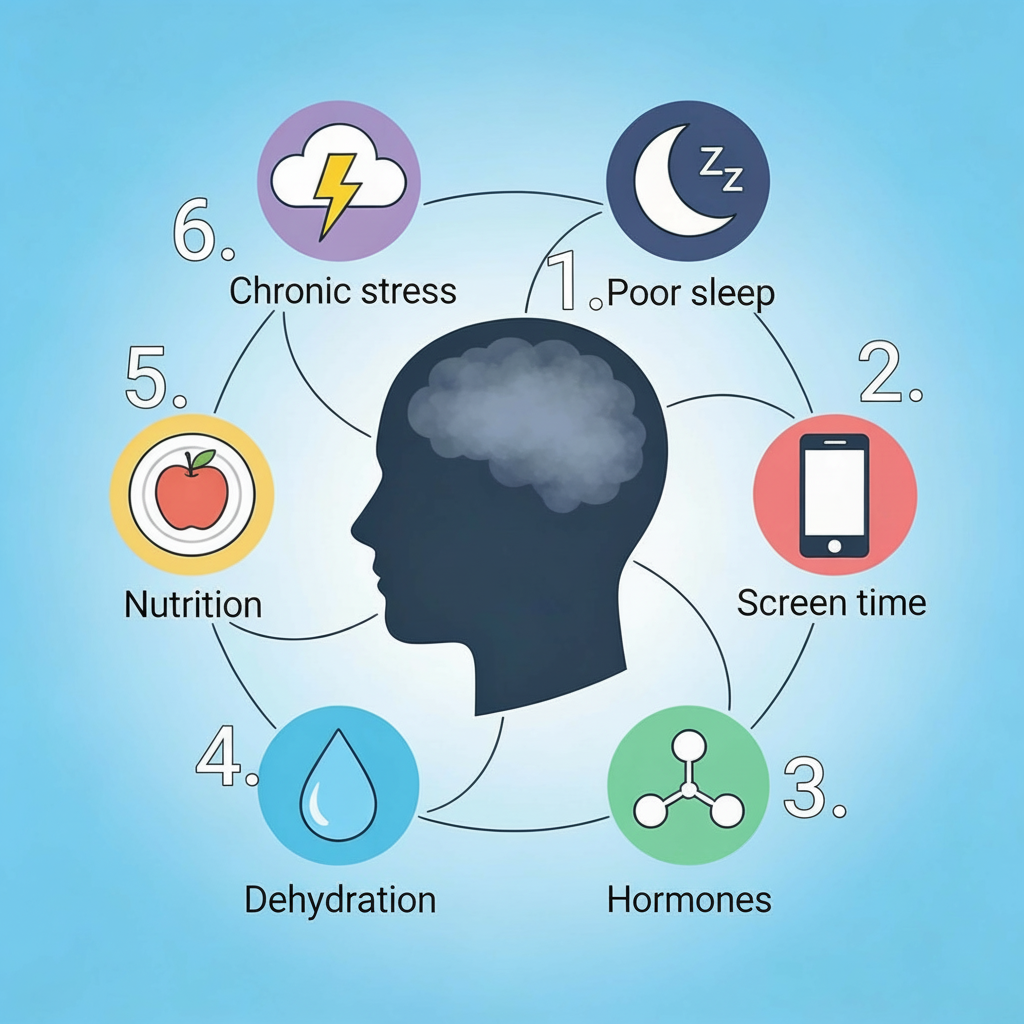
5. 9 Hidden Causes of Brain Fog
Cause 1: Chronic Stress and Mental Overload
Brain fog often begins when stress becomes constant and unrelieved. Ongoing pressure keeps the brain stuck in survival mode, where the focus shifts from thinking clearly to simply coping. This state reduces creativity, memory, and decision-making ability. Over time, the mind feels tired even before the day begins.
When stress hormones like cortisol remain high for long periods, they interfere with how the brain processes information. Attention span shortens, emotional reactions intensify, and mental clarity fades. The brain prioritizes threat response over higher thinking, which makes concentration and learning difficult.
Mental overload from work, studies, or personal responsibilities further drains cognitive energy. Too many tasks, deadlines, and expectations overwhelm the brain’s capacity. Without proper mental rest, confusion and fatigue slowly become a daily experience.
Cause 2: Poor Sleep Quality and Irregular Rest
Brain fog commonly appears when sleep quality is poor or sleep routines are inconsistent. Sleep is essential for repairing brain cells, clearing waste, and strengthening memory pathways. Without deep, restful sleep, the brain cannot fully recover from daily mental demands.
Even if the number of sleep hours seems sufficient, irregular sleep schedules can disrupt the brain’s natural rhythm. Late nights, screen exposure before bed, or frequent sleep interruptions prevent deep restorative sleep. As a result, the mind wakes up feeling heavy and unfocused.
Over time, poor sleep reduces mental alertness, slows thinking, and weakens emotional control. This creates a cycle where fatigue increases stress, and stress further damages sleep quality. Breaking this cycle is crucial for restoring mental clarity.
Cause 3: Nutritional Deficiencies
Brain fog can develop when the brain does not receive enough essential nutrients. The brain requires vitamins, minerals, healthy fats, and proteins to maintain focus, memory, and energy. A lack of proper nutrition weakens neural communication.
Poor diet choices, skipped meals, or excessive processed foods can cause unstable blood sugar levels. This instability leads to sudden drops in energy, difficulty concentrating, and mental sluggishness. Over time, thinking becomes slower and less sharp.
Nutritional deficiencies also affect mood and motivation. When the brain lacks fuel, emotional balance suffers along with cognitive function. Supporting brain health through balanced nutrition is essential for sustained mental clarity.
Cause 4: Excessive Screen Time and Digital Overstimulation
Brain fog increases with constant exposure to digital screens and online content throughout the day. Continuous scrolling, notifications, bright screens, and rapid information overload overstimulate the brain’s attention system. The mind stays alert but never relaxed, which prevents deep thinking and proper mental recovery.
Excessive screen use shortens focus span and weakens the ability to concentrate on a single task for long. The brain becomes used to quick rewards and fast stimulation, making slow tasks like reading, studying, or planning feel difficult. This constant stimulation trains the mind to seek distraction instead of depth.
Over time, digital overstimulation leads to mental fatigue and reduced clarity. The brain feels busy, noisy, and overwhelmed but not productive or sharp. Reducing screen exposure allows the nervous system to calm down and helps the mind reset, improving focus and clarity.
Cause 5: Dehydration
Brain fog can occur even with mild dehydration that many people do not notice. The brain depends heavily on water to maintain blood flow, oxygen delivery, and proper nerve signaling. When hydration drops slightly, mental performance can decline faster than physical energy.
Dehydration reduces concentration, slows reaction time, and increases feelings of tiredness and heaviness in the head. Many people confuse dehydration-related brain fog with stress, anxiety, or lack of sleep. As a result, the real cause often goes untreated for long periods.
Over time, chronic low hydration can make mental fog feel constant and normal. The brain struggles to maintain alertness, clarity, and mental endurance. Drinking enough water regularly supports brain function and improves focus, memory, and mental energy.
Cause 6: Hormonal Imbalance
Brain fog may be influenced by hormonal changes that affect brain chemistry and energy levels. Hormones play a major role in mood regulation, memory, focus, and emotional stability. When hormones fluctuate, the brain often struggles to function smoothly.
Periods of physical stress, emotional pressure, lifestyle changes, or poor sleep can disrupt hormonal balance. These disruptions may cause difficulty concentrating, forgetfulness, low motivation, and emotional sensitivity. Mental clarity often drops without any obvious reason.
When hormones are balanced, mental clarity improves naturally. The brain feels more stable, focused, and emotionally calm. Supporting hormonal health through proper rest, nutrition, stress management, and routine helps reduce brain fog over time.
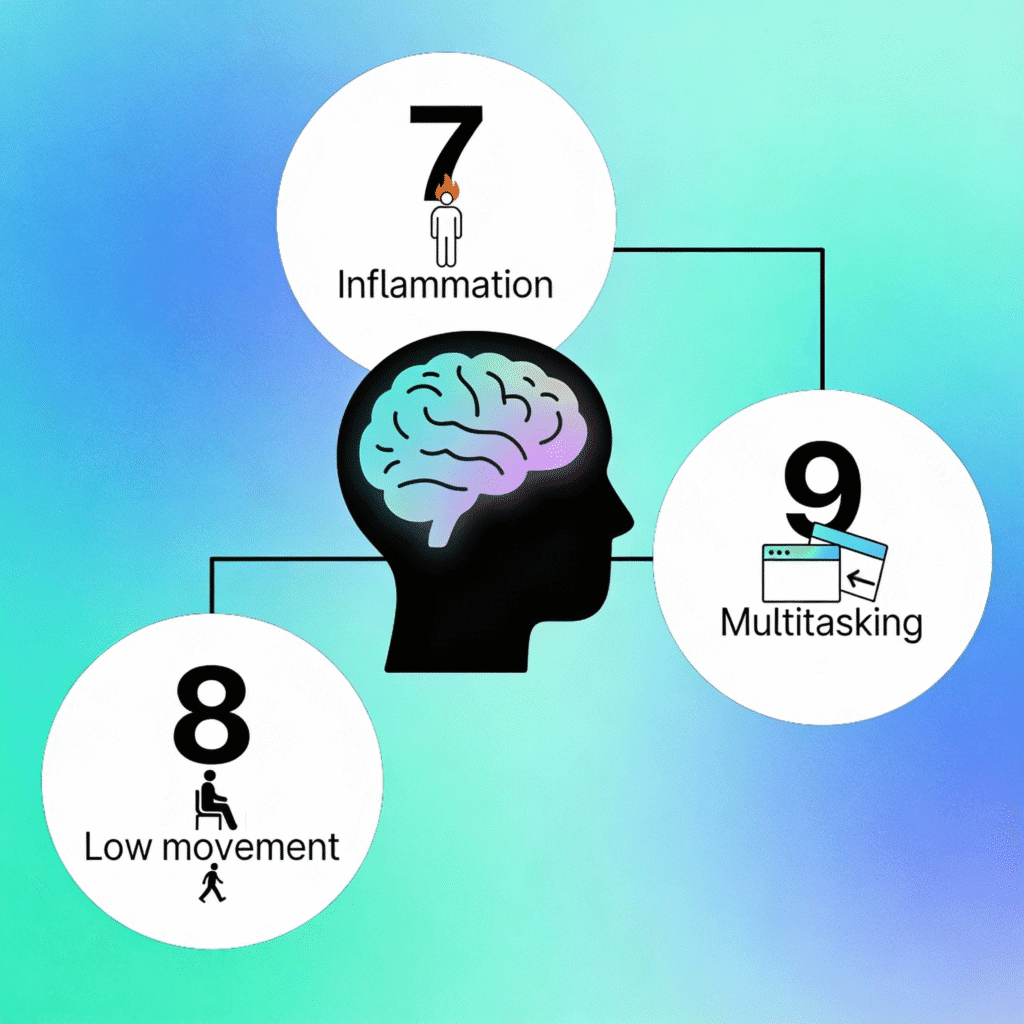
Cause 7: Inflammation in the Body
Brain fog is often linked to chronic inflammation within the body. Inflammation interferes with communication between brain cells, slowing down thinking and memory processes. This makes the mind feel heavy, dull, and less responsive.
When inflammation continues for long periods, the brain struggles to produce energy efficiently. Mental fatigue increases, attention span shortens, and memory becomes unreliable. Emotional balance may also suffer, leading to irritability and low mood.
Reducing inflammation supports better brain function and mental clarity. When the body becomes calmer internally, brain communication improves. A healthier internal environment allows the mind to regain focus, energy, and sharpness.
Cause 8: Lack of Physical Movement
Brain fog can worsen when the body stays inactive for long periods of time. Physical movement increases blood flow to the brain, delivering oxygen and nutrients needed for clear thinking. Without movement, the brain receives less stimulation and energy.
A sedentary lifestyle limits circulation and reduces mental alertness. Sitting for long hours slows brain activity and lowers mood and motivation. Over time, this lack of movement can make the mind feel sluggish and unfocused.
Regular movement supports cognitive sharpness and emotional balance. Even simple activities like walking or stretching help wake up the brain. Movement signals the brain to become more alert, improving clarity and focus.
Cause 9: Constant Multitasking and Mental Fragmentation
Brain fog develops when the mind is forced to switch between tasks repeatedly throughout the day. Multitasking breaks attention into small fragments, preventing deep focus and efficient thinking. The brain never fully settles on one task.
Each task switch consumes mental energy and increases cognitive fatigue. Over time, memory retention weakens and mental clarity decreases. The brain feels exhausted even without doing heavy or meaningful work.
Reducing multitasking allows the brain to focus deeply and recover mental strength. Sustained attention improves thinking speed, memory, and decision-making. A focused mind feels calmer, clearer, and more productive.
6. Recognizing Triggers and Patterns
Brain fog becomes much easier to manage when you start recognizing your personal triggers and repeating patterns. Brain fog does not appear randomly; it often results from a combination of lifestyle habits, stress levels, and environmental factors. When these patterns remain unnoticed, the brain struggles to function efficiently, leaving you feeling confused, mentally sluggish, and emotionally drained. Developing awareness of these triggers allows you to take control instead of feeling at the mercy of your cognitive fog.
Brain fog often shows up at specific times of the day, depending on your body’s natural rhythms and energy cycles. Some people feel mentally dull in the morning, while others experience heavier fog in the afternoon or evening. These fluctuations can be linked to sleep quality, nutrition, hydration, workload, or even excessive screen exposure. By observing when mental clarity dips, you can identify which habits or conditions your brain is sensitive to and take preventive action to maintain focus throughout the day.
Brain fog can also be triggered by emotional stress, anxiety, and mental pressure. Situations such as looming deadlines, overthinking, unresolved conflicts, or emotional tension overload the brain’s processing capacity. When the nervous system is overstimulated, cognitive function slows, memory weakens, and decision-making becomes difficult. Developing emotional awareness helps you recognize these stress patterns early, allowing for timely interventions like mindfulness, breaks, or problem-solving strategies to prevent mental fatigue from worsening.
Brain fog patterns become much clearer through systematic journaling and self-observation. Keeping track of mental energy levels, focus, mood, sleep patterns, diet, and daily activities provides valuable insights into how different factors affect your cognitive clarity. Over time, recurring trends and triggers emerge, revealing which habits contribute to fog and which support mental sharpness. This practice empowers you to create targeted strategies for improvement instead of relying on guesswork.
Brain fog may also be influenced by physical habits that are often overlooked. Skipping meals, consuming low-nutrition foods, staying dehydrated, sitting for long periods, or avoiding movement can all impact the brain’s efficiency. Even minor imbalances in hydration, nutrition, or circulation can cause significant cognitive slowdowns. Recognizing these physical contributors helps prevent fog from becoming chronic and reinforces the importance of daily routines that support overall brain health.
Brain fog becomes more manageable once triggers are identified and understood. Rather than reacting with frustration or self-criticism, proactive changes can be implemented to minimize its occurrence. Adjusting sleep schedules, improving nutrition, incorporating movement, managing stress, and setting boundaries around screen use can all help the brain function optimally. Awareness of triggers becomes a cornerstone for long-term mental clarity, allowing you to regain control, improve productivity, and maintain emotional and cognitive balance consistently.
7. Proven Ways to Restore Mental Clarity
Brain fog can be significantly reduced through consistent, practical strategies that naturally support brain function and mental clarity. One of the most effective ways is to prioritize high-quality sleep. Sleep allows the brain to repair neural pathways, consolidate memories, and remove toxins that accumulate during the day. Establishing regular sleep schedules, reducing late-night screen exposure, and creating a calming bedtime routine can dramatically improve focus, attention, and cognitive performance the next day.
Brain fog responds strongly to effective stress management techniques. Chronic stress floods the brain with cortisol, impairing memory and decision-making. Practices such as mindfulness meditation, deep breathing exercises, yoga, or progressive muscle relaxation help calm the nervous system, reduce anxiety, and improve concentration. By incorporating these practices into daily life, the mind becomes more resilient, alert, and able to process information efficiently.
Brain fog improves when nutrition and hydration are optimized. Consuming a balanced diet rich in whole foods, omega-3 fatty acids, proteins, and antioxidants supports neurotransmitter function and brain energy. Staying hydrated is equally critical, as even mild dehydration can impair concentration and slow cognitive processes. Meal planning, mindful eating, and avoiding processed foods or excess sugar contribute to sustained mental clarity and energy.
Brain fog can also be alleviated by limiting excessive screen time and reducing digital overstimulation. Constant exposure to notifications, social media, and multitasking overtaxes the brain’s attention system, leading to mental fatigue. Taking regular breaks from devices, scheduling digital detox periods, and focusing on one task at a time allows the brain to rest and recover. Over time, this strengthens the ability to concentrate deeply and think clearly.
Physical movement is another essential factor in combating brain fog. Regular exercise increases blood flow, delivers oxygen and nutrients to the brain, and releases endorphins that boost mood and cognitive function. Even light activities like walking, stretching, or short bursts of activity between tasks can refresh the mind and reduce mental heaviness. Combining movement with mindful practices further enhances mental clarity and emotional stability.
Brain fog can also be reduced through cognitive and reflective practices. Journaling thoughts, tracking mental energy, setting clear priorities, and breaking tasks into manageable steps improve focus and prevent overwhelm. Engaging in mentally stimulating activities such as reading, puzzles, or creative projects strengthens neural connections and sharpens attention. Over time, these habits help the brain operate more efficiently, restore clarity, and maintain long-term cognitive health.
8. Daily Habits That Support Cognitive Health
Brain fog prevention depends on daily habits that support long-term cognitive health. Consistent routines reduce mental load and improve focus, helping the brain operate more efficiently. Establishing structured daily schedules for work, meals, and rest trains the mind to stay alert and reduces unnecessary mental strain. Over time, these routines build a strong foundation for clarity and sustained cognitive performance.
Brain fog fades when the brain is treated with patience rather than pressure. Trying to force focus during moments of mental fatigue often worsens the fog. Instead, pacing tasks, taking intentional pauses, and allowing the brain to reset naturally improve attention span and mental energy. Patience also encourages self-compassion, reducing frustration and mental tension.
Structured breaks prevent burnout and maintain high levels of cognitive function. Short walks, stretching, or simple breathing exercises help the brain recharge, improving memory and problem-solving abilities. Incorporating mini-breaks between tasks also prevents mental fatigue from accumulating, keeping the mind sharp throughout the day.
Mindfulness and meditation promote emotional balance and sharpen mental clarity. By focusing on the present moment, the mind becomes less distracted by racing thoughts or stressors. Regular mindfulness practice reduces anxiety, strengthens attention, and improves decision-making, supporting both mental and emotional wellness.
Balanced nutrition and proper hydration play a vital role in sustaining cognitive health. Whole foods, lean proteins, healthy fats, and plenty of water fuel the brain efficiently. Avoiding excessive sugar, caffeine, or processed foods prevents energy crashes and supports sustained mental performance. Proper nutrition also stabilizes mood, further reducing brain fog.
Physical activity enhances oxygen flow to the brain, improves blood circulation, and stimulates neural activity. Even light exercises, like walking, yoga, or stretching, can reduce mental fatigue and increase alertness. Combining movement with other healthy habits creates a holistic routine that strengthens cognitive clarity and overall brain health.

9. Conclusion
Brain fog is not a permanent state, nor is it a personal failure. It is an important signal that the mind and body need balance, rest, and intentional care. Recognizing the underlying causes—such as chronic stress, poor sleep, inadequate nutrition, hormonal changes, or lifestyle factors—allows you to address them effectively and restore cognitive clarity over time. Understanding brain fog as a symptom rather than a flaw empowers you to take proactive steps toward improvement.
Brain fog recovery is a gradual process that rewards consistency, patience, and self-awareness. Rapid solutions rarely work; sustainable improvement comes from small, repeated actions that nurture mental health. By practicing mindfulness, journaling mental energy levels, following structured routines, and incorporating adequate rest, the brain gradually strengthens its focus, memory, and processing ability. Each step toward consistency compounds, making clarity easier to maintain long term.
Supporting cognitive health strengthens focus, emotional stability, and overall well-being. A clear mind improves problem-solving, creativity, and decision-making while reducing stress, anxiety, and frustration. Cognitive clarity also enhances personal and professional performance, allowing individuals to feel more competent, confident, and capable. Mental clarity impacts not just thinking, but motivation, emotional resilience, and life satisfaction.
Mental wellness also involves listening to your mind and respecting its signals. Recognizing fatigue, confusion, or reduced concentration as indicators that the brain needs care is crucial. Adjusting your daily habits, workload, and self-care routines in response to these signals prevents prolonged cognitive strain and promotes a more balanced, productive lifestyle.
At MindQuora, mental wellness emphasizes creating a lifestyle that promotes long-term clarity, balance, and cognitive resilience. Incorporating proper sleep, nutrition, hydration, physical activity, and time away from screens ensures that the brain receives the resources it needs to function optimally. Combining these habits with stress management and emotional self-awareness strengthens mental performance and emotional well-being simultaneously.
Finally, reclaiming mental clarity is an ongoing journey rather than a one-time fix. Developing consistent routines, practicing mindfulness, supporting physical and emotional health, and prioritizing cognitive balance all contribute to long-term mental sharpness. By respecting the mind’s needs and committing to healthy habits, you transform the brain into a resilient, focused, and powerful tool that supports every aspect of your life. Recovery from brain fog is entirely achievable, and with intention, patience, and consistent effort, your mind can operate at its full potential.