
Table of Contents
1. Mental Endurance – Why It Matters in a Demanding World
Mental endurance has become one of the most essential psychological skills in today’s fast-paced world. Modern life constantly demands attention, decision-making, emotional regulation, and productivity, often without enough rest or recovery. Whether it’s long work hours, academic pressure, digital overload, or emotional stress, the human mind is pushed far beyond what it was designed for just a few decades ago. This continuous pressure leads many people to feel mentally drained, unfocused, and overwhelmed even before the day ends.
Unlike physical fatigue, mental fatigue is harder to recognize and easier to ignore. People often push themselves through exhaustion, believing that productivity means constant effort. Over time, this mindset leads to burnout, emotional instability, and declining performance. Mental endurance is what allows individuals to continue functioning effectively even when mental energy feels low. It is not about forcing the mind but about training it to tolerate effort, manage stress, and recover efficiently.
From a mental wellness perspective, mental endurance acts as a protective buffer. It helps individuals remain emotionally balanced during stress, maintain focus during long tasks, and stay productive without sacrificing well-being. People with strong are better equipped to face uncertainty, setbacks, and pressure without collapsing emotionally or mentally. In a world where exhaustion is often normalized, building becomes a necessity rather than a luxury.
Mental endurance has become one of the most essential psychological skills in today’s fast-paced world. Modern life constantly demands attention, quick decisions, emotional control, and sustained productivity, often without enough rest or recovery time. Work pressure, academic competition, social expectations, and constant digital stimulation keep the mind in a near-continuous state of alertness. Over time, this leads to mental overload, reduced clarity, and emotional exhaustion.
Unlike physical tiredness, mental fatigue is subtle and often ignored. People push through exhaustion believing that productivity means constant effort and availability. This habit slowly weakens focus, motivation, and emotional stability. Without mental endurance, even small tasks begin to feel overwhelming. The mind struggles to concentrate, emotions become reactive, and stress builds silently until burnout appears.
At MindQuora, the focus is not just on productivity but on sustainable performance. Mental endurance supports this philosophy by promoting long-term cognitive health, emotional strength, and resilience. It allows people to work smarter, remain calm under pressure, and preserve inner stability even during demanding phases of life.
2. Mental Endurance – What It Is and How It Shapes Productivity
Mental endurance refers to the mind’s ability to sustain focus, effort, and emotional control over extended periods, especially during mentally demanding or stressful situations. Unlike motivation, which fluctuates based on mood or inspiration, it operates quietly in the background. It keeps you going when enthusiasm fades and energy dips. It is the reason some people can stay productive late into the day while others mentally shut down after a few hours.
Productivity is often misunderstood as working harder or longer. In reality, productivity depends on the mind’s capacity to stay engaged without becoming overwhelmed. Mental endurance supports this by reducing mental friction. When endurance is strong, tasks feel manageable even when they are difficult. When it is weak, even simple tasks feel exhausting and mentally heavy.
A key distinction between and willpower is sustainability. Willpower relies on short bursts of self-control and depletes quickly. Mental endurance, on the other hand, is built through repeated exposure to manageable cognitive challenges. Over time, the brain adapts, making effort feel less draining. This adaptation allows individuals to maintain consistent performance without constant internal struggle.
Mental endurance also plays a critical role in emotional regulation. When mental energy is low, emotions become harder to manage. Irritability, frustration, and anxiety increase, leading to poor decision-making. A well-trained mind can stay emotionally steady even when tired, protecting relationships, work quality, and self-confidence. Productivity, therefore, becomes a by-product of emotional balance rather than forced effort.
Mental endurance refers to the mind’s ability to sustain focus, effort, and emotional control over extended periods, especially during mentally demanding tasks. It allows individuals to keep working even when motivation fades or energy feels low. Unlike bursts of inspiration, mental endurance provides steady mental strength that supports consistent action.
Many people confuse productivity with working longer hours or pushing harder. True productivity depends on how well the mind can stay engaged without becoming overwhelmed. Mental endurance reduces mental resistance and distraction. When endurance is strong, tasks feel more approachable, and the mind stays present instead of drifting into avoidance or stress.
3. Mental Endurance – The Science Behind Mental Stamina and Cognitive Resilience
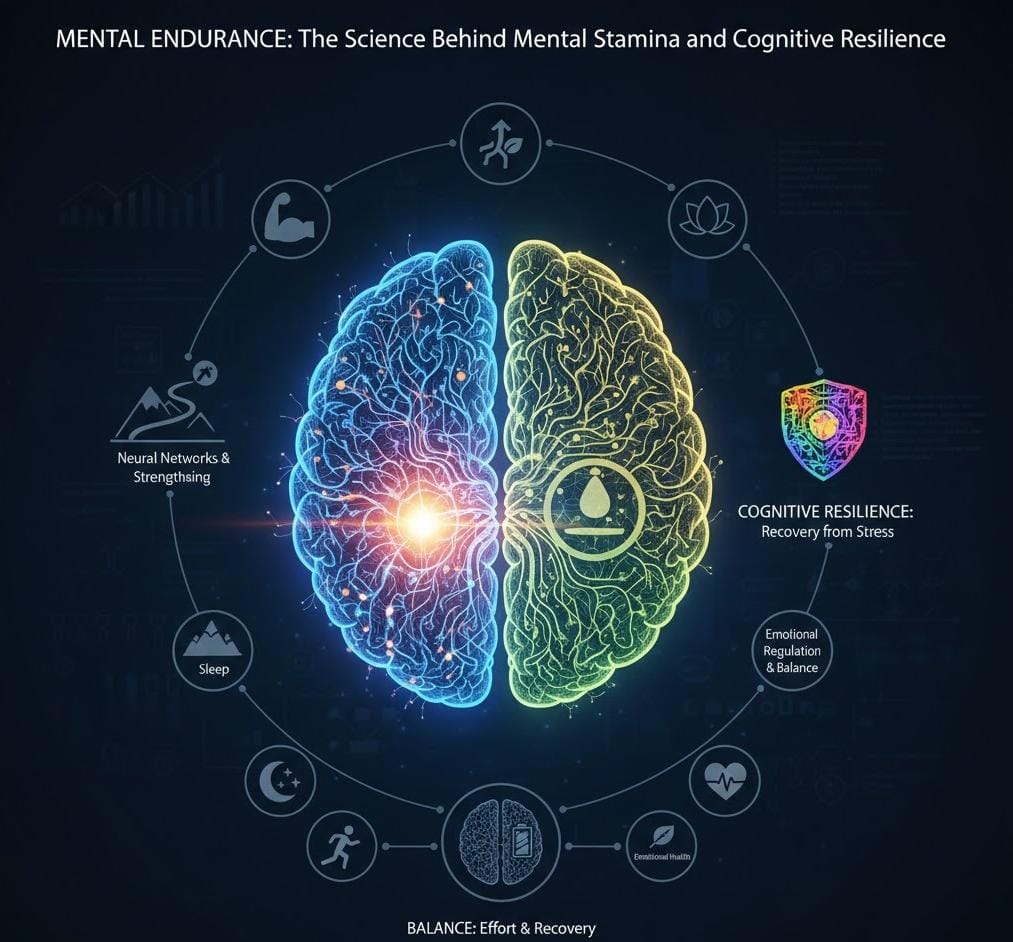
Mental endurance is deeply rooted in neuroscience and the brain’s ability to adapt through experience. The brain operates using neural networks that become stronger and more efficient with repeated use, similar to how muscles grow through regular training. When the mind is exposed to focused effort, emotional regulation, and manageable stress, it slowly adapts by improving efficiency and tolerance. This neurological adaptation is what creates mental stamina over time.
Cognitive resilience refers to the brain’s capacity to recover from stress, fatigue, and emotional strain without long-term damage. A resilient brain does not avoid challenges but processes them effectively and returns to balance faster after pressure. Mental endurance and cognitive resilience work together as complementary systems. Mental endurance helps sustain effort, while cognitive resilience ensures recovery and emotional stability after exertion.
Research in neuroplasticity shows that consistent mental effort strengthens the prefrontal cortex, the area of the brain responsible for focus, planning, decision-making, and impulse control. At the same time, emotional awareness and stress regulation reduce overactivation of the amygdala, which governs fear and threat responses. When these systems are balanced, individuals can stay calm, focused, and emotionally regulated even under intense pressure.
Mental fatigue often occurs when cognitive demands exceed the brain’s ability to recover. Constant multitasking, digital overload, emotional stress, and lack of boundaries drain mental resources rapidly. Mental endurance training teaches the brain to conserve energy, prioritize attention, and manage cognitive load more effectively. Over time, the mind becomes less reactive, more deliberate, and better able to sustain concentration.
Sleep, nutrition, movement, and emotional health play a critical role in building cognitive resilience. A brain that is deprived of rest or overloaded with stress cannot strengthen endurance effectively. Sustainable mental endurance is created through a balance of effort and recovery. When the brain feels supported rather than pressured, stamina grows naturally and consistently.
4. Mental Endurance – Signs It Needs Strengthening
Mental endurance often declines quietly, making it easy to overlook until exhaustion becomes overwhelming. Many people normalize constant mental tiredness, assuming it is just part of adult life or modern work culture. However, persistent cognitive strain is a warning sign. When the mind no longer feels refreshed even after rest, it signals that mental endurance is being depleted faster than it can recover.
One of the earliest signs is difficulty sustaining focus for extended periods. Tasks that once required moderate effort begin to feel mentally heavy and draining. Attention drifts frequently, concentration breaks easily, and the mind seeks constant stimulation or distraction. This indicates that the brain is struggling to maintain cognitive engagement and is operating under mental fatigue rather than clarity.
Emotional changes are another strong indicator. When mental endurance weakens, emotional regulation becomes harder. Minor inconveniences feel overwhelming, patience shortens, and irritability increases. Stress responses activate faster, leading to anxiety, frustration, or emotional numbness. This emotional volatility often impacts relationships, communication, and decision-making, creating additional mental strain.
Decision fatigue is also a common sign. When mental endurance is low, even simple choices feel exhausting. The brain avoids effort by procrastinating, delaying tasks, or choosing the easiest option rather than the most effective one. This avoidance is not laziness but a protective response to cognitive overload. Over time, it reduces confidence and creates a cycle of stress and self-doubt.
Physical symptoms often accompany declining mental endurance. These may include persistent headaches, mental fog, tension, difficulty sleeping, or feeling mentally drained despite adequate physical rest. Such symptoms indicate that the nervous system is under continuous strain. Recognizing these signals early is crucial. Strengthening mental endurance is not about pushing harder but about restoring balance, improving recovery, and training the mind to handle effort without collapse.
5. Mental Endurance Training – 7 Powerful Ways to Build Mental Stamina
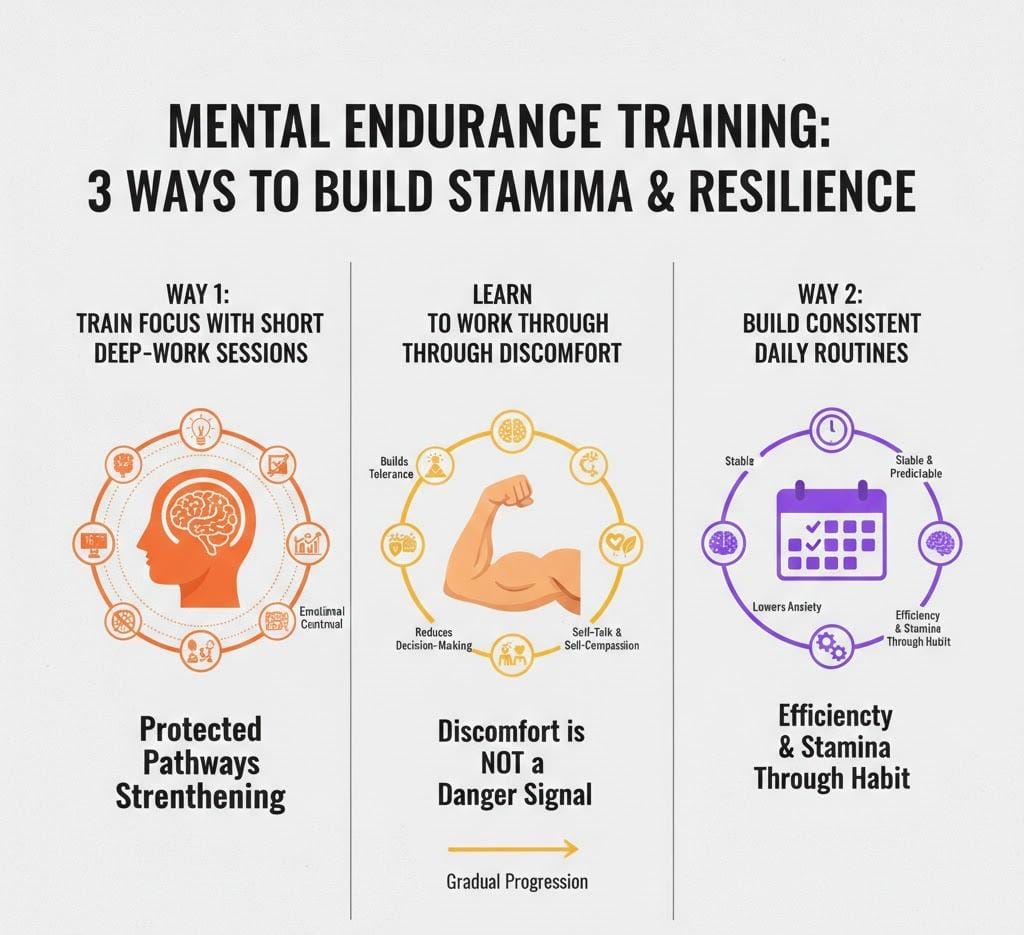
Way 1: Train Focus With Short Deep-Work Sessions
Mental endurance grows most effectively when focus is developed gradually and intentionally rather than forced through long, exhausting hours. Short deep-work sessions allow the brain to experience concentration as something controlled and achievable instead of overwhelming. When attention is required for a limited and clearly defined period, internal resistance decreases and mental engagement becomes more willing. This gentle exposure retrains the brain to understand.
During these focused sessions, the quality of attention is far more important than the total amount of time spent. Actively removing distractions such as phone notifications, unnecessary browser tabs, background noise, or interruptions creates a protected mental space. In this environment, the mind can settle fully into a single task instead of constantly shifting attention. This reduction in mental switching preserves cognitive energy, sharpens clarity, and strengthens the brain’s ability to concentrate deeply.
With regular repetition, short deep-work sessions begin to reshape how the brain responds to effort. Neural pathways linked to sustained attention and self-control grow stronger through consistent use. As a result, focus feels less forced and more natural over time. The mind becomes calmer, less reactive to distractions, and better able to remain engaged even when tasks require significant mental effort or problem-solving.
As this capacity develops, the length of deep-work sessions can be increased slowly and without pressure. This gradual progression allows mental stamina to build safely and sustainably. Instead of pushing to the point of exhaustion, the brain adapts steadily, learning to handle longer periods of concentration with ease. Over time, this approach creates strong, lasting mental endurance and a more disciplined, resilient focus.
Way 2: Learn to Work Through Discomfort Without Giving Up
Mental endurance develops when the mind slowly understands that discomfort is not a danger signal. Discomfort usually appears as boredom, irritation, mental resistance, restlessness, self-doubt, or the strong urge to quit when sustained effort is required. These sensations are natural reactions to challenge and growth, not proof of weakness or inability. However, when discomfort is immediately avoided, the brain learns to associate effort with threat, making future challenges feel heavier and harder to face.
By consciously staying present with mild discomfort, the brain begins to build tolerance. Remaining focused for a few extra minutes, even when the task feels uncomfortable, teaches the nervous system that effort can be managed safely. This exposure reduces fear-based avoidance and gradually strengthens emotional control. Over time, the mind becomes less reactive and more capable of maintaining focus despite internal resistance.
Repeated avoidance strengthens the belief that mental effort is overwhelming or harmful. This belief slowly erodes confidence, discipline, and motivation. When discomfort is met with patience, curiosity, and self-compassion instead of judgment, the brain starts to rewire its response to challenge. Effort becomes something familiar rather than something to escape, allowing resilience to grow naturally.
This practice does not mean forcing yourself through exhaustion, burnout, or extreme stress. It involves gently extending effort within healthy and realistic limits. Small, consistent extensions of focus teach the mind endurance without causing harm. With time, tasks that once felt intimidating or draining begin to feel manageable, strengthening long-term mental stamina and emotional balance.
Way 3: Build Consistent Daily Routines
Consistency forms a powerful foundation for mental endurance. When daily routines are stable and predictable, the brain conserves energy by reducing constant decision-making. Instead of repeatedly deciding what to do next, mental resources are freed for concentration, problem-solving, and emotional regulation. This efficiency allows the mind to sustain effort for longer periods without feeling overwhelmed.
Simple routines such as waking up at the same time, scheduling focused work sessions, eating regular meals, and planning rest periods create mental stability. Predictability lowers anxiety because the brain feels prepared rather than reactive. When the mind knows what comes next, it can settle into tasks with greater clarity and confidence. Structure acts as a mental anchor during demanding or stressful periods.
Unstructured days often increase mental fatigue because the brain must continuously evaluate choices, priorities, and distractions. This constant decision-making leads to decision fatigue, which weakens focus, reduces self-control, and increases stress. Without routines, even small tasks can feel exhausting. Consistent structure removes this unnecessary mental burden and establishes a steady rhythm that supports endurance.
Over time, well-designed routines become automatic habits. This automation allows the mind to function efficiently even during challenging or emotionally intense phases of life. When effort is supported by structure instead of chaos, mental stamina increases naturally. Consistent routines do not limit freedom; instead, they create a stable framework that helps the mind perform at its best over the long term.
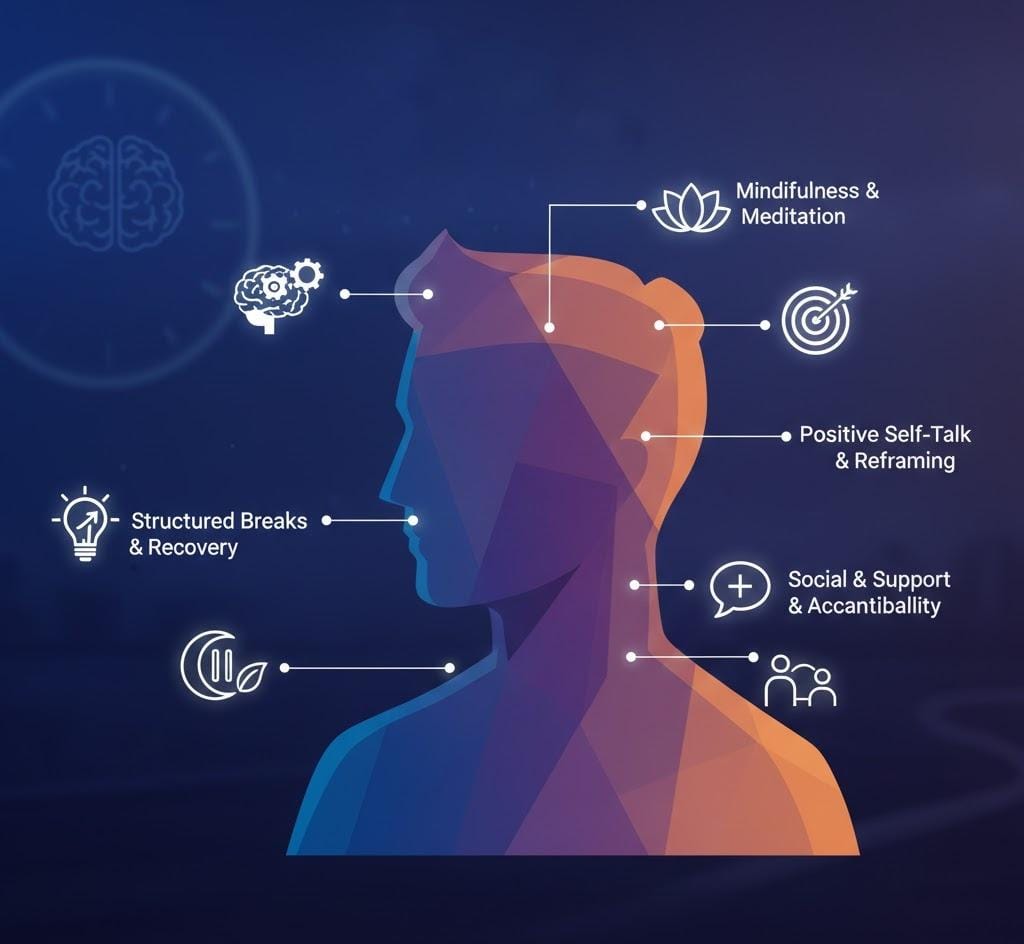
This image explains mental endurance by showing how the brain builds strength and resilience. It highlights focus, emotional balance, stress recovery, sleep, and consistent effort as key elements that improve mental stamina and long term cognitive health.
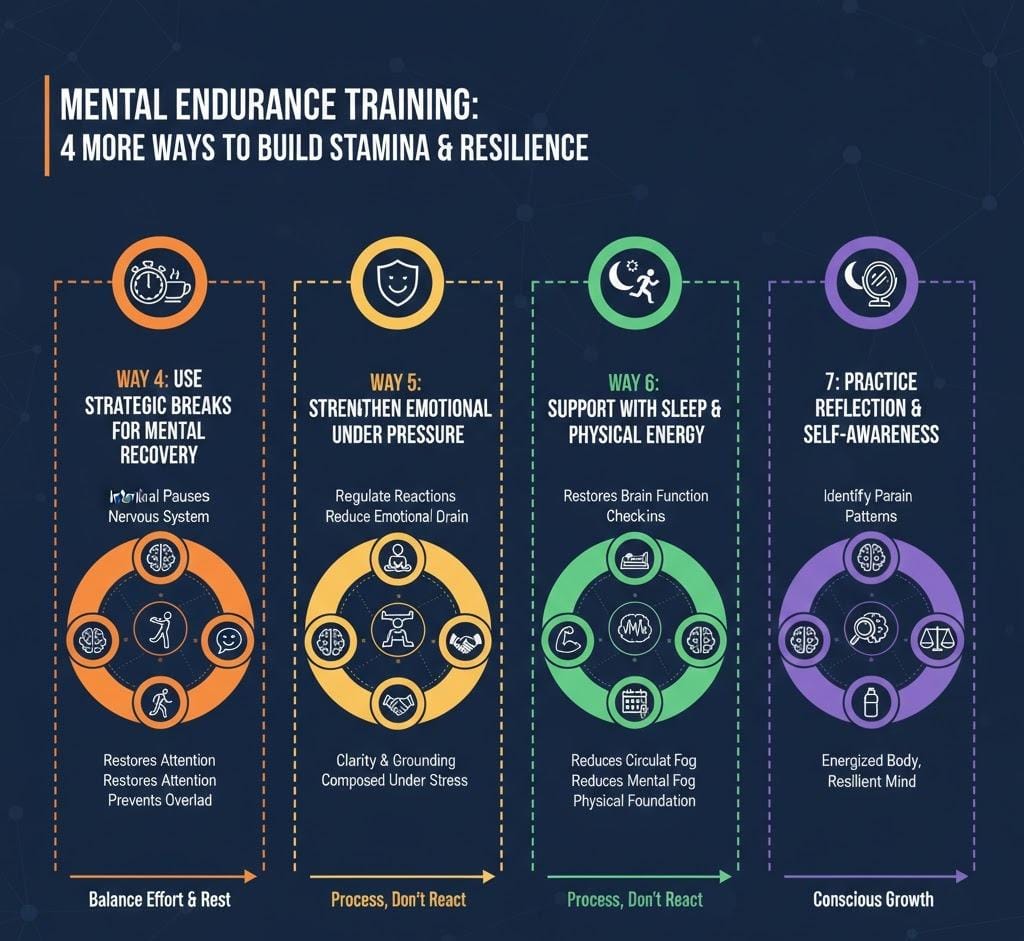
Way 4: Use Strategic Breaks for Mental Recovery
Mental endurance is not built through nonstop effort or constant pressure. It develops when periods of focused work are balanced with intentional and well-timed recovery. Strategic breaks give the brain space to reset, organize information, and restore attention before fatigue turns into exhaustion. These pauses support long-term performance by preventing mental overload rather than reacting to it after damage is done.
Short breaks taken at the right moments actually strengthen focus instead of disrupting it. Stepping away from screens, gently stretching the body, walking briefly, or practicing slow, deep breathing helps release built-up mental and physical tension. These simple actions calm the nervous system and allow cognitive resources to recover. As a result, attention becomes sharper and emotional strain decreases when work resumes.
When breaks are ignored, mental fatigue accumulates quietly and gradually. Concentration begins to weaken, small errors increase, patience decreases, and irritability rises. Productivity drops not due to lack of discipline or effort, but because the brain is operating without recovery. Over time, this pattern leads to burnout, reduced motivation, and diminished mental endurance.
Learning to pause before reaching exhaustion is a sign of self-awareness and mental strength. Strategic recovery protects cognitive performance while preserving emotional balance. By respecting the brain’s need for rest, sustained effort becomes possible without sacrificing well-being or long-term resilience.
Way 5: Strengthen Emotional Control Under Pressure
Emotional reactions consume a large amount of mental energy, often without being noticed. When stress triggers panic, frustration, anger, or overthinking, the brain shifts into a survival-oriented state. In this mode, clarity, creativity, and logical thinking decline, draining the mental resources needed for endurance and sustained focus that focus does not automatically lead to stress, fatigue, or burnout.
Emotional control helps conserve mental energy by keeping the nervous system regulated and responsive rather than reactive. Learning to notice emotions without immediately acting on them allows the mind to remain clear and grounded. Simple techniques such as pausing before responding, naming emotions internally, or bringing attention to breathing and body sensations help reduce emotional intensity and restore balance.
When emotions remain unmanaged, pressure feels overwhelming and exhausting. Even small challenges can seem unmanageable, leading to mental fatigue and avoidance. In contrast, when emotions are regulated, pressure becomes something the mind can handle calmly. This shift protects mental stamina and supports steady performance during demanding situations.
With consistent practice, emotional control becomes a stabilizing inner skill. The mind stays composed even when expectations are high or conditions are stressful. This emotional steadiness allows mental endurance to grow without leading to burnout, creating resilience that supports both performance and well-being over time.
Way 6: Support Mental Endurance Through Sleep and Physical Energy
Mental endurance cannot be sustained without strong physical support. Sleep plays a critical role in restoring brain function, strengthening memory, regulating emotions, and clearing mental fatigue accumulated during the day. When sleep is inadequate or inconsistent, focus weakens, reaction time slows, and even simple mental tasks begin to feel unusually heavy. No amount of motivation can fully compensate for a tired brain.
Physical movement further supports mental endurance by improving blood circulation and oxygen flow to the brain. Movement increases alertness, reduces mental fog, and releases built-up emotional tension stored in the body. Regular activity, even in small amounts such as walking, stretching, or light exercise, helps reset attention and improve overall cognitive stamina. A physically active body keeps the mind more responsive and resilient.
Ignoring physical needs places constant strain on mental resources. When the body is fatigued, undernourished, or inactive, irritability rises and motivation declines. Mental effort requires more energy, leading to faster exhaustion and reduced emotional control. Supporting the body allows the brain to operate efficiently instead of struggling against physical limitations.
By prioritizing quality sleep and regular movement, a strong foundation for mental endurance is created. A rested and energized body makes sustained focus, emotional balance, and long-term cognitive resilience possible without unnecessary strain.
Way 7: Practice Reflection and Self-Awareness
Reflection strengthens mental endurance by developing deeper self-awareness and intentional control over mental energy. Regularly observing how focus, motivation, and emotional responses change throughout the day helps identify patterns that either drain attention or restore it. This awareness allows effort to be directed more wisely, reducing wasted energy and preventing unnecessary mental strain.
Reflection does not require long or complex sessions to be effective. Simple daily check-ins, such as briefly reviewing what felt mentally demanding or energizing, create meaningful insight over time. These moments of awareness reveal attention habits, emotional triggers, stress responses, and recovery needs. With this clarity, exhaustion is addressed early instead of being allowed to accumulate silently.
Self-awareness also softens unrealistic expectations and harsh self-judgment. When personal limits are clearly understood, the tendency to overwork or push beyond healthy boundaries decreases. Effort becomes more balanced, and rest is recognized as a tool for endurance rather than a sign of weakness. This shift supports steady progress and long-term mental stamina.
Through ongoing reflection, mental endurance becomes a conscious and adaptive skill. You learn to recognize early signs of fatigue, adjust effort levels, and respond to challenges with flexibility instead of force. Working with the mind rather than against it builds resilience, clarity, and sustainable cognitive strength that supports both performance and emotional well-being over time.
6. Mental Endurance – Staying Productive Even When Tired
Mental endurance makes it possible to stay productive even when energy levels are low, without harming mental or emotional well-being. Instead of forcing constant output or relying on pressure, a resilient mind learns to prioritize tasks wisely and pace effort throughout the day. Energy is directed toward high-impact activities rather than being wasted on urgency or perfectionism. As a result, productivity becomes calmer, more focused, and sustainable, allowing steady progress even during mentally demanding periods.
When mental stamina is strong, tiredness does not automatically trigger emotional reactions such as frustration, anxiety, irritability, or loss of confidence. The mind becomes less reactive and more stable, even when fatigue is present. This emotional balance allows individuals to work through low-energy moments with patience and clarity rather than stress-driven behavior. Instead of panicking about performance, the focus remains on steady effort and realistic expectations.
Mental endurance also improves how decisions are made under pressure and fatigue. Rather than pushing blindly through exhaustion, the mind recognizes when to adjust effort, simplify tasks, or take short recovery breaks. This self-awareness reduces errors, poor judgment, and impulsive choices that often occur when the brain is overloaded. Productivity becomes intentional and thoughtful, guided by awareness instead of desperation.
Another important benefit of mental endurance is improved efficiency. A mentally resilient person wastes less energy on overthinking, self-doubt, comparison, or constant mental distractions. Attention remains focused on what truly needs to be done, making each unit of effort more effective. Even with limited energy, progress continues because mental resources are used wisely instead of being scattered.
Cognitive resilience also supports faster mental recovery after periods of effort. Instead of remaining mentally drained for days, the mind learns how to restore itself more quickly through rest, reflection, and emotional regulation. Fatigue no longer lingers unnecessarily or carries over into future tasks. This faster recovery cycle allows productivity to remain consistent and balanced over time.
Ultimately, mental endurance transforms productivity into a sustainable and healthy process. Work no longer feels like a constant struggle against tiredness or pressure. Instead, effort becomes balanced, manageable, and aligned with personal well-being. This approach protects mental health while enabling long-term performance, making success possible without burnout or emotional exhaustion.
7. Conclusion
Mental endurance is not developed through sudden change, extreme discipline, or short bursts of motivation. It is built gradually through consistent practice, growing self-awareness, and intentional effort over time. Each small action taken to manage focus, regulate emotions, and recover properly adds strength to the mind. These repeated efforts quietly expand the brain’s capacity to endure stress and remain steady during challenges.
As mental endurance grows, the ability to handle stress improves in noticeable ways. Situations that once felt overwhelming begin to feel manageable, and emotional reactions become more controlled and thoughtful. The mind learns to stay calm under pressure instead of slipping into panic or avoidance. This calmness allows challenges to be approached with clarity, confidence, and problem-solving awareness rather than fear-driven responses.
Mental resilience also strengthens adaptability, which is essential in an unpredictable world. Life constantly brings change, uncertainty, and unexpected demands. With mental endurance, individuals can adjust without losing balance or self-control. Instead of resisting discomfort, the mind learns to respond flexibly, preserving emotional stability and inner confidence even during transition or uncertainty.
Over the long term, mental endurance supports overall life satisfaction, not just productivity or performance. It protects mental health by preventing chronic stress, emotional exhaustion, and burnout. A strong mind can pursue goals, responsibilities, and ambitions while still maintaining inner peace, emotional balance, and healthy boundaries in daily life.
At MindQuora, mental endurance is viewed as a foundational life skill rather than a temporary performance tool. It supports personal growth, professional development, and emotional well-being together, creating a balanced approach to success. True mental strength comes from sustainability, awareness, and consistency, not from constant pressure or overexertion.
By training mental stamina and cognitive resilience gradually, anyone can build lasting mental strength that endures across different stages of life. A resilient mind does not rush or force outcomes. It adapts thoughtfully, endures challenges patiently, and grows with purpose, creating long-term stability, fulfillment, and emotional strength.