
Table of Contents

1. Introduction
Time management skills are essential in today’s fast-paced, distraction-heavy world. Whether you are a student juggling assignments, a professional balancing multiple projects, or an entrepreneur handling business operations, the ability to manage time effectively directly impacts your productivity, mental wellness, and the achievement of your personal goals. Despite the abundance of resources on productivity, many individuals struggle with staying focused, completing tasks on time, and maintaining a structured daily routine. The key to overcoming these challenges lies in developing strong time management skills that allow you to prioritize tasks, maintain focus, and achieve consistent progress.
Developing these skills is more than simply organizing a to-do list; it involves understanding how your mind functions, recognizing distractions, and designing strategies that maximize your energy and efficiency. Good time management tips reduces stress, improves decision-making, and empowers you to take control of your day rather than letting the day control you. Furthermore, mastering these skills is crucial for mental wellness. When time is managed effectively, individuals feel less overwhelmed, more focused, and better equipped to tackle challenges. The sense of accomplishment derived from completing tasks efficiently boosts confidence, motivation, and overall satisfaction in life.
Consider two professionals working in the same industry. One constantly struggles to meet deadlines, frequently multitasks, and feels mentally drained at the end of the day. The other employs time management skills, structures their work efficiently, and maintains consistent progress toward long-term goals. Despite having similar qualifications and resources, the second professional consistently achieves more, experiences less stress, and maintains a healthier work-life balance. This example illustrates that success is often less about natural talent or luck and more about effectively managing your time and energy.
In this blog, we will explore six tested hacks to stay focused, finish tasks faster, and make measurable progress toward your personal goals. These hacks are practical, actionable, and applicable in any context—whether academic, professional, or personal. By adopting these strategies, you will gain clarity, control, and momentum, transforming how you approach your daily routine and long-term objectives.
2. Understanding Time Management Skills
Time management skills refer to the ability to plan, prioritize, and execute tasks effectively while minimizing distractions and maximizing focus. These skills are not about spending more hours on work but about making smarter choices with available time. By concentrating on high-value activities and reducing unproductive habits, individuals can achieve more in less time. At their core, time management skills ensure that energy and attention are invested in what truly matters, leading to improved productivity, clarity, and balance in everyday life.
Effective time management skills are built on several key components. The first is prioritization, which involves recognizing tasks that are most important and urgent while identifying those that can be delegated or postponed. This is followed by planning and scheduling, where individuals structure their day through calendars, planners, or time-blocking methods to ensure deadlines are met.
Another essential element is focus and concentration, which requires avoiding distractions such as excessive social media, constant notifications, or multitasking, all of which dilute efficiency. Beyond focus, task completion is equally critical, as it emphasizes finishing assignments fully and with quality rather than leaving work half-done. Finally, review and adjustment help refine strategies by analyzing progress and modifying plans to achieve better results over time.
The importance of time management skills extends well beyond workplace productivity. They enhance discipline, reduce stress, and improve overall mental well-being. People who consistently manage their time effectively often report higher satisfaction levels, better decision-making, and increased confidence in handling responsibilities. These skills also play a direct role in personal goal achievement, as they align daily actions with long-term objectives, ensuring that progress is steady and measurable.
A practical example can be seen in students preparing for competitive exams. Without structured time management skills, study sessions become scattered, deadlines are missed, and revision remains incomplete, leading to poor performance. However, with a clear timetable, focused study hours, and regular reviews, students can optimize retention, reduce anxiety, and achieve superior results. Similarly, professionals in the corporate world rely on time management to balance multiple projects, meet deadlines, and still maintain personal time, ultimately driving career advancement while preserving work-life harmony.

3. Why Time Management Skills Are Crucial for Personal Goal Achievement
Time management skills are the backbone of personal goal achievement because they directly determine how effectively an individual can turn intentions into results. Every personal or professional goal—whether finishing an academic project, building a successful career, improving fitness, or starting a business—requires consistent effort, discipline, and planning. Without these skills, even motivated people often find themselves stuck in a cycle of procrastination, missed deadlines, and incomplete commitments. This not only delays progress but also creates frustration, stress, and self-doubt, making long-term success more difficult.
By mastering time management skills, individuals can prioritize tasks based on importance and urgency, ensuring that critical activities receive maximum attention. When priorities are clear, productivity naturally improves because energy is directed toward high-value work rather than wasted on distractions. Structured schedules allow for better organization, helping people complete more in less time while maintaining quality. At the same time, efficient time management reduces stress by providing clarity and eliminating the chaos of last-minute efforts. This structured approach also enhances decision-making, as allocating time for reflection leads to thoughtful and strategic choices rather than impulsive reactions.
A practical example of this is seen in entrepreneurship. Starting a new venture requires handling multiple responsibilities—such as product design, marketing strategies, customer management, and finances—often within tight deadlines. Without strong time management, entrepreneurs may spend their days reacting to urgent problems, leaving little room for long-term planning. Over time, this reactive approach increases burnout risk and slows growth. In contrast, those who practice effective time management strategies like time-blocking, goal-setting, and progress reviews are able to align daily actions with larger objectives, sustain productivity, and steadily achieve measurable results.
Beyond productivity, time management skills also strengthen adaptability and resilience. Life is unpredictable, and challenges such as sudden workload changes, personal setbacks, or external disruptions can derail plans. Individuals with good time management skills are better equipped to re-prioritize, reorganize schedules, and stay focused on their long-term vision despite obstacles. This resilience transforms challenges into opportunities for growth, ensuring that setbacks do not lead to giving up but rather fuel a smarter and stronger approach toward goal achievement.
Ultimately, time management skills not only help people reach their goals faster but also improve overall well-being, confidence, and balance in life. The ability to manage time effectively creates a sustainable cycle of planning, execution, reflection, and adjustment, which is essential for turning ambitions into lasting success.
4. 6 Tested Hacks to Stay Focused and Finish Tasks Faster
Hack 1: Prioritize Tasks Using the Eisenhower Matrix
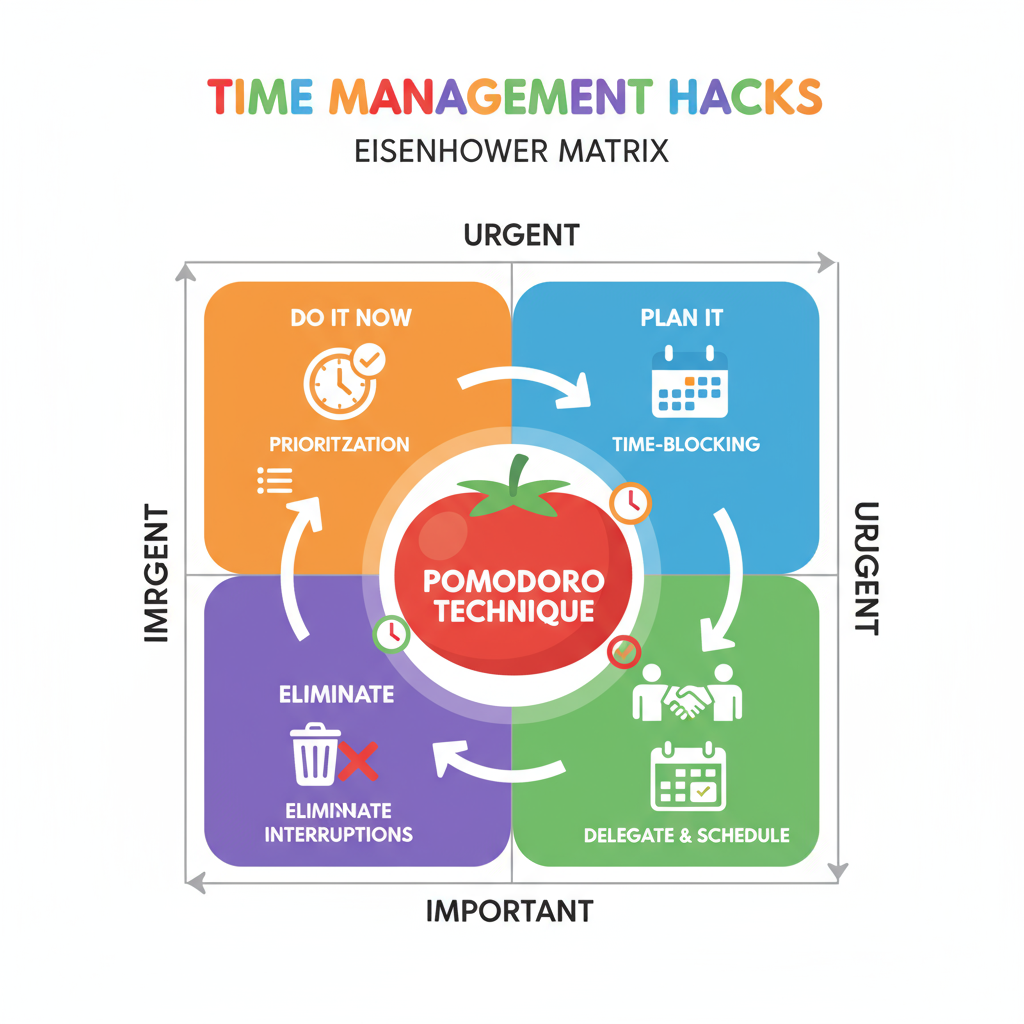
Effective prioritization is at the heart of time management skills. The Eisenhower Matrix, developed by former U.S. President Dwight D. Eisenhower, helps individuals categorize tasks into four quadrants:
- Urgent and Important: Tasks requiring immediate attention.
- Important but Not Urgent: Tasks that contribute to long-term goals but can be scheduled.
- Urgent but Not Important: Tasks that can be delegated or minimized.
- Not Urgent and Not Important: Tasks to eliminate or postpone.
By focusing primarily on tasks that are both urgent and important, and scheduling those that are important but not urgent, you ensure that your energy aligns with your most meaningful goals. This prevents time wastage on low-impact activities.
Practical Tip: Each morning, list your tasks and assign them to the four quadrants. Commit to completing high-priority tasks first.
Hack 2: Implement Time-Blocking for Focused Work
Time-blocking involves assigning specific periods in your day for focused work on individual tasks or projects. By dedicating uninterrupted time to critical activities, you reduce multitasking and increase productivity.
For instance, a writer might allocate 9:00–11:00 AM for content creation, 11:15–12:15 PM for research, and 2:00–4:00 PM for editing. This structure ensures consistent progress and minimizes the risk of distraction.
Practical Tip: Use digital calendars or planners to block time. Include breaks to prevent burnout and maintain high levels of concentration.
Hack 3: Use the Pomodoro Technique to Maintain Concentration
The Pomodoro Technique involves working in focused intervals of 25–30 minutes, followed by a short 5-minute break. After four intervals, take a longer 15–30 minute break. This method trains your brain to maintain attention and prevents mental fatigue.
Example: A student preparing for exams can study in Pomodoro cycles, reviewing difficult concepts during breaks or briefly walking to refresh the mind.
Practical Tip: Use timers or apps specifically designed for Pomodoro sessions to stay on track.
Hack 4: Eliminate Distractions Strategically
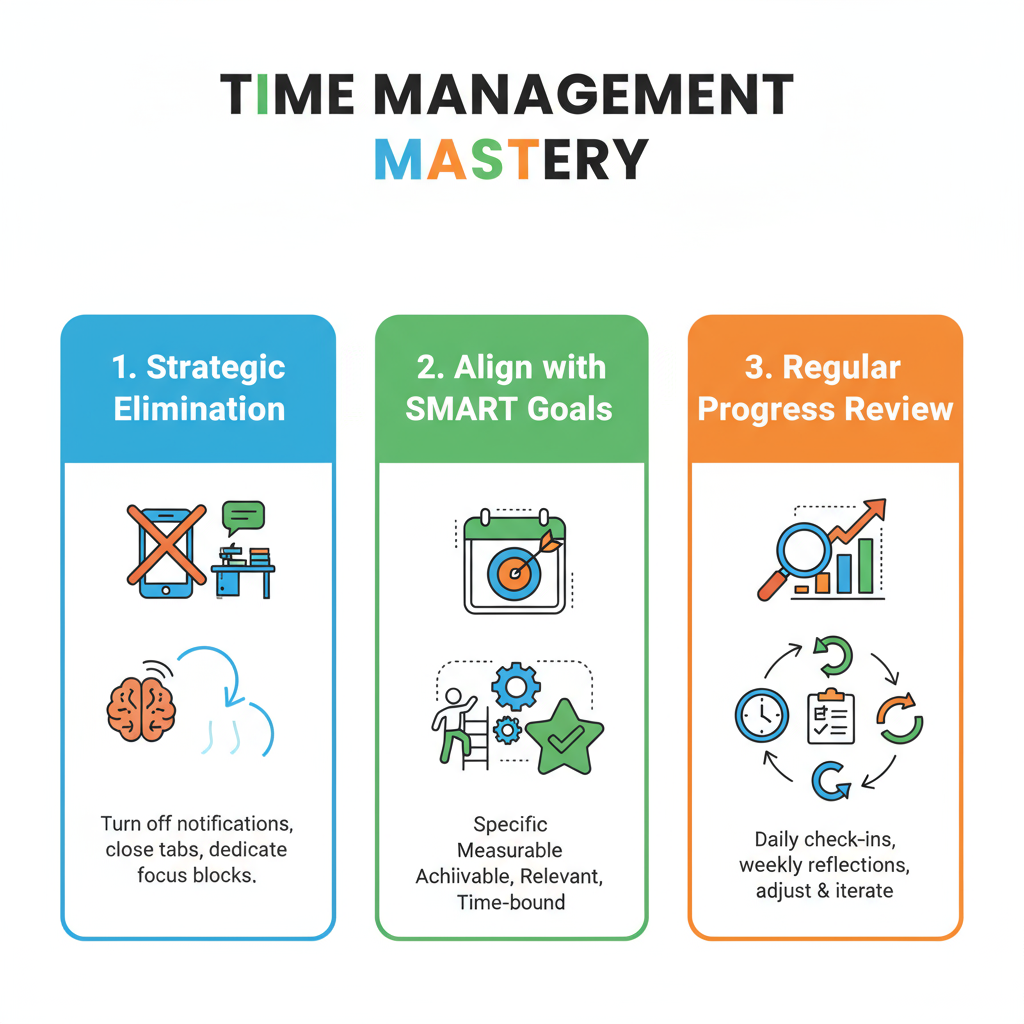
Distractions are the biggest enemy of time management skills. Identify common interruptions—social media, notifications, background noise, or multitasking—and implement strategies to minimize them.
Practical Tip: Turn off non-essential notifications, create a quiet workspace, and use website blockers during focused work sessions.
Example: Remote workers can set clear boundaries with family members or housemates during work hours to protect their focus
Hack 5: Align Daily Actions with SMART Goals
Time management is most effective when your daily tasks are directly linked to your personal goals. Using the SMART framework (Specific, Measurable, Achievable, Relevant, Time-bound) ensures that actions have purpose and direction.
Practical Tip: At the start of each week, break down goals into actionable tasks. Review progress daily and adjust priorities to remain aligned with your objectives.
Example: An aspiring author might set a SMART goal to write 500 words daily for a book, ensuring steady progress over time.
Hack 6: Review and Reflect on Progress Regularly
Reflection is critical to sustaining time management skills. Regularly reviewing completed tasks, evaluating efficiency, and identifying areas for improvement ensures continuous growth.
Practical Tip: Dedicate 10–15 minutes at the end of each day to review accomplishments, identify obstacles, and plan adjustments for tomorrow.
Example: Entrepreneurs can track completed tasks versus planned tasks to fine-tune scheduling and maintain productivity.
5. Benefits of Mastering Time Management Skills
Mastering time management skills has a profound impact on every aspect of life, shaping not only how tasks are completed but also how individuals feel about their work and personal growth. One of the most important advantages is enhanced focus. By planning ahead and setting clear priorities, people reduce mental clutter and eliminate distractions, which creates clarity and allows them to direct full attention toward high-value activities. This sharper focus improves both the quality and speed of execution, making even challenging tasks feel more manageable.
Another major benefit is higher productivity. Effective use of time ensures that more work is completed in less time, without increasing stress or pressure. Research highlights that individuals who follow structured time management techniques can complete projects up to 30% faster than those who approach tasks without a plan. This efficiency comes from working smarter, not harder—optimizing efforts, avoiding wasted motion, and channeling energy into meaningful outcomes that support long-term progress.
Equally important is the role of time management skills in maintaining better work-life balance. By organizing schedules effectively, individuals can allocate dedicated time not just to professional responsibilities but also to hobbies, family, and self-care. This balance reduces the risk of burnout and improves overall satisfaction in life. Along with this comes reduced stress, as structured routines eliminate last-minute chaos, deadline pressure, and the feeling of being overwhelmed, creating a sense of control and predictability in daily routines.
Long-term success is also closely tied to these skills. When daily actions consistently align with larger objectives, individuals achieve steady progress toward personal and professional goals. Meeting deadlines and completing tasks on time boosts confidence and builds self-discipline, motivating people to take on bigger challenges with greater assurance. This is why companies like Google, Apple, and Microsoft emphasize structured planning and time management as part of employee productivity and innovation strategies. On an individual level, students preparing for exams, entrepreneurs growing businesses, and professionals managing multiple projects all benefit greatly by applying these principles consistently, ultimately creating a lifestyle of efficiency, purpose, and accomplishment.
6. Conclusion
Time management skills are truly the cornerstone of both personal and professional success. They provide individuals with the ability to take control of their day, set clear priorities, and focus on tasks that generate the most meaningful outcomes. Rather than being consumed by endless to-do lists or distractions, mastering time management helps you channel your energy into high-value activities that move you closer to your personal and professional goals. By applying the six tested hacks discussed in this blog—prioritizing tasks, time-blocking, using the Pomodoro Technique, eliminating distractions, aligning tasks with SMART goals, and conducting regular progress reviews—you can dramatically boost productivity, reduce stress, and ensure consistent growth in every area of life.
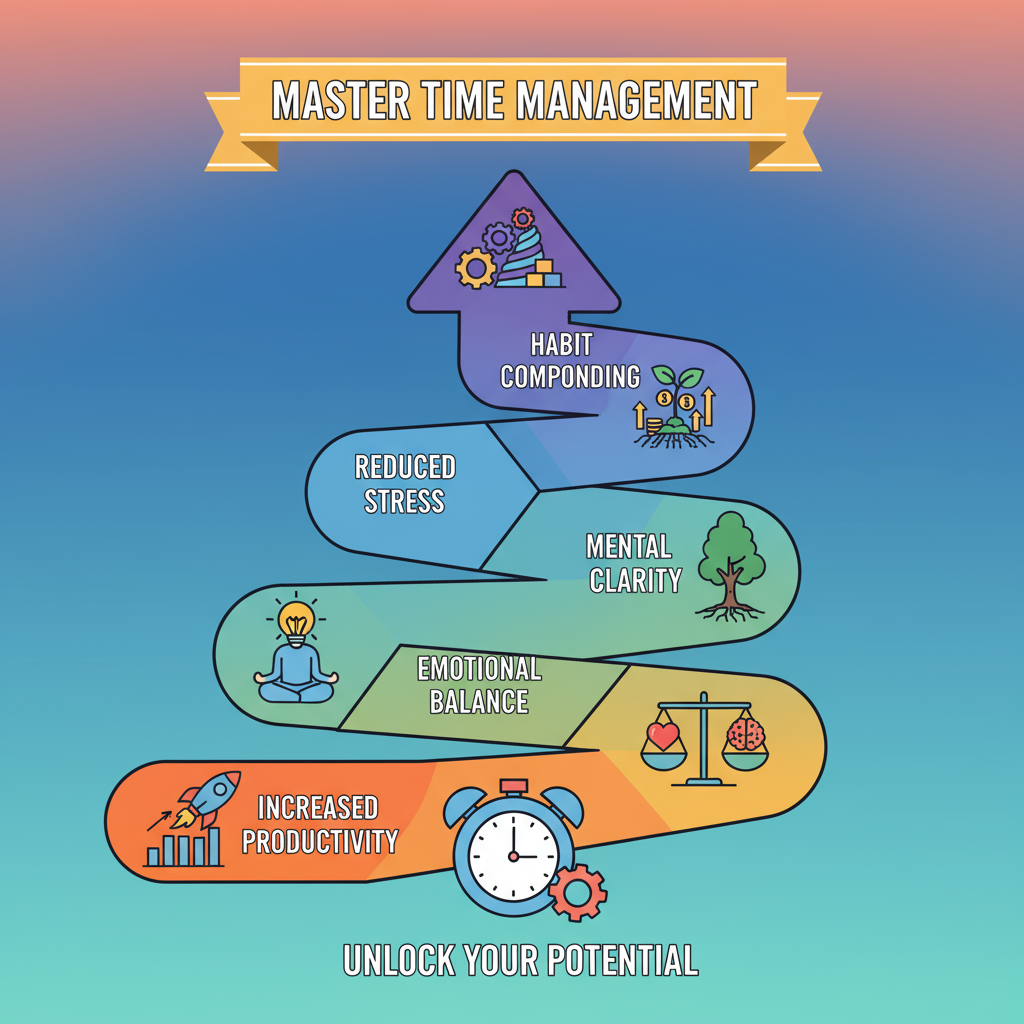
The benefits of time management extend far beyond simply getting things done faster. Effective management of time fosters mental clarity, allowing you to approach each day with a structured mindset and purpose. It also supports emotional balance, since well-planned schedules reduce the anxiety caused by procrastination and last-minute chaos. More importantly, strong time management skills build resilience. Instead of reacting impulsively to challenges, you learn to approach them strategically, adjusting plans and finding solutions without losing focus on long-term objectives. This ability to transform obstacles into opportunities is what sets high achievers apart from those who remain stuck in cycles of inefficiency.
Another key advantage of mastering time management skills is the compounding effect of good habits. When you consistently apply effective techniques, such as sticking to time blocks or reflecting on progress, these habits accumulate over time to produce significant long-term results. For example, a student who follows a disciplined study routine not only performs better academically but also develops life skills like consistency, discipline, and focus. Similarly, professionals who manage their time wisely find themselves meeting deadlines more easily, maintaining work-life balance, and advancing steadily in their careers. These outcomes are not achieved overnight but are the product of small, intentional actions repeated consistently.
It is also important to remember that mastering time management skills is a journey rather than a one-time effort. Expecting immediate perfection often leads to frustration. Instead, start small by adopting just one new strategy—such as time-blocking or reducing distractions—and incorporate it into your daily routine. Once that becomes a habit, layer in additional strategies and refine your approach based on personal experience. This gradual method ensures sustainability while keeping motivation high. Along the way, celebrate small wins, reflect on your progress, and stay disciplined. Over time, you will notice improved focus, greater efficiency, and tangible results that align with your bigger goals.
Ultimately, strong time management skills go beyond helping you finish tasks more quickly. They empower you to live with purpose, intentionality, and clarity. By reclaiming control of your time and directing it toward meaningful actions, you create a foundation for sustained success and fulfillment. Every minute spent wisely is not just a task completed but an investment in your future. Whether you are a student, professional, or entrepreneur, mastering these skills ensures that your time works for you—not against you—helping you unlock your full potential and lead a life of achievement, growth, and balance.