

Table of Contents
1. Introduction
Gratitude practices are powerful tools for enhancing mental wellness, emotional stability, and overall well-being. In today’s fast-paced, technology-driven world, it is easy to get caught up in constant stress, digital distractions, and negative thought cycles. Many individuals often find themselves overwhelmed, anxious, or disconnected from the simple joys of life. Practicing gratitude through intentional daily rituals can help counter these challenges by rewiring the brain to focus on positive experiences, fostering a mindset of appreciation, and improving resilience.
When consistently applied, gratitude practices improve focus, emotional balance, and happiness while reducing stress and enhancing overall mental clarity. Simple actions like writing down things you are thankful for, expressing appreciation to others, or reflecting on daily wins may seem small, but they create profound changes over time. This blog will serve as a comprehensive guide to 10 daily gratitude practices, including the transformative habit of gratitude journaling, to help you cultivate lasting mental wellness and a more positive thinking approach to life.
By adopting these practices, you are not only nurturing a healthier mind but also setting the stage for stronger relationships, improved productivity, and greater personal fulfillment. Whether you are a professional facing daily workplace challenges, a student managing academic pressure, or anyone seeking emotional stability, these gratitude practices provide a reliable framework to elevate your mental wellness.
2. Understanding Gratitude and Its Importance
Gratitude practices are more than just saying “thank you” politely—they represent a conscious effort to recognize and appreciate the positive aspects of life. Gratitude is about intentionally acknowledging the good in your surroundings, relationships, and personal achievements, even amidst challenges or hardships. It fosters a sense of abundance rather than focusing on what is lacking.
Scientific studies have shown that people who actively practice gratitude experience a range of emotional and physical benefits. They report lower stress levels, improved sleep quality, and heightened overall satisfaction in both personal and professional life. Gratitude also positively impacts emotional intelligence, helping individuals manage their emotions more effectively, empathize with others, and cultivate healthier relationships.
Gratitude practices also influence the brain by activating regions associated with reward, motivation, and social connection. Regular engagement strengthens neural pathways that promote positivity, thereby making it easier to maintain an optimistic mindset. Moreover, acknowledging daily blessings encourages mindfulness, helping individuals stay present and fully engage with life rather than dwelling on past regrets or future anxieties.
For mental wellness, gratitude acts as a foundational habit that enhances emotional resilience, reduces depressive tendencies, and improves overall life satisfaction. When you understand and embrace the importance of gratitude, it becomes clear that these practices are not mere rituals—they are powerful tools for creating sustainable happiness and well-being.
3. The Link Between Gratitude and Mental Wellness
Mental wellness refers to a state of emotional and cognitive balance where an individual can effectively manage stress, engage in healthy relationships, and navigate daily challenges with resilience. Gratitude practices are closely tied to mental wellness because they directly shape the way we perceive and respond to our experiences.
By focusing on what is going well in your life rather than what is missing, gratitude reduces the mental load associated with anxiety, stress, and negative thinking. Individuals who regularly engage in gratitude journaling report improved mood, lower levels of depression, and increased overall happiness. Writing down what you are grateful for allows reflection, reinforces positive thought patterns, and creates a tangible record of accomplishments, blessings, and joyful moments.
Gratitude practices also strengthen emotional regulation, helping individuals respond calmly and thoughtfully rather than reacting impulsively to challenges. They shift attention from scarcity to abundance, reducing feelings of inadequacy or envy, which are common triggers for stress and anxiety. In professional and personal contexts, this translates into enhanced focus, more constructive interactions, and better decision-making.
Furthermore, gratitude encourages social bonding, which is a crucial component of mental wellness. Expressing appreciation to family, friends, or colleagues strengthens connections and fosters trust, empathy, and mutual support. These social benefits amplify the emotional advantages of gratitude, creating a positive feedback loop that enhances mental and emotional resilience over time.

4. How Gratitude Practices Transform Your Mindset
Engaging in daily gratitude practices fundamentally transforms the way the brain processes experiences. By focusing intentionally on positive aspects of life, you retrain your mind to recognize and savor even small joys, which gradually reduces the tendency for negative thinking and pessimism.
Regular gratitude practices shift perspective from a mindset of lack to one of abundance. For example, rather than dwelling on unmet goals or challenges, individuals begin to notice opportunities, achievements, and supportive relationships. This transformation enhances optimism, emotional stability, and life satisfaction.
Gratitude practices also foster mindfulness by encouraging present-moment awareness. When reflecting on what you are thankful for, you actively pause to observe your surroundings, experiences, and feelings. This mindfulness strengthens self-awareness, reduces impulsivity, and supports intentional decision-making, all of which are essential for sustained mental wellness.
Moreover, consistently practicing gratitude improves resilience. Individuals who focus on appreciation are better equipped to handle setbacks because they learn to view challenges as opportunities for growth rather than threats. By adopting a grateful perspective, it becomes easier to recover from difficulties, maintain motivation, and approach life with a more balanced and constructive mindset.
5. 10 Daily Gratitude Practices for Mental Wellness
Gratitude practices can be seamlessly integrated into your daily routines. By dedicating intentional time each day to appreciate life’s positives, you gradually cultivate a mindset of abundance, emotional balance, and mental wellness. Here are ten detailed practices to help you get started:
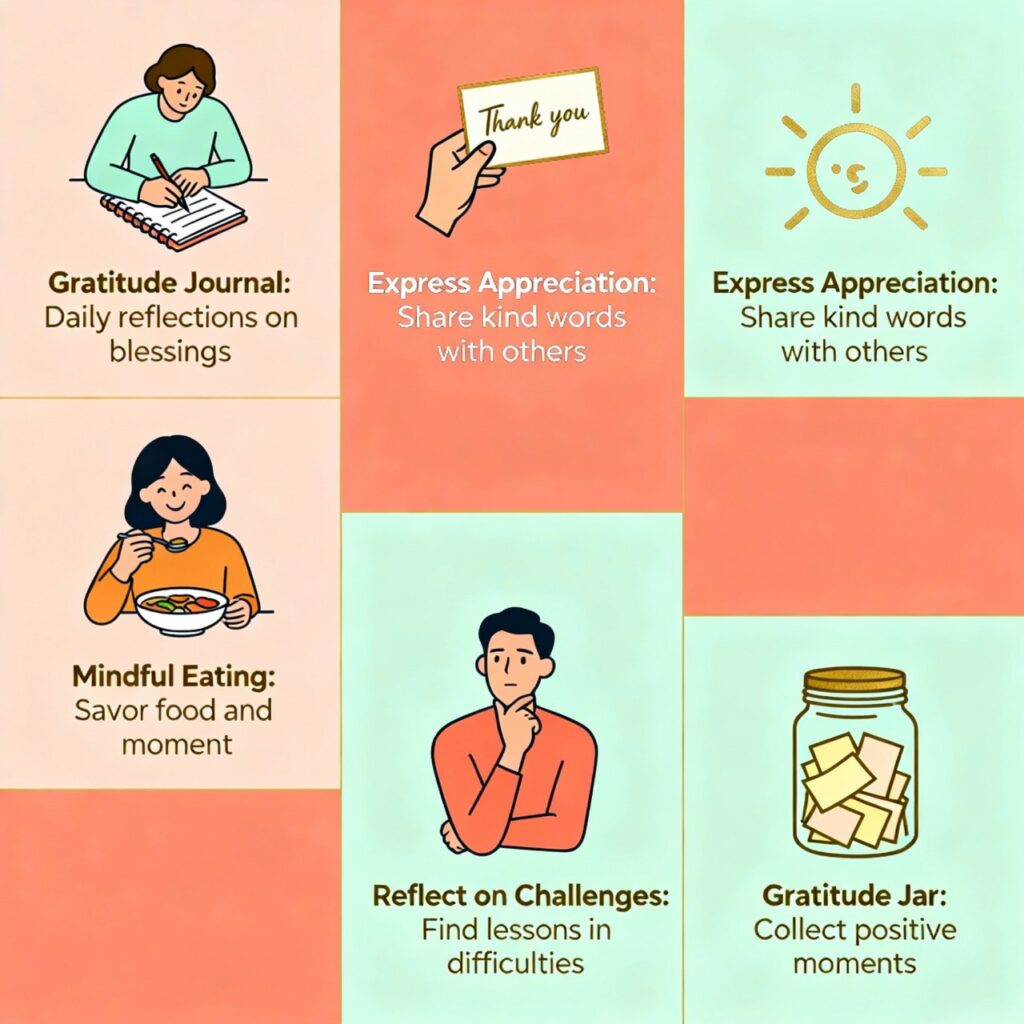
Practice 1: Start a Gratitude Journal
Begin each day by writing three things you are thankful for. A gratitude journal provides a structured space to reflect on positive experiences, both big and small. Over time, this habit retrains your brain to notice abundance rather than scarcity, which helps reduce stress and negative thinking. To make journaling more effective, include why each item makes you grateful, how it impacts your life, and any emotions associated with it. Journaling in the morning sets a positive tone for the day, improves focus, and enhances overall emotional resilience.
Practice 2: Express Appreciation to Others
Take time to express gratitude to friends, family, colleagues, or even strangers. A simple “thank you” or a heartfelt note can strengthen social bonds and build supportive relationships. Expressing appreciation not only uplifts others but also reinforces your own feelings of connectedness and emotional well-being. Over time, this practice nurtures empathy, encourages positive social interactions, and reduces feelings of isolation or loneliness.
Practice 3: Practice Mindful Gratitude During Meals
Eating is not just a necessity; it can be a powerful opportunity to practice mindfulness and gratitude. Focus on the taste, texture, and nourishment that each meal provides. Acknowledge the effort that went into preparing the food and the resources that made it possible. Mindful eating encourages present-moment awareness, reduces mindless snacking, and allows you to savor life’s simple pleasures. By associating meals with gratitude, you enhance both mental wellness and physical health.
Practice 4: Reflect on Past Challenges with Gratitude
Look back at difficult experiences and consider the lessons they provided. Gratitude does not mean ignoring struggles; instead, it involves seeing obstacles as opportunities for growth. Reflecting on past challenges from a grateful perspective fosters resilience, reframes setbacks, and strengthens problem-solving skills. This practice helps you develop a more positive outlook on life, understanding that every challenge contributes to personal growth and emotional strength.
Practice 5: Keep a Gratitude Jar
Create a tangible reminder of positive experiences by maintaining a “gratitude jar.” Write short notes about moments of joy, achievements, or kind gestures you receive and place them in the jar. Over time, this collection serves as a visual representation of abundance in your life. Whenever you feel stressed or overwhelmed, reading these notes can instantly lift your mood, reinforce positive thinking, and remind you of the many blessings present in your daily life.
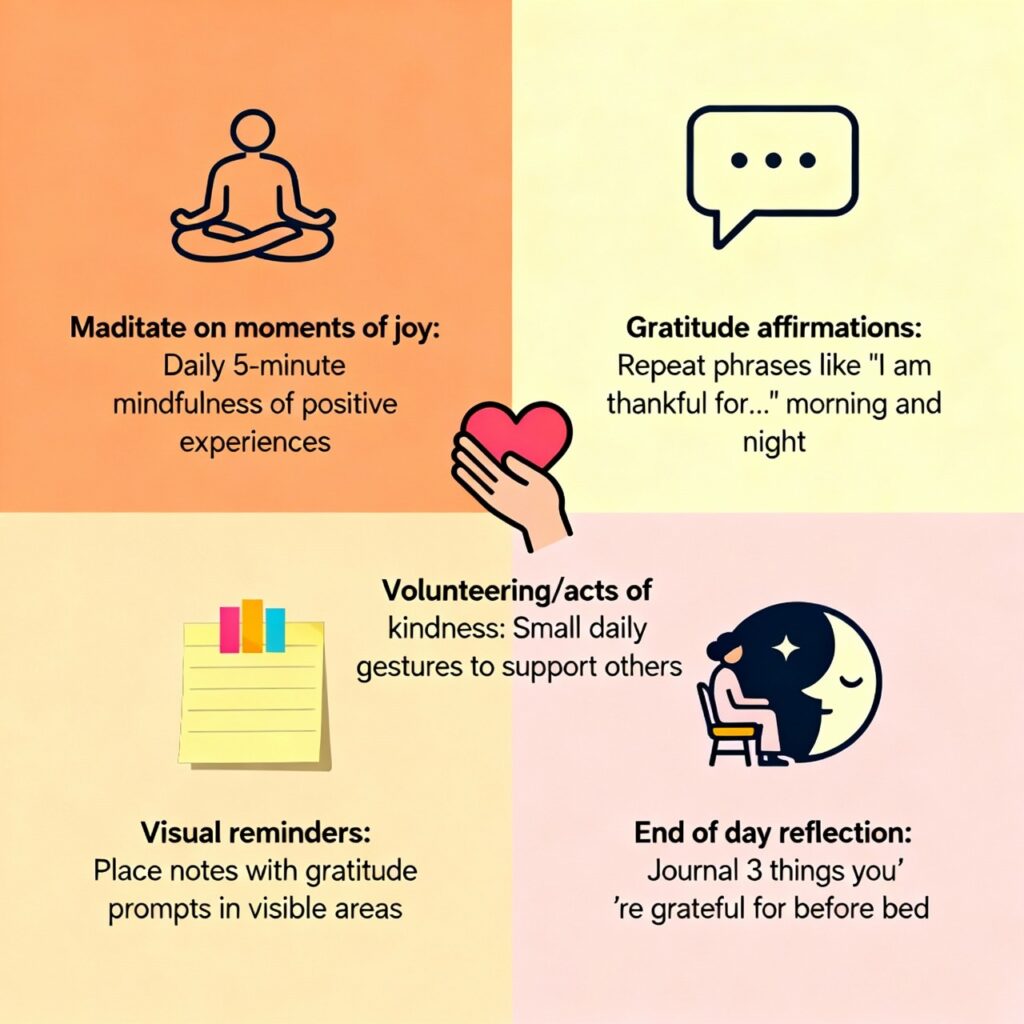
Practice 6: Meditate on Moments of Joy
Set aside time each day to meditate on things you are grateful for. Gratitude-focused meditation involves closing your eyes, taking deep breaths, and reflecting on the positive aspects of your life. This practice promotes emotional regulation, reduces stress, and strengthens mental clarity. Even just five to ten minutes of meditation daily can enhance mindfulness, deepen self-awareness, and create a sense of calm that carries throughout the day.
Practice 7: Incorporate Gratitude Affirmations
Use positive affirmations to reinforce gratitude in your daily routine. Phrases such as “I am grateful for the abundance in my life” or “I appreciate the love and support around me” help program your mind to focus on positivity. Repeating affirmations, especially during moments of self-doubt or stress, strengthens self-esteem, reduces negative thinking, and fosters a confident and optimistic mindset. Pairing affirmations with deep breathing or meditation can amplify their impact.
Practice 8: Volunteer or Perform Acts of Kindness
Helping others is a powerful way to cultivate gratitude. Volunteering, supporting someone in need, or performing small acts of kindness encourages empathy and strengthens your awareness of the positive impact you can have on the world. Engaging in service not only benefits others but also reinforces your own sense of purpose, gratitude, and connection, which are essential components of mental wellness.
Practice 9: Use Visual Reminders and Prompts
Place sticky notes, phone reminders, or visual cues around your home or workspace with gratitude prompts. These can be simple questions like “What am I thankful for today?” or inspirational quotes about appreciation. Visual reminders encourage consistent reflection and help maintain awareness of positive experiences, even during stressful or busy moments. They act as gentle nudges to pause, reflect, and cultivate mindfulness throughout your day.
Practice 10: End the Day with Reflection
Before going to bed, take a few minutes to review the day and identify positive events, achievements, or interactions. Reflecting on the day’s highlights and expressing thankfulness creates a sense of closure and satisfaction. This nightly gratitude practice can improve sleep quality, reduce rumination on negative thoughts, and strengthen emotional resilience. Over time, this ritual encourages a balanced perspective on life, helping you recognize progress, learn from challenges, and maintain a consistently positive mindset.
By incorporating these ten gratitude practices into your daily routine, you create a continuous cycle of reflection, appreciation, and positivity that nurtures mental wellness, emotional stability, and a sense of fulfillment. The combination of journaling, mindfulness, affirmations, and acts of kindness provides a holistic approach to building a grateful and resilient mindset.
6. How Gratitude Journaling Enhances These Practices
Gratitude journaling is a central tool for embedding gratitude practices into daily life. Writing down what you are thankful for not only helps internalize positivity but also reduces overthinking, mitigates negative rumination, and strengthens mental wellness. Journals provide a tangible record of progress, allowing individuals to recognize recurring patterns of abundance, personal growth, and meaningful experiences. By physically noting moments of gratitude, the brain is prompted to focus on positive stimuli, making appreciation a habitual mindset rather than an occasional thought.
Scientific research supports the profound impact of journaling on mental and emotional health. Studies indicate that gratitude journaling enhances emotional intelligence, strengthens self-awareness, and improves cognitive processing. It also contributes to better sleep quality, as taking time to reflect before bed can calm the mind and reduce intrusive thoughts. Journaling acts as a structured outlet for negative emotions, providing a safe space for reflection without judgment. This conscious practice allows individuals to process challenges, set intentions for growth, and celebrate small wins.
Moreover, gratitude journaling complements other daily habits such as mindfulness, meditation, or affirmations. For instance, pairing journaling with meditation can deepen emotional clarity, while combining it with positive affirmations reinforces self-esteem and mental resilience. Over time, journaling helps create a feedback loop where recognizing gratitude strengthens other positive habits, enhancing overall mental wellness and cultivating a more optimistic outlook on life. For those struggling with stress, journaling serves as a tool to track triggers, acknowledge progress, and celebrate personal resilience, making it an essential practice for emotional balance.
7. Tips for Making Gratitude Practices a Daily Habit
Consistency is the key to experiencing the full benefits of gratitude practices. Start small by dedicating five to ten minutes each day to reflect on what you are thankful for. It’s better to practice daily in short intervals than sporadically in long sessions, as regularity is what rewires the brain toward positivity.
Pairing gratitude practices with existing daily routines helps cement the habit. For example, integrate journaling into your morning coffee ritual, or reflect on positive experiences during your evening wind-down. Setting reminders or using apps for accountability can further support habit formation. For some, sharing gratitude with a friend or family member daily can enhance motivation and create a sense of community around positive thinking.
Approach gratitude practices with patience and authenticity. The goal is not perfection but genuine reflection. Avoid forcing gratitude, as it may lead to superficial responses. Instead, focus on sincerity—acknowledge even small moments of joy, connection, or personal achievement. Celebrate progress, however minor it may seem. Over time, these small actions accumulate, gradually reshaping your mindset, improving emotional regulation, reducing stress, and enhancing overall mental wellness.
Additionally, flexibility is important. Some days, you may have more to reflect on than others. Embrace this variation as part of the journey. Rotate different gratitude practices—journaling, meditation, affirmations, or acts of kindness—to keep the routine engaging and prevent it from becoming monotonous. This approach ensures that gratitude practices remain sustainable and impactful in the long term.
8. Real-Life Examples and Success Stories
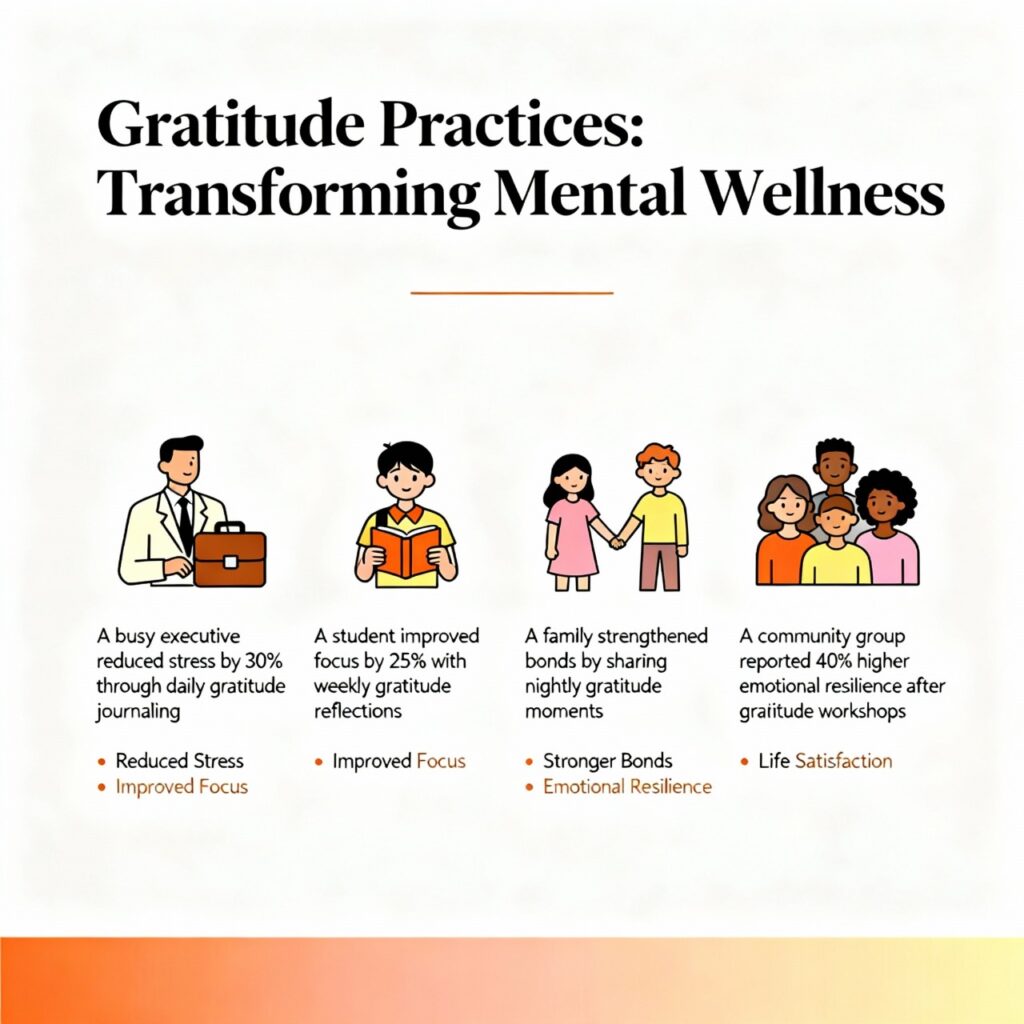
Individuals from diverse backgrounds have transformed their mental wellness through consistent gratitude practices. For example, professionals who practice daily gratitude journaling report lower workplace stress, increased focus, and improved collaboration with colleagues. By consciously appreciating team efforts and personal accomplishments, they cultivate a positive work environment and enhance productivity.
Students have also benefited from gratitude practices, noticing improvements in academic motivation, resilience, and social relationships. Those who reflect on achievements, express thanks to peers, or journal daily tend to maintain a balanced perspective during exams or challenging projects, reducing anxiety and increasing self-confidence.
Families practicing gratitude together have observed deeper emotional connections and stronger bonds. Simple rituals, such as sharing daily highlights at the dinner table or writing notes of appreciation for each other, foster harmony and open communication. Children learn early to focus on positivity, which supports emotional development and resilience.
Gratitude practices are not confined to any specific age group or profession—they are universally beneficial. Entrepreneurs, teachers, healthcare workers, and retirees alike have shared success stories of how acknowledging daily blessings transformed their outlook on life. Whether it’s overcoming stress, navigating challenges, or celebrating personal growth, gratitude practices provide a consistent framework for enhancing mental wellness, emotional intelligence, and overall life satisfaction.
9. Frequently Asked Questions (FAQs)
Q1: How long does it take to see benefits from gratitude practices?
A1: Benefits can be noticed within a few weeks, as daily reflection and journaling gradually rewire the brain toward positivity and mental wellness.
Q2: Can gratitude journaling reduce stress and anxiety?
A2: Yes, writing down positive experiences and reflecting on what you are thankful for helps calm the mind, reduce rumination, and lower stress levels.
Q3: What is the best time to practice gratitude daily?
A3: Morning routines or evening reflections work well, as they set a positive tone for the day or allow you to process daily events with appreciation.
Q4: Do gratitude practices require a lot of time?
A4: No, even 5–10 minutes a day of journaling or mindful reflection can produce meaningful results over time.
Q5: Can these practices be combined with meditation or mindfulness?
A5: Absolutely. Gratitude practices complement meditation and mindfulness, enhancing focus, emotional balance, and overall mental wellness.
10. Conclusion
Gratitude practices are transformative tools for cultivating mental wellness, emotional stability, and long-term well-being. By incorporating daily rituals such as journaling, affirmations, mindful reflection, and acts of kindness, individuals can gradually shift their mindset from negativity to appreciation. These practices not only enhance emotional regulation but also promote cognitive clarity, improve focus, and foster resilience during challenging times. Over time, gratitude becomes a lens through which daily experiences—both big and small—are perceived more positively, reducing stress and supporting overall mental health.
Consistency is key, as repeated practice strengthens neural pathways associated with positivity, resilience, and emotional regulation. Neuroscience studies indicate that gratitude activates areas of the brain linked to reward, empathy, and moral cognition, making it a scientifically supported method to enhance psychological well-being. Starting small—perhaps by writing three things you are grateful for each morning or reflecting on positive experiences at night—can lead to profound long-term benefits. Even brief daily exercises of acknowledgment and appreciation accumulate, reinforcing a sense of purpose, optimism, and emotional balance.
As gratitude becomes a natural part of daily life, you will notice improved relationships, reduced stress, enhanced emotional intelligence, and a greater sense of life satisfaction. Interpersonal connections deepen when appreciation is expressed genuinely, and social interactions become more meaningful. At work or school, practicing gratitude can improve collaboration, boost morale, and create a more positive environment. On a personal level, it nurtures self-compassion and a balanced perspective, helping individuals navigate setbacks with grace and resilience.
Moreover, gratitude practices serve as a protective factor against mental health challenges such as anxiety, depression, and burnout. By regularly acknowledging and reflecting on positive aspects of life, individuals shift focus away from negative rumination, cultivating hope and psychological resilience. Practices like gratitude journaling, meditative reflection, or verbal expressions of thanks create a feedback loop, reinforcing both internal well-being and outward positivity.
By committing to these gratitude practices today, you are investing in your mental wellness and building a foundation for a happier, more balanced, and fulfilling life. The journey toward a grateful mindset is ongoing, but each intentional act of appreciation—whether a written note, a mindful pause, or a kind gesture—brings you closer to sustained positivity, resilience, and emotional well-being. Start today, be patient with yourself, and notice how these small, consistent actions gradually transform your outlook, strengthen your mental health, and enhance your overall quality of life.
Nice and good information keep it up.
Thanks