
Table of Contents
1. Introduction
Resilience building is one of the most powerful skills a person can develop to live a balanced, fulfilling, and mentally strong life. In today’s fast-paced world, setbacks are unavoidable—whether it’s a career roadblock, a personal loss, or the stress of handling multiple responsibilities. What sets people apart is not whether they face challenges but how they respond to them. Resilience is the invisible strength that allows individuals to bounce back stronger, turn difficulties into learning experiences, and achieve lasting personal growth.
For mental wellness, resilience building is essential. It nurtures the ability to handle stress with clarity, to recover emotionally from disappointments, and to stay focused when life feels overwhelming. Beyond survival, resilience acts as a springboard for progress. When we learn to build resilience, we unlock the capacity to overcome challenges without being consumed by them and instead use these experiences as stepping stones toward growth in career, relationships, and personal fulfillment.
Resilience building is not an inborn trait limited to a few—it is a learnable and trainable skill that anyone can develop with practice. Just like physical fitness requires consistent exercise, mental and emotional resilience grows stronger through intentional habits such as reframing negative thoughts, practicing mindfulness, and cultivating self-compassion. By integrating resilience into daily life, individuals not only prepare themselves to face inevitable obstacles but also create a foundation for long-term mental wellness and personal growth.
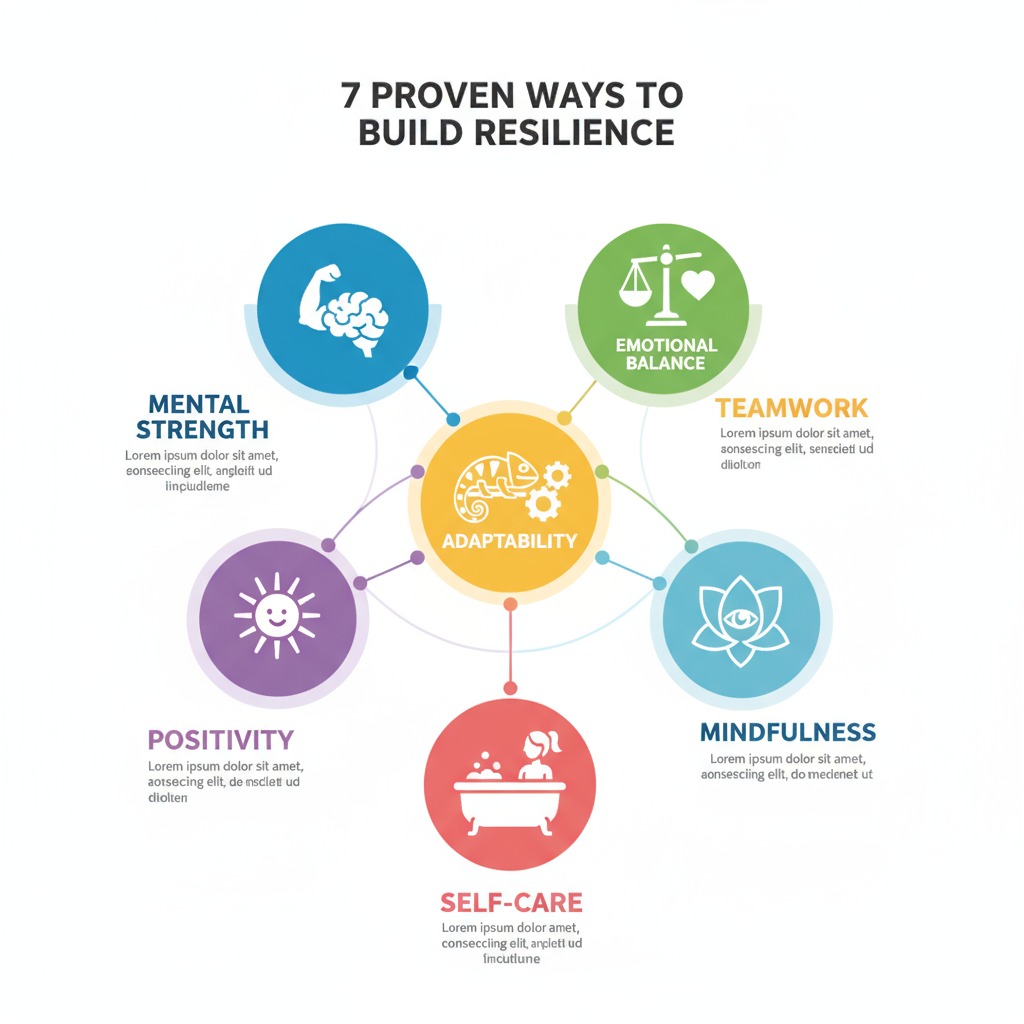
This blog explores resilience from all angles: understanding what it really means, why it matters, and how it connects directly to overcoming challenges and long-term personal growth. Most importantly, it will guide you through 7 proven resilience-building skills that can help you embrace setbacks, maintain emotional balance, and grow into a stronger, more confident version of yourself.
2. Understanding Resilience Building
Resilience building is more than simply “toughing it out” or “coping with stress.” At its core, resilience is the art of adapting positively to adversity. It’s about learning to remain stable and strong even when life throws unexpected difficulties. Resilience doesn’t mean avoiding pain or pretending everything is fine. Instead, it is about acknowledging the challenge, accepting the emotions that come with it, and then actively finding ways to move forward.
Psychologists describe resilience as a combination of emotional strength, adaptability, and problem-solving ability. For example, imagine two people losing a job. One might sink into hopelessness and self-doubt, while the other takes the setback as motivation to upskill, network, and find a better opportunity. The difference lies in resilience.
Resilience building also has a strong link with mental wellness. Studies show that resilient people are less likely to experience long-term anxiety or depression because they see problems as temporary and solvable rather than permanent and defining. On a deeper level, resilience contributes to self-improvement—because every time you overcome a difficulty, you build emotional muscle that makes the next challenge easier to face.
Resilience building is also closely tied to a growth mindset—the belief that abilities and intelligence can be developed through effort and learning. When challenges are seen as opportunities to grow rather than threats, individuals become more creative, persistent, and solution-oriented. This perspective not only reduces the fear of failure but also transforms obstacles into valuable life lessons, ultimately fostering both personal and professional growth.
3. The Connection Between Resilience, Overcoming Challenges, and Personal Growth
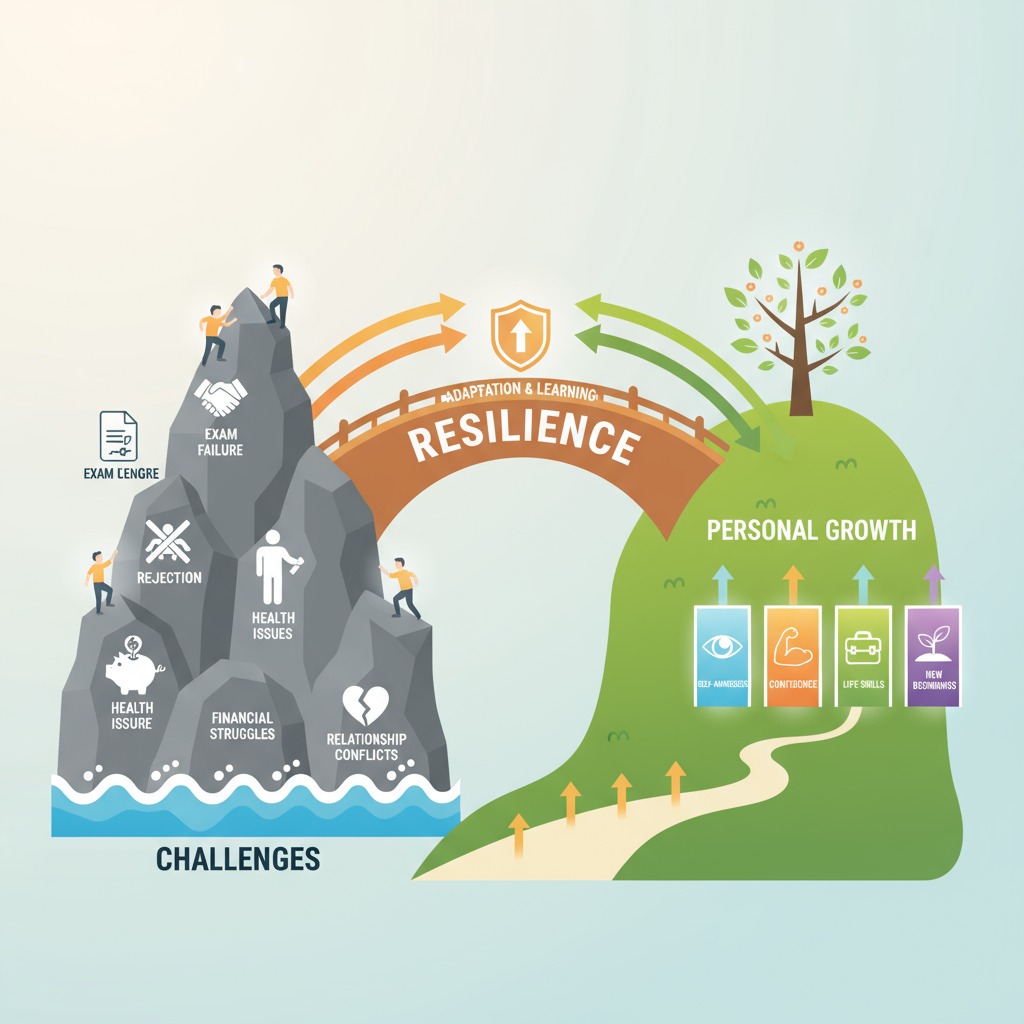
Resilience building overcoming challenges, and personal growth are three tightly connected forces. To understand their relationship, think of resilience as the bridge between hardship and growth. Challenges are inevitable in life. They come in many forms: failure in exams, rejection at work, financial struggles, health issues, or relationship conflicts. Without resilience, these challenges feel like walls blocking progress. With resilience, they become doorways leading to transformation.
Every time a person uses resilience to overcome challenges, they gain self-awareness, confidence, and life skills. For instance, dealing with financial stress may force someone to learn budgeting and discipline, which strengthens their independence. Facing personal rejection may push someone to reflect, develop empathy, and grow emotionally. This process of facing adversity, adapting, and coming out stronger is the very definition of personal growth.
Moreover, resilience is the tool that protects us from being broken by difficulties. Instead of internalizing failure as a permanent weakness, resilient individuals see it as feedback. They ask: What can I learn from this? How can I grow from this? That mindset shift is what turns life’s toughest trials into opportunities for self-discovery and long-term growth.
4. Why Resilience Building Matters in Everyday Life
Resilience building is not something reserved for extraordinary leaders, athletes, or survivors of extreme hardships—it is a skill that every person needs in their daily lives. Life, by its very nature, is unpredictable. We cannot always control what happens to us, but we can always control how we respond. Resilience is the inner capacity that allows us to manage stress, adapt to change, and recover quickly from setbacks. In today’s fast-paced and competitive world, resilience has become as essential as any academic or professional skill.
Take the workplace as an example. Modern jobs often come with long hours, tight deadlines, and high expectations. Resilient employees do not collapse under pressure; instead, they find ways to adapt, delegate, or reframe challenges as opportunities for improvement. A resilient worker who faces rejection on a project may take it as constructive feedback and return with a more refined strategy, while someone lacking resilience may give up entirely.
In academics, resilience building is just as critical. Students today face fierce competition, constant evaluations, and the pressure to meet societal expectations. A resilient student views failure in an exam not as a sign of weakness but as a signal to study smarter, adopt new methods, or seek guidance from mentors. Resilience turns failure into motivation rather than despair.
In health and wellness, resilience building plays a major role in recovery. Patients facing chronic illnesses or mental health struggles often find themselves in prolonged battles with uncertainty and discomfort. Those with resilience show higher adherence to treatment, maintain hope even in setbacks, and recover more effectively. Scientific studies show that resilient patients often report better mental health outcomes, even when their physical conditions remain unchanged, because resilience protects emotional well-being.
Finally, in moments of personal loss and grief, resilience building becomes the foundation for rebuilding life. Losing a loved one or experiencing heartbreak is one of the most painful challenges. While resilience does not erase sorrow, it provides the courage to process emotions, lean on support systems, and eventually create new meaning from life.
In summary, resilience building touches every aspect of life—professional, academic, personal, and emotional. It is the quality that allows people not only to survive difficulties but also to thrive through them, transforming adversity into growth. Without resilience, setbacks feel overwhelming. With resilience, they become the very fuel for transformation.
5. 7 Proven Resilience Building Skills for Overcoming Challenges
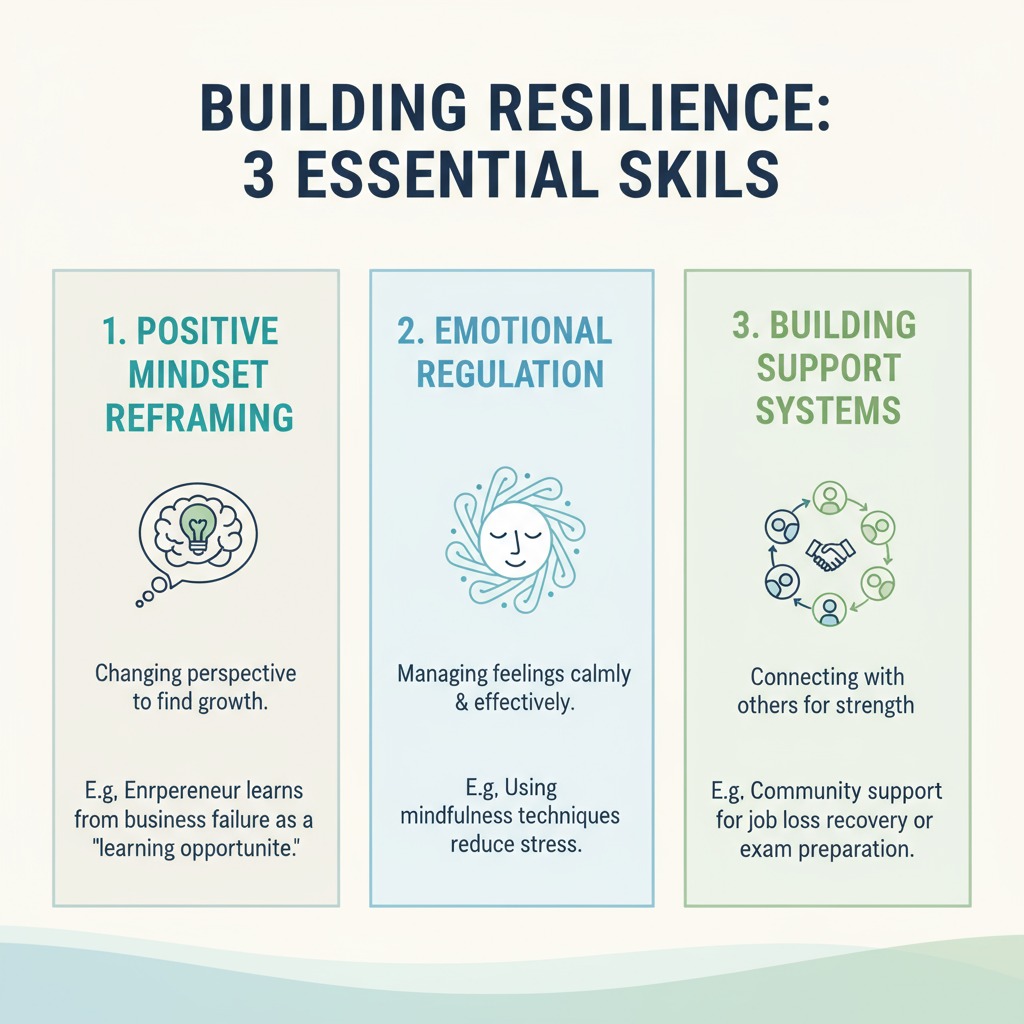
1. Positive Mindset Reframing
The first step in resilience building is learning how to reframe challenges. People naturally interpret setbacks in negative ways—thinking, “Why is this happening to me?” or “I will never succeed.” Resilient individuals shift this perspective to “What can I learn from this?” or “How will this experience help me grow?” This act of reframing changes the way the brain processes challenges, reducing stress and fostering optimism.
For example, imagine an entrepreneur whose first business fails. A negative mindset would label it as a permanent defeat. A resilient mindset, however, sees it as valuable market experience, a lesson in leadership, and a stepping stone toward future ventures. Over time, this reframing develops an optimistic outlook, allowing individuals to find hope in difficulties instead of despair.
2. Emotional Regulation
Emotions are powerful, but without regulation, they can cloud judgment and amplify stress. Emotional regulation is the ability to manage feelings constructively, especially during high-pressure situations. Resilient individuals do not suppress emotions but acknowledge them calmly and choose intentional responses.
Techniques like mindfulness meditation, journaling, and breathing exercises help reduce impulsive reactions. For example, instead of exploding in anger during an argument, a resilient person pauses, reflects, and communicates more thoughtfully. This not only prevents damage to relationships but also ensures clarity in decision-making. Emotional regulation is one of the most practical ways resilience shows itself in daily life.
3. Building Support Systems
Resilience building is not built in isolation. One of the strongest predictors of resilience is having a supportive network of friends, family, mentors, or community groups. Social support provides perspective, encouragement, and practical assistance in difficult times.
For instance, someone recovering from job loss might find motivation and new opportunities by talking with mentors or peers. Similarly, a student struggling with exams may perform better when surrounded by supportive teachers or friends. Resilient people understand that seeking help is not weakness—it is strength. By leaning on others, they replenish energy, gain wisdom, and face challenges with greater confidence.
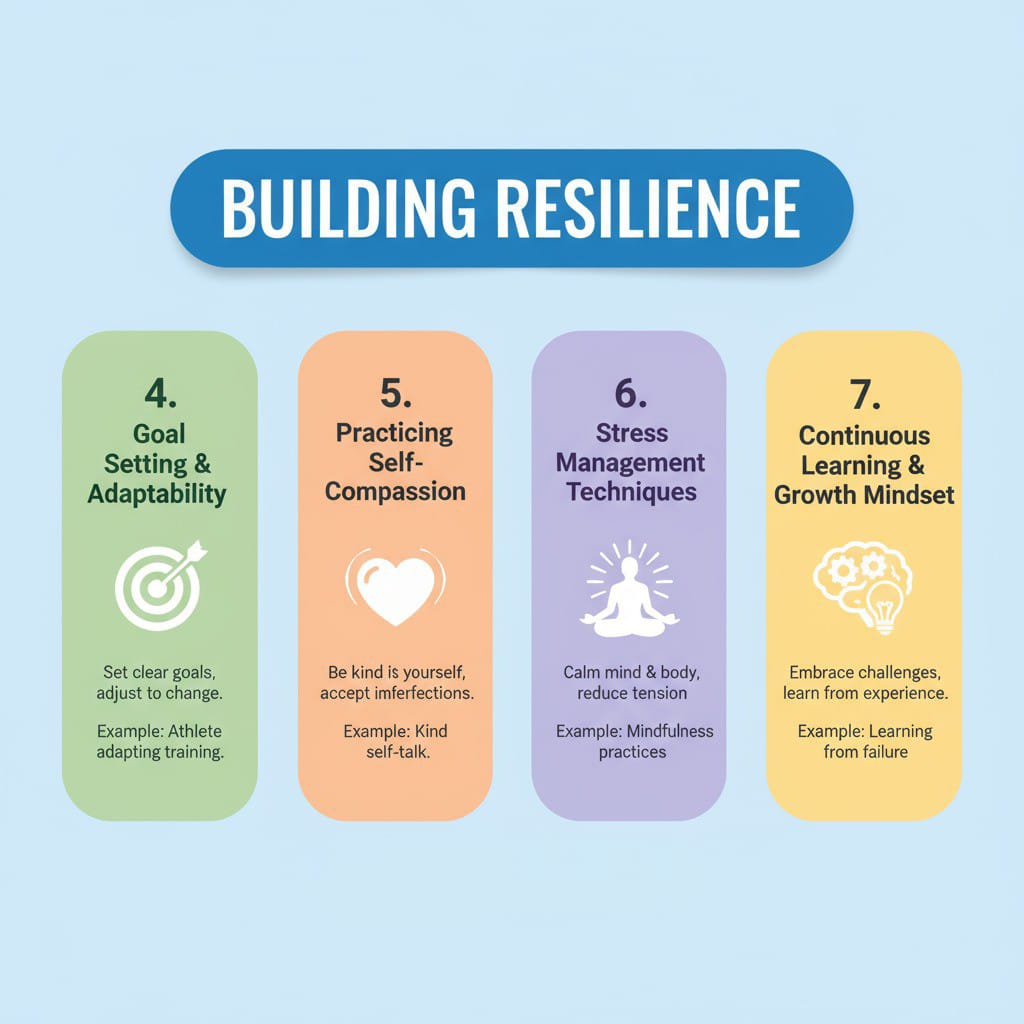
4. Goal Setting and Adaptability
Life rarely unfolds as planned. Resilient individuals know the importance of setting goals but also understand the need for flexibility. They set realistic, achievable objectives but remain open to adapting when circumstances change. This prevents frustration and keeps motivation intact.
For example, an athlete training for a competition may face an injury. Instead of giving up, resilience teaches them to adapt by adjusting the training plan, focusing on recovery, and setting new targets. Goal setting with adaptability ensures that progress continues even in uncertain situations.
5. Practicing Self-Compassion
Many people collapse under stress not because of the challenge itself but because of the harsh way they treat themselves. Resilience thrives on self-compassion—treating yourself with kindness during failure, just as you would treat a close friend.
Self-compassion prevents the destructive cycle of self-blame. Instead of saying, “I’m useless,” a resilient person says, “I made a mistake, but I can learn from it.” This attitude creates room for growth instead of self-punishment. Studies show that self-compassion not only reduces anxiety and depression but also fuels motivation, making people more likely to try again after setbacks.
6. Stress Management Techniques
Stress is an unavoidable part of life, but resilience building determines whether stress breaks us or strengthens us. Resilient people actively manage stress through techniques like mindfulness, yoga, breathing exercises, physical exercise, or even creative outlets like art and music.
Unlike unhealthy coping methods such as substance abuse or avoidance, effective stress management strengthens emotional stability and mental clarity. For instance, daily mindfulness practice can lower cortisol levels, improving focus and decision-making. Over time, this skill transforms stress into a manageable force rather than a destructive one.
7. Continuous Learning and Growth Mindset
Finally, resilience building thrives on adopting a growth mindset—the belief that abilities and intelligence can be developed through effort. Resilient individuals see challenges as opportunities for self-improvement, not as threats.
When faced with failure, they ask, “What did I learn?” rather than, “Why did I fail?” This growth mindset encourages continuous learning, adaptability, and curiosity. Whether in careers, academics, or personal life, resilient individuals constantly evolve, turning setbacks into stepping stones for long-term success.
6. Daily Practices to Strengthen Resilience
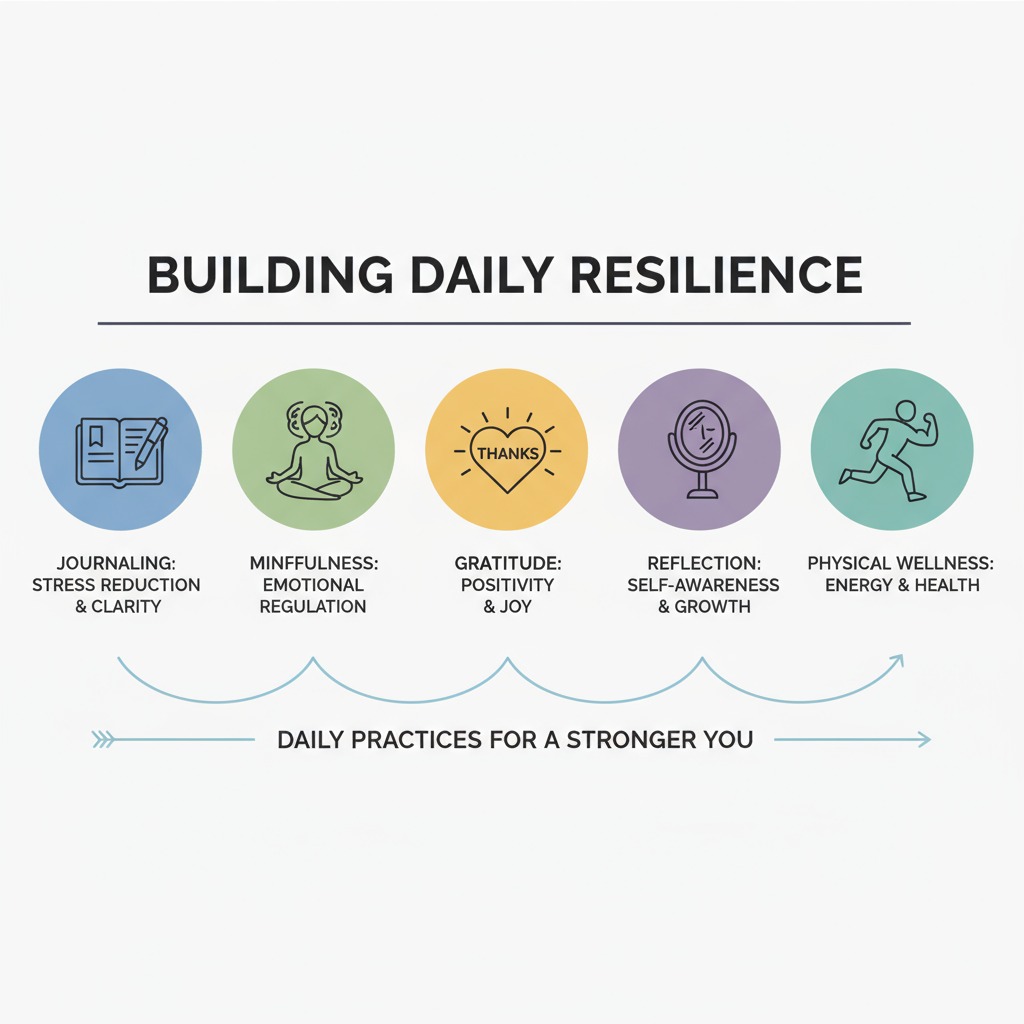
Resilience building is not achieved in a single moment—it is cultivated through consistent and intentional effort over time. Much like developing physical strength through regular exercise, resilience strengthens when we repeatedly engage in habits that nurture our mind, emotions, and behaviors. The key lies in small, consistent practices that rewire the brain for adaptability, positivity, and calmness even under stress.
One of the most effective daily practices is journaling. Writing about challenges, emotions, and lessons learned gives individuals a safe outlet to process experiences and find meaning in them. Research shows that expressive writing reduces stress, increases problem-solving ability, and fosters clarity. Over time, journaling helps people notice patterns in their thinking, track progress, and celebrate small victories. Even spending five minutes writing about three challenges and how you overcame them can gradually build resilience by reinforcing a sense of control and self-awareness.
Mindfulness and meditation are equally powerful practices. The mind often dwells on regrets of the past or worries about the future, which heightens anxiety and drains emotional energy. Mindfulness anchors us in the present moment, where resilience truly grows. Deep breathing exercises, short guided meditations, or even mindful walking in nature reduce stress hormone levels, calm the nervous system, and sharpen emotional regulation. Studies reveal that mindfulness training can change brain structures related to attention and emotional control, directly strengthening resilience. Just a few minutes daily can improve mental stability and reduce emotional reactivity.
Another cornerstone of resilience building is gratitude practice. Writing three things you are grateful for each day may sound simple, but it shifts your brain’s focus away from scarcity and negativity. Neuroscience research shows that gratitude activates regions of the brain associated with dopamine and serotonin, boosting happiness and optimism. Over time, gratitude rewires the mind to recognize opportunities and positives even in the midst of adversity. For example, instead of dwelling on a career setback, gratitude helps you recognize supportive colleagues, valuable lessons, or new opportunities that arise from the situation.
Reflective practices also play an important role. Taking a few moments before bed to mentally review your day, acknowledge what went well, and identify small improvements promotes self-awareness and growth. This routine prevents you from carrying unresolved stress into sleep, improves rest quality, and sets you up for a stronger mindset the next day. Reflection reinforces the idea that even if mistakes were made, there is always room for progress and learning.
In addition, physical wellness supports emotional resilience building. Regular exercise, even as simple as a 20-minute walk, enhances endorphin release, regulates stress, and boosts self-confidence. Combined with healthy eating and sufficient sleep, it ensures that your body has the energy and stability to manage challenges. A resilient body fuels a resilient mind.
Ultimately, resilience building through daily rituals transforms resilience from a concept into a lifestyle. The more consistently you practice, the more naturally you’ll bounce back from adversity with strength, optimism, and confidence.
7. Conclusion
Resilience building is far more than just enduring tough times—it is about transforming them into opportunities for learning, strength, and growth. It is a life skill that shapes how we respond to challenges and determines whether we emerge from them weakened or empowered. With resilience, failure becomes a stepping stone, stress becomes a motivator, and loss becomes a pathway to rediscovering meaning.
The seven proven skills—positive mindset reframing, emotional regulation, building support systems, goal setting with adaptability, self-compassion, stress management, and continuous learning with a growth mindset—serve as the foundation for resilience building. Each skill complements the other, creating a holistic approach to overcoming challenges and achieving personal growth. Positive reframing shifts your perspective, emotional regulation ensures clarity under pressure, and strong support systems remind you that you are not alone. Self-compassion shields you from self-criticism, while stress management and mindfulness keep you grounded. Finally, a growth mindset transforms setbacks into powerful lessons for the future. Together, these practices empower individuals to bounce back stronger and live with greater mental wellness.
Resilience building is not a fixed trait; it is a skill anyone can cultivate with intention and practice. Life will never be free of challenges, whether they are workplace stress, academic struggles, health issues, relationship conflicts, or personal grief. But resilience ensures that these challenges do not define us—they refine us. They teach us who we are, what we value, and what we are capable of.
The journey toward resilience building begins with small steps. Practice gratitude by writing down three things you appreciate today. Reframe one negative thought into a lesson or opportunity. Call a friend and strengthen your support network. Take a deep breath and spend five minutes in mindfulness meditation. These small actions may feel insignificant in the moment, but over time, they accumulate into powerful habits that reshape your entire approach to adversity.
By committing to resilience building, you are investing in more than just coping strategies—you are investing in long-term mental wellness, personal growth, and emotional balance. With resilience, you not only learn to survive challenges but also to thrive because of them. Life becomes less about avoiding struggles and more about embracing them as natural parts of the journey that lead to wisdom, strength, and fulfillment.
The truth is, resilience building does not eliminate pain or prevent difficulties, but it equips you with the mindset and skills to rise above them. Every setback becomes a chance to grow, every challenge an opportunity to discover your inner strength. Start building resilience today, and you will not only bounce back stronger but also live a more meaningful, balanced, and empowered life.