
Table of Contents
1. Introduction – Understanding the Power of Emotional Intelligence
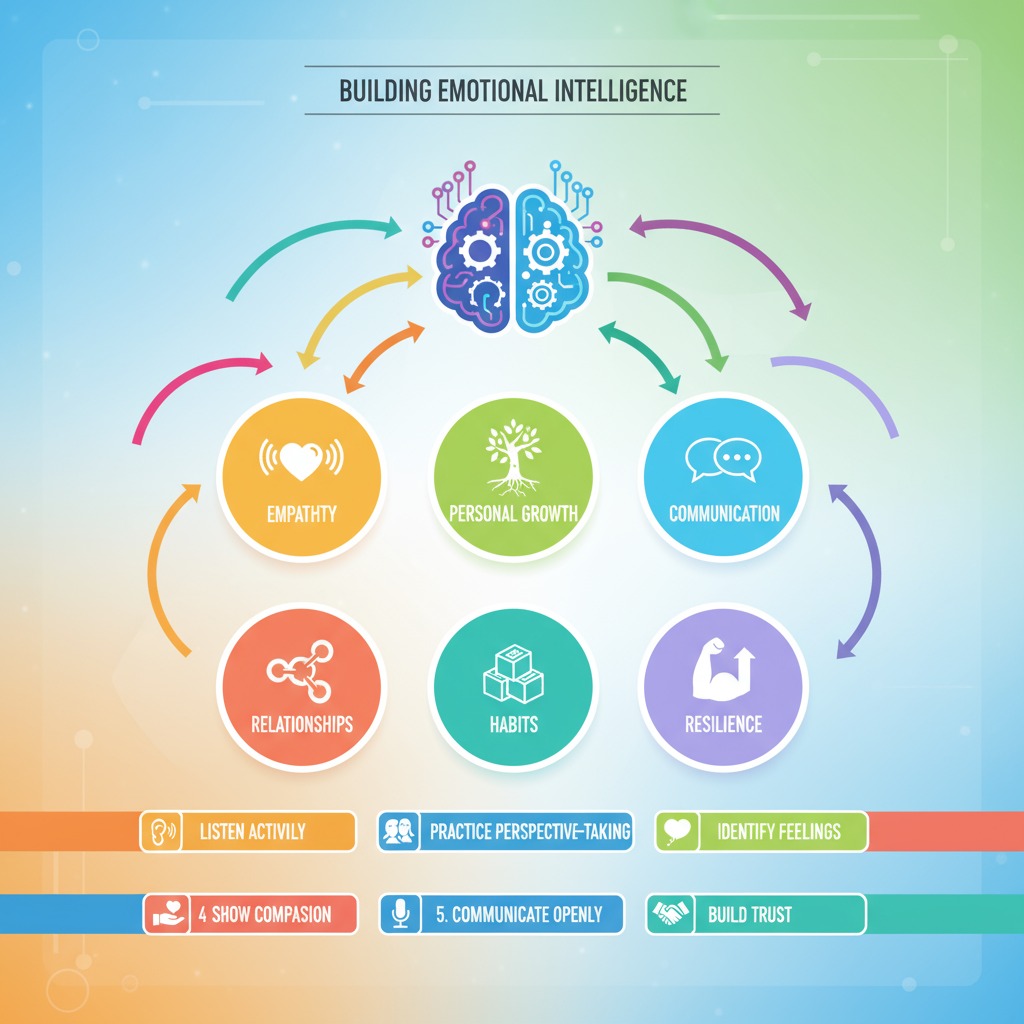
Building emotional intelligence is one of the most vital life skills for achieving personal and social well-being. While traditional intelligence, or IQ, measures cognitive abilities like problem-solving and memory, emotional intelligence (EQ) measures the capacity to recognize, understand, and manage emotions—both your own and those of others. This distinction is critical because, in everyday life, emotional awareness often determines how effectively we communicate, form connections, and navigate complex social situations.
In today’s fast-paced and emotionally complex world, technical skills and knowledge alone are no longer sufficient. Success and fulfillment increasingly depend on our ability to connect with ourselves and others on a deeper level. Emotional intelligence empowers us to regulate our reactions, respond with empathy, and approach challenges with balance and clarity. It lays the foundation for healthy communication, trust, and resilience, which are essential in personal relationships, professional environments, and even self-management.
Moreover, building emotional intelligence is not an innate trait reserved for a few; it is a skill that can be developed and strengthened over time. Like learning a language or mastering a musical instrument, EQ requires awareness, practice, and reflection. By consciously observing emotions, understanding their roots, and responding thoughtfully, individuals can transform reactive patterns into intentional behaviors. The ability to empathize, manage conflicts, and maintain composure under stress becomes a natural part of life, creating harmony within and with others.
Building emotional intelligence is also strongly linked with overall well-being. People with higher EQ levels report lower stress, higher life satisfaction, and more meaningful relationships. They are better equipped to face setbacks with resilience skills and to approach challenges with creativity rather than fear. In essence, building emotional intelligence allows us to lead not just a successful life, but a balanced and fulfilling one, making it a cornerstone of mental wellness.
2. The Psychology Behind Building Emotional Intelligence
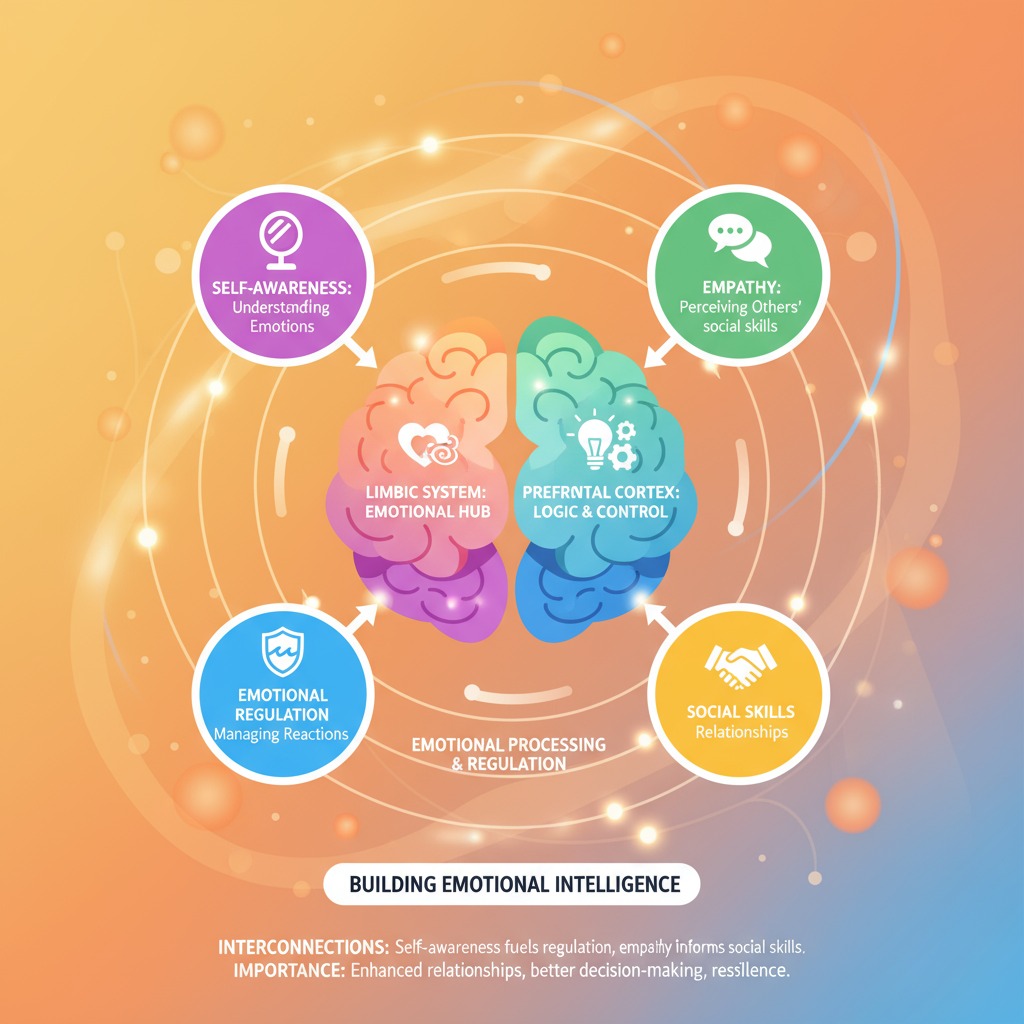
The psychology behind building emotional intelligence reveals that our emotional skills are interconnected with both cognitive processes and social learning. Emotional intelligence is composed of several core components: self-awareness, emotional regulation, empathy, and social skills. These elements are not independent; they influence one another continuously, shaping how we perceive situations, react to stress, and engage with others.
Self-awareness is the first pillar of building emotional intelligence. It involves recognizing one’s own emotions and understanding how they influence thoughts, decisions, and behaviors. Psychologically, self-awareness develops through reflective practices, mindfulness, and feedback from others. People who are highly self-aware can identify emotional triggers and patterns, which allows them to respond intentionally rather than react impulsively. This awareness forms the foundation of all other emotional skills, because without understanding yourself, it is challenging to empathize with others or maintain balanced relationships.
Building emotional intelligence is another essential component. It involves managing emotional responses in a way that is constructive rather than destructive. From a psychological perspective, the brain’s limbic system drives immediate emotional reactions, while the prefrontal cortex mediates reasoning and decision-making. Individuals with strong emotional intelligence can engage the prefrontal cortex to pause, reflect, and choose appropriate responses even under stress. Techniques like deep breathing, cognitive reframing, and mindfulness exercises strengthen this ability, helping people navigate challenging interactions calmly.
Empathy development is closely tied to social and cognitive neuroscience. It involves understanding others’ emotions, perspective-taking, and emotionally resonating with their experiences. When empathy is practiced consistently, it strengthens neural pathways related to social cognition, making it easier to connect with others and respond compassionately. Active listening, observation of nonverbal cues, and curiosity about others’ experiences are practical ways to enhance empathy.
Finally, social skills integrate these abilities to form emotionally intelligent interactions. Communication, conflict resolution, teamwork, and relationship management all rely on the conscious application of self-awareness, emotional regulation, and empathy. Psychologically, building emotional intelligence strengthens neural connections between emotional and cognitive centers in the brain, fostering adaptive social behavior. By understanding the psychology behind these skills, individuals can intentionally cultivate EQ and apply it to real-life scenarios, improving both personal fulfillment and relational effectiveness.
3. Why Emotional Intelligence Matters for Empathy Development
Building emotional intelligence directly influences empathy development, which is the ability to understand and share the feelings of others. Empathy is more than simply recognizing someone else’s emotions; it involves emotionally resonating with their experience and responding in a supportive, thoughtful manner. Psychological studies suggest that empathy begins with understanding your own emotions. People who are aware of their feelings are better equipped to recognize emotions in others and relate authentically.
Active listening is a crucial tool in empathy development. When you focus entirely on the speaker, without judgment or interruption, you create an environment of trust and validation. Empathy is also enhanced through perspective-taking — the conscious effort to see a situation from another person’s viewpoint. This practice strengthens emotional intelligence by expanding awareness beyond personal experience and fostering genuine connection.
Emotional resonance is another key aspect. It involves feeling a subtle reflection of others’ emotions within yourself. This ability is rooted in mirror neurons, which help the brain simulate and understand others’ experiences. Individuals who cultivate emotional intelligence can experience this resonance without becoming overwhelmed or losing their own emotional stability. By balancing self-awareness with empathy, people can respond compassionately while maintaining healthy emotional boundaries.
Empathy development not only improves interpersonal connections but also enhances personal growth. It encourages emotional flexibility, tolerance, and patience, while reducing impulsive reactions and conflict. The psychology behind empathy shows that emotionally intelligent individuals are more likely to engage in prosocial behaviors, create supportive communities, and maintain long-term relational harmony. By nurturing empathy, emotional intelligence becomes a bridge that connects personal insight with meaningful interactions, strengthening both individual well-being and relationship growth.
4. 6 Actionable Habits to Build Emotional Intelligence
Building emotional intelligence is most effective when practiced consistently through daily, actionable habits. These habits not only strengthen self-awareness and empathy development but also contribute significantly to long-term relationship growth. By integrating these strategies into your daily life, you create a framework for emotional mastery that enhances both personal fulfillment and social connection.
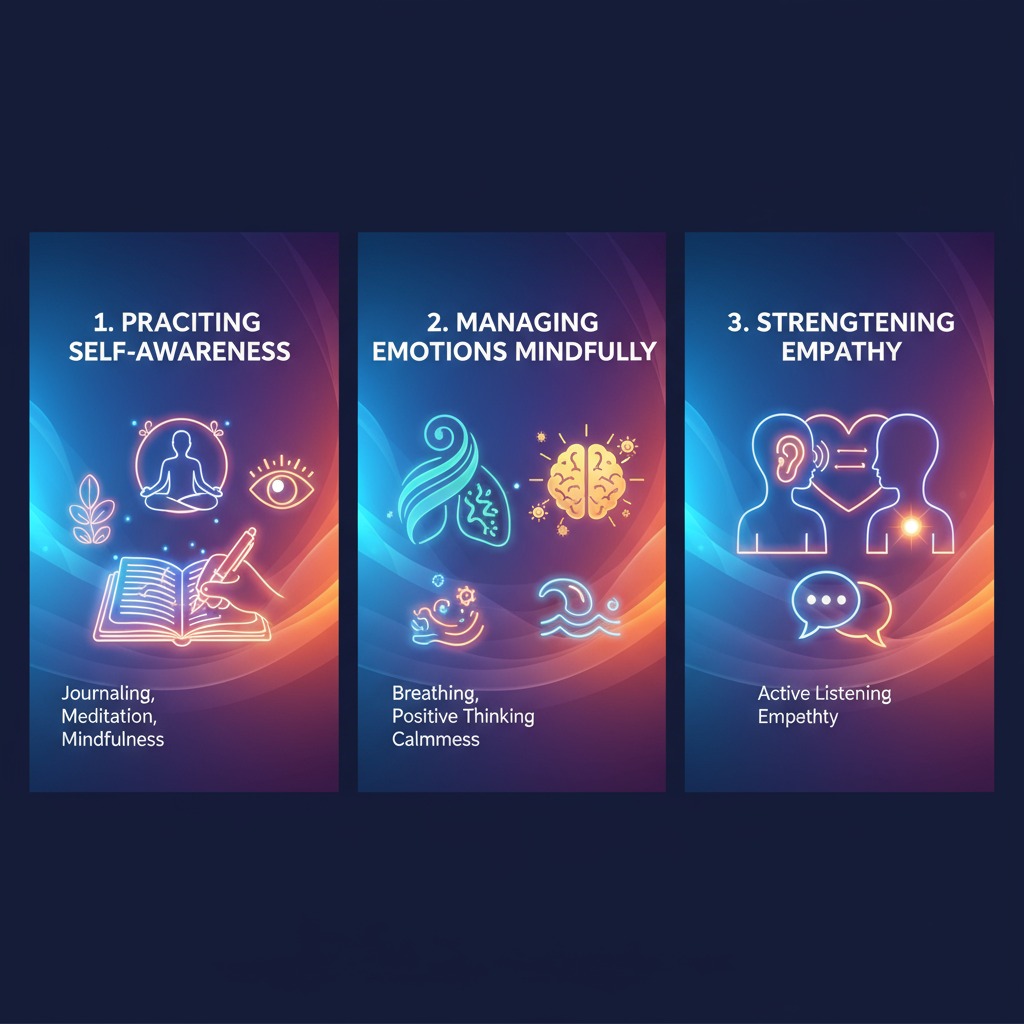
Habit 1: Practicing Self-Awareness
Building emotional intelligence begins with self-awareness, the ability to recognize and understand your own emotions. Self-awareness allows you to identify patterns in your behavior, understand triggers, and recognize how your emotions influence your thoughts and decisions. One practical way to cultivate self-awareness is through journaling. Writing down your daily experiences, emotional responses, and reflections can provide clarity and reveal recurring emotional patterns that you might otherwise overlook.
Meditation and mindfulness exercises further strengthen this habit by training the mind to stay present. Mindfulness encourages observation of emotions without judgment, helping you notice subtle feelings before they escalate into stress or conflict. Over time, heightened self-awareness allows you to pause before reacting, choose your responses intentionally, and make decisions aligned with your values. By understanding your inner emotional landscape, you lay the foundation for empathy, deeper relationships, and overall emotional resilience.
Habit 2: Managing Emotions Mindfully
Emotional regulation is a critical component of building emotional intelligence. It involves acknowledging strong emotions as they arise and responding thoughtfully rather than impulsively. Mindful emotion management prevents overreactions, reduces stress, and improves interactions with others. Techniques such as deep breathing, pausing before speaking, and reframing negative thoughts are highly effective in maintaining composure during challenging situations.
For instance, if you feel anger during a disagreement, taking a moment to breathe and assess the situation can prevent conflict escalation. Cognitive reframing — consciously interpreting situations in a less threatening or more positive light — allows you to approach problems calmly and strategically. Over time, consistent practice strengthens resilience, reduces emotional volatility, and enhances decision-making. By managing emotions mindfully, you create an environment of stability and trust, which supports both empathy development and relationship growth.
Habit 3: Strengthening Empathy Through Active Listening
Active listening is a cornerstone of building emotional intelligence and empathy development. It requires giving undivided attention to others, validating their feelings, and holding back from immediate judgment or advice. Listening attentively allows you to perceive both verbal and nonverbal cues, such as tone of voice, body language, and subtle emotional signals, which often convey more than words alone.
Practicing empathy through active listening involves curiosity and openness. Ask questions to understand the other person’s perspective fully, and paraphrase what they express to confirm understanding. This approach builds trust, encourages authentic communication, and strengthens relational bonds. Strengthened empathy also expands your own emotional awareness, enabling you to respond thoughtfully rather than reactively. By integrating active listening into daily interactions, you foster both emotional intelligence and meaningful relationships, creating a cycle of mutual understanding and support.
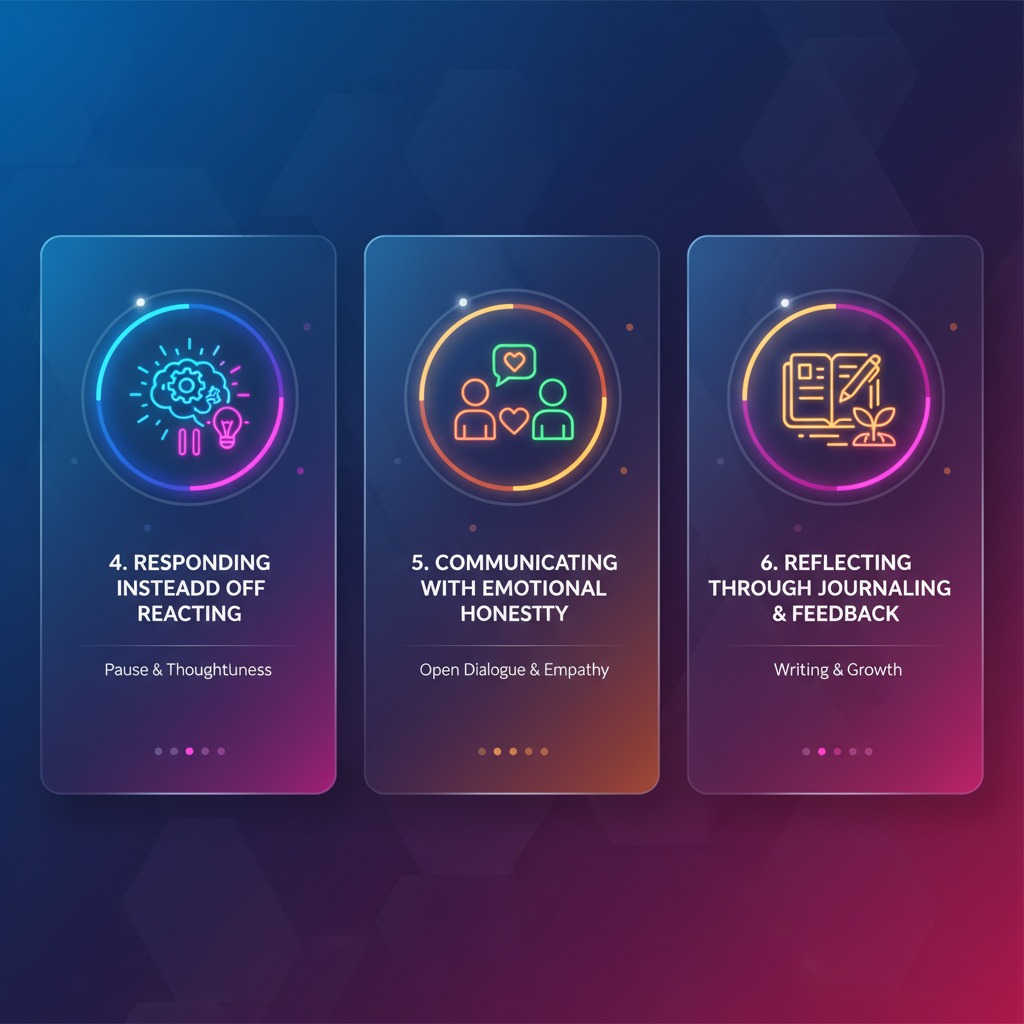
Habit 4: Responding Instead of Reacting
One of the most common barriers to building emotional intelligence is impulsive reaction to emotional triggers. Reacting immediately to anger, frustration, or disappointment can damage relationships and escalate conflict. Building emotional intelligence involves learning to pause, reflect, and respond in a way that aligns with your values and long-term goals.
For example, during a heated conversation, instead of responding defensively, take a moment to consider the other person’s perspective and the consequences of your words. This conscious choice allows for constructive dialogue, reduces misunderstandings, and preserves trust. Responding instead of reacting also strengthens emotional resilience, as it teaches your mind to manage stress and control impulses. Over time, this habit fosters calm, thoughtful interactions, reinforcing both personal integrity and relational harmony.
Habit 5: Communicating with Emotional Honesty
Emotional honesty is essential for authentic connection and effective relationship growth. It involves expressing your thoughts and feelings clearly, assertively, and with empathy. When you communicate emotionally honestly, you reduce misunderstandings and create a transparent environment where trust can thrive.
Emotional honesty does not mean sharing every fleeting thought; it means articulating feelings respectfully and constructively. For instance, instead of saying, “You always upset me,” you might say, “I feel hurt when this happens, and I’d like to discuss it.” This approach communicates your emotional experience without blaming others, encouraging dialogue rather than defensiveness. Regularly practicing emotional honesty strengthens self-awareness, deepens empathy development, and reinforces relational bonds by modeling vulnerability and trustworthiness.
Habit 6: Reflecting Through Journaling and Feedback
Reflection is a powerful tool for building emotional intelligence and sustaining growth. Journaling enables you to process daily experiences, recognize patterns in your reactions, and identify areas for improvement. Writing about interpersonal interactions can reveal insights into how your emotions influence behavior, helping you make intentional changes over time.
Seeking constructive feedback from trusted friends, colleagues, or mentors further enhances self-awareness. Feedback provides an external perspective on blind spots or recurring behaviors you may not notice, helping refine emotional skills. Combining reflection with feedback allows for continuous learning, deeper empathy, and more effective relationship management. This habit reinforces all other aspects of emotional intelligence, ensuring growth is sustainable and measurable.
Final Thoughts on Habits for Building Emotional Intelligence
Consistently practicing these six habits transforms emotional intelligence from an abstract concept into a tangible skill set. By cultivating self-awareness, managing emotions mindfully, practicing active listening, responding thoughtfully, communicating honestly, and reflecting regularly, individuals create a foundation for empathy development and stronger relationships. These habits, while simple in concept, require deliberate attention and repetition. Over time, they rewire thought patterns, enhance emotional resilience, and foster lasting connection with others.
Building emotional intelligence is not a one-time effort; it is a lifelong practice. Each habit reinforces the others, creating a cycle of personal insight, empathetic engagement, and relationship growth. When applied consistently, these habits empower you to navigate life’s emotional challenges with clarity, compassion, and confidence. The more you integrate them into daily life, the more natural emotional intelligence becomes, shaping not just your interactions but your overall well-being and fulfillment.
5. The Role of Emotional Intelligence in Relationship Growth
Building emotional intelligence is a cornerstone for fostering strong, meaningful, and long-lasting relationships. People with high EQ are equipped to navigate the complex emotional dynamics that exist in personal and professional interactions. Emotional intelligence allows individuals to communicate clearly, manage conflicts effectively, and respond to others with empathy and understanding, rather than reacting impulsively. This ability creates a foundation for trust, mutual respect, and emotional safety in every relationship.
Relationship growth thrives when empathy development and emotional regulation are practiced consistently. For example, couples who take time to understand each other’s perspectives and respond without judgment often experience deeper intimacy and connection. Friends who listen actively, validate feelings, and support each other’s emotional needs tend to develop stronger, longer-lasting bonds. In workplace settings, colleagues who communicate with emotional honesty and manage stress effectively create a collaborative environment where everyone feels valued and heard. By applying emotional intelligence in these interactions, individuals foster a culture of openness, respect, and cooperation, which is essential for relational growth.
Beyond individual interactions, building emotional intelligence encourages healthy conflict resolution. Rather than escalating disagreements through criticism or defensiveness, emotionally intelligent individuals approach conflicts with curiosity and calm. They focus on solutions, listen attentively, and validate emotions, which reduces tension and strengthens mutual understanding. This approach also nurtures long-term trust because people feel safe expressing themselves without fear of judgment or retaliation.
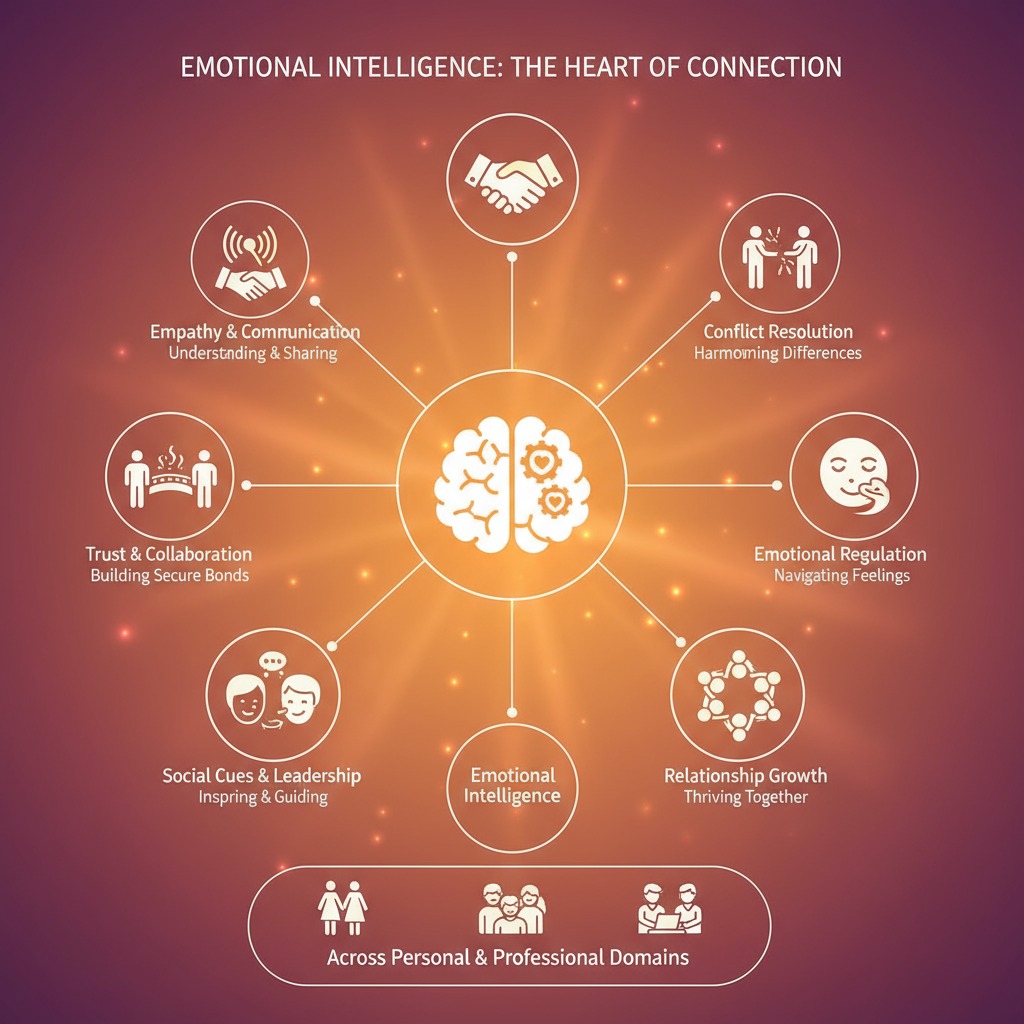
In professional contexts, building emotional intelligence is equally transformative. Leaders who demonstrate empathy, self-awareness, and emotional regulation inspire loyalty, engagement, and motivation among team members. They can manage team dynamics effectively, resolve conflicts constructively, and cultivate a positive organizational culture. Employees who practice emotional intelligence contribute to teamwork, cooperation, and creative problem-solving. Across personal, social, and professional domains, building emotional intelligence is a critical driver for sustained relationship growth and meaningful connections.
Moreover, emotionally intelligent individuals are better at reading social cues and adapting to the emotional needs of those around them. They can sense when someone is stressed, anxious, or in need of support and respond appropriately. This responsiveness strengthens bonds because people feel acknowledged, understood, and valued. Ultimately, emotional intelligence transforms relationships from transactional interactions into deeply connected, mutually supportive partnerships, fostering harmony, empathy, and shared growth.
6. Conclusion – Nurturing Lifelong Emotional Growth
Building emotional intelligence is a lifelong journey rather than a destination. It is not about suppressing emotions or avoiding discomfort but about understanding, processing, and harnessing emotions to improve personal well-being and relational outcomes. Each day presents countless opportunities to practice self-awareness, emotional regulation, empathy development, and mindful communication. By consistently engaging in these practices, individuals strengthen their brain’s capacity for emotional insight and social understanding, laying the foundation for resilient, meaningful relationships.
The psychology of building emotional intelligence reveals that personal growth is inseparable from relational growth. By cultivating self-awareness, recognizing emotional triggers, responding thoughtfully, and reflecting on experiences, individuals create more authentic and harmonious connections. Challenges and conflicts, when approached with emotional intelligence, become opportunities for learning, adaptation, and mutual understanding rather than sources of stress or resentment. Over time, these practices reshape how we interact with others, fostering environments built on trust, compassion, and cooperation.
Empathy development is particularly crucial in this process. Understanding your own emotions allows you to resonate with others authentically, strengthening bonds of trust, compassion, and intimacy. Emotionally intelligent individuals can anticipate the emotional needs of others, respond sensitively, and communicate effectively, creating a cycle of mutual support. Relationships flourish when both parties can express themselves openly, listen without judgment, and respond thoughtfully. The more consistently emotional intelligence is nurtured, the deeper and more resilient these connections become, enhancing both personal fulfillment and relational harmony.
Building emotional intelligence also empowers individuals to manage stress, navigate challenges, and maintain balance in daily life. By integrating habits such as mindful self-reflection, deliberate emotional regulation, active listening, honest communication, and feedback incorporation, emotional intelligence becomes an ongoing practice rather than a temporary effort. Each deliberate action strengthens awareness, empathy, and relational competence, transforming emotional challenges into opportunities for growth and connection.
Ultimately, building emotional intelligence equips individuals with the skills to lead a life of insight, balance, and connectedness. It allows you to transform self-understanding into empathy, empathy into connection, and connection into enduring personal and relational growth. By embracing this journey, you cultivate not only meaningful relationships but also a profound sense of inner peace, resilience, and fulfillment. The path of emotional intelligence is continuous, offering lifelong opportunities to learn, evolve, and foster authentic connections with yourself and others.