
Table of Contents
Introduction
Growth mindset serves as the bedrock upon which lasting achievement and personal transformation are built. When individuals embrace a growth mindset, they start to perceive challenges as avenues for growth, setbacks as essential stepping stones on the path to success, and effort as the true catalyst for progress. Unlike fleeting fixes or temporary surges of motivation, a growth mindset cultivates the mental endurance necessary to remain steadfast in pursuit of long-term goals while deftly navigating obstacles with a sense of confidence and purpose.
Adopting a growth mindset empowers individuals to engage with life through a lens of curiosity, adaptability, and an openness to personal development. Instead of recoiling from failure, they view mistakes as valuable feedback, using these experiences to refine their strategies and enhance future outcomes. This perspective is particularly crucial in the fast-paced and highly competitive world we inhabit today, where the ability to bounce back from adversity often delineates the line between those who give up and those who ultimately succeed.
To illustrate this, consider two students preparing for the same competitive exams. One student, anchored in a fixed mindset, believes that intelligence is an immutable trait and, upon encountering difficulties, quickly resigns to defeat. The other, equipped with a growth mindset, understands that skills and knowledge can be cultivated through dedicated effort and strategic practice. This second student not only studies more effectively but also learns from their mistakes, ultimately surpassing the first student in performance. The disparity between their outcomes lies not in natural talent, but in their differing mindsets.
In this blog, we will delve into seven powerful growth mindset techniques designed to bolster resilience and facilitate the achievement of your long-term goals. Whether you identify as a student, a professional, an entrepreneur, or simply someone on a quest for personal growth, these methods possess the transformative potential to alter the way you think, act, and ultimately succeed.
Understanding Growth Mindset
The concept of a growth mindset is rooted in the belief that abilities, intelligence, and talents are not fixed traits but rather qualities that can be developed through dedicated effort, learning, and persistence. This transformative idea was introduced and popularized by psychologist Carol Dweck, who drew a clear distinction between the growth mindset and the opposing fixed mindset.
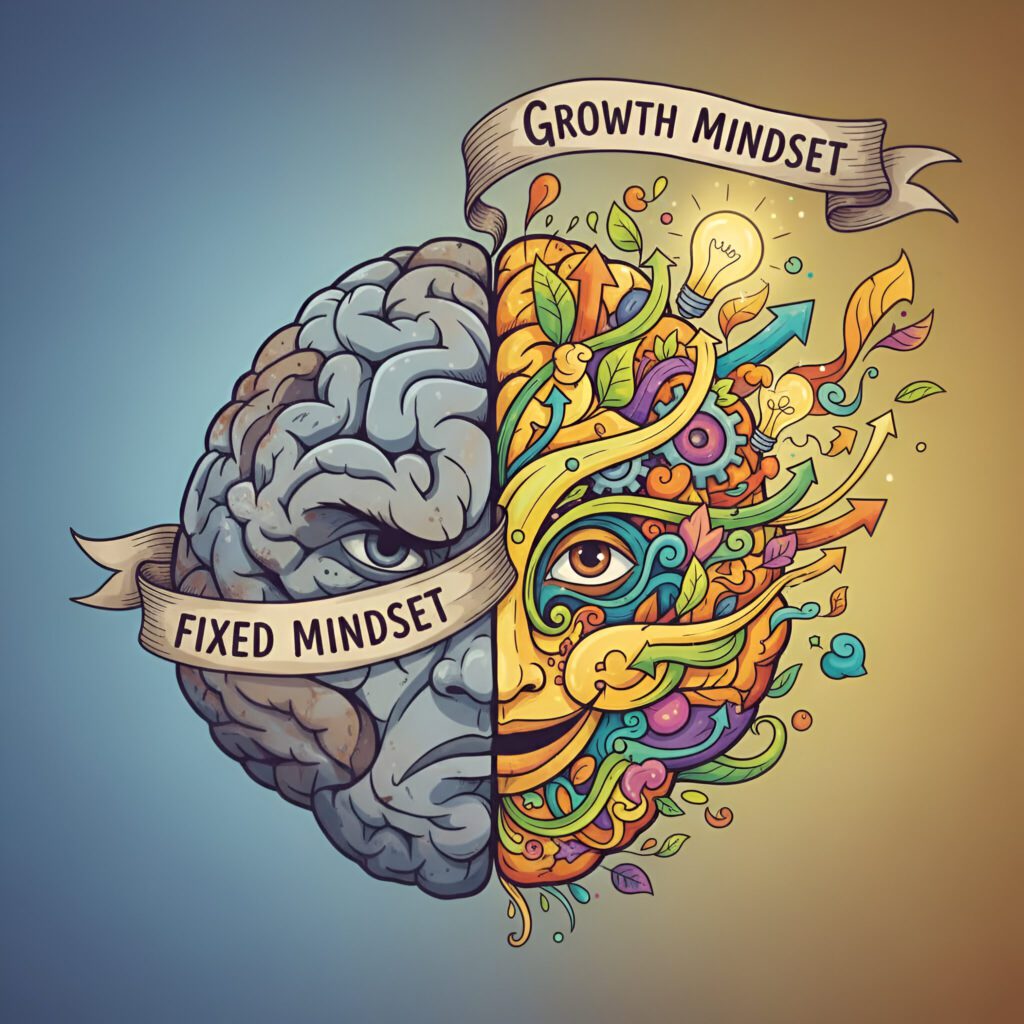
A fixed mindset is characterized by the belief that intelligence and talent are innate and unchangeable. Individuals who harbor this mindset often shy away from challenges, give up easily in the face of adversity, and harbor a profound fear of failure, viewing it as a direct reflection of their limited capabilities.
In contrast, a growth mindset posits that skills and intelligence can be enhanced over time through sustained effort, practice, and learning. Those who embody this mindset actively seek out challenges, demonstrate resilience when confronted with difficulties, and regard effort as the crucial pathway to mastery and achievement.
This fundamental shift in perspective can radically alter how we define and perceive success. Rather than engaging in counterproductive comparisons with others, individuals with a growth mindset focus on their personal progress, striving to improve incrementally day by day. This approach fosters resilience, as setbacks are reframed not as failures but as opportunities for feedback and growth.
For instance, consider the renowned athlete Michael Jordan, who faced significant rejection early in his career when he was cut from his high school basketball team. Instead of succumbing to despair, he channeled his disappointment into renewed determination, committing to rigorous practice and effort until he ultimately transcended his initial setbacks. This is a quintessential example of a growth mindset in action—transmuting adversity into the fuel for long-term achievement.
Moreover, cultivating a growth mindset is vital not only for professional aspirations but also for mental wellness and overall well-being. It equips individuals with the tools to manage stress more effectively, recover more swiftly from emotional challenges, and maintain motivation even amid periods of uncertainty and difficulty.
Why Growth Mindset is the Key to Resilience and Goal Achievement
The growth mindset is intrinsically linked to resilience—the capacity to rebound from setbacks and persist in the face of challenges. Life is replete with unforeseen obstacles—be it failed exams, rejected job applications, business losses, or personal struggles. Absent resilience, many individuals may falter and abandon their pursuits midway. However, with a growth mindset, these setbacks can be reframed as stepping stones rather than insurmountable barriers.
By adopting a growth mindset, individuals are empowered to reframe problems in ways that foster empowerment and continued effort. For instance:
- A failed business venture may be viewed as an invaluable opportunity to gain deeper insights into customer needs and preferences.
- A rejected job application can serve as motivation to hone interview skills and refine one’s professional approach.
- A personal setback might trigger a period of self-reflection and emotional growth, leading to greater self-awareness and maturity.
Research consistently demonstrates that students who cultivate a growth mindset are more likely to persevere through challenging subjects such as mathematics and science, even when they encounter initial difficulties. Similarly, entrepreneurs and leaders who embrace a growth mindset exhibit greater adaptability in times of crisis and are more likely to achieve sustained success over the long haul.
A compelling case study is that of Elon Musk, whose journey with SpaceX was fraught with repeated failures. A fixed mindset might have led him to conclude, “This is impossible.” However, a growth mindset drove him to dissect each failure, glean lessons from his mistakes, and iterate on his strategies. This relentless pursuit of improvement ultimately culminated in the historic achievement of reusable rockets, a breakthrough that revolutionized the landscape of space travel.
Furthermore, a growth mindset transforms the daunting nature of long-term goals into manageable milestones. Rather than perceiving the distance to one’s objectives as insurmountable, individuals are encouraged to break down their aspirations into smaller, achievable steps, focusing on steady progress. This patience and persistence ultimately pave the way for sustainable success.

8 Growth Mindset Techniques
Technique 1: Embrace Challenges with Confidence
The journey towards a growth mindset begins with the conscious decision to embrace challenges rather than shy away from them. Each challenge faced pushes individuals beyond their comfort zones, unearthing hidden potential that may have remained dormant otherwise. Take, for instance, the daunting task of learning a new language. Initially overwhelming, this endeavor becomes manageable when approached through small, daily challenges that gradually build fluency over time. Instead of recoiling from difficulty, lean into it, recognizing it as a golden opportunity for personal development and growth.
Practical Tip: Whenever you sense resistance toward a challenge, remind yourself, “This is an opportunity to grow, not a threat.” This simple mental shift can transform your perspective and energize your approach.
Technique 2: Reframe Failures as Learning Opportunities
A growth mindset flourishes when failures are reframed as valuable learning experiences. Instead of languishing in self-pity and asking, “Why me?” pivot your focus to the question, “What can I learn from this experience?” Consider the journey of Thomas Edison, who famously failed hundreds of times before ultimately inventing the light bulb. Each failure represented a data point, inching him closer to success rather than marking the end of his endeavor.
Practical Tip: Maintain a “failure journal” where you document mistakes alongside the lessons gleaned from each experience. Over time, this record will reveal patterns of growth and reinforce your understanding of progress.
Technique 3: Value Effort and Consistency Over Talent
At the heart of a growth mindset lies the belief that effort supersedes innate talent. While natural ability may provide an initial advantage, it is consistent practice and dedication that lead to mastery. Cristiano Ronaldo exemplifies this principle; he may not have been the most naturally gifted football player, but his unwavering commitment to relentless training ultimately solidified his status as one of the greatest athletes of all time.
Practical Tip: Shift your self-talk from self-defeating thoughts like “I’m not good at this” to affirming statements such as “I’m improving every time I try.” This positive reinforcement cultivates a growth-oriented mindset.
Technique 4: Develop Self-Reflection Habits Like Journaling
A growth mindset deepens in individuals who actively engage in self-reflection. Journaling serves as an effective tool to uncover limiting beliefs and replace them with empowering alternatives. By writing daily reflections such as “What did I learn today?” individuals foster self-awareness and reinforce their sense of progress.
Practical Tip: Dedicate 10 minutes each day to journaling, focusing on both achievements and setbacks. Over time, this habit will illuminate growth patterns and fortify your resilience.

Technique 5: Strengthen Resilience Through Mindfulness
To foster a growth mindset, it is essential to cultivate calmness and clarity, especially during challenging moments. Mindfulness practices such as meditation, gratitude journaling, and deep breathing exercises can significantly reduce stress, allowing individuals to maintain focus on growth. Athletes and performers frequently employ mindfulness techniques to stay centered and composed in high-pressure scenarios.
Practical Tip: Set aside 5–10 minutes daily for mindful breathing exercises. This practice not only resets your focus but also diminishes emotional reactivity, enhancing your ability to approach challenges with a clear mind.
Technique 6: Surround Yourself with Growth-Minded People
A growth mindset thrives in nurturing environments. When you surround yourself with resilient, motivated individuals, their positive energy and habits can profoundly influence your own mindset. For instance, a student embedded in a driven peer group is more likely to elevate their efforts and remain committed than one who finds themselves surrounded by negativity.
Practical Tip: Seek out mastermind groups, mentorship programs, or communities that encourage learning and foster growth. Engaging with like-minded individuals can amplify your commitment to a growth-oriented journey.
Technique 7: Celebrate Small Wins to Stay Motivated Long-Term
A hallmark of a growth mindset is the recognition that significant achievements are often the culmination of small, consistent victories. Celebrating these incremental successes not only keeps motivation alive but also builds momentum towards larger goals. For example, a writer who acknowledges each completed chapter is more likely to maintain enthusiasm and remain committed to finishing the entire book.
Practical Tip: Create a “success jar” where you write down every achievement, no matter how minor, and drop them in. When motivation wanes, revisiting these notes will serve as a powerful reminder of your progress.
Technique 8: Practice Lifelong Learning to Stay Adaptable
At the core of a growth mindset is the understanding that learning never stops. Lifelong learning means continuously seeking new knowledge, skills, and perspectives beyond formal education. This habit not only expands your capabilities but also strengthens resilience by preparing you to adapt when faced with unexpected challenges. For example, many successful entrepreneurs attribute their growth to staying curious—reading widely, taking up new courses, and embracing opportunities to learn from every experience.
Practical Tip: Dedicate at least 20–30 minutes daily to learning something new—whether it’s reading a book, listening to an educational podcast, or taking an online course. Over time, this consistent practice nurtures adaptability and ensures you remain prepared to achieve long-term goals.

Benefits of Practicing Growth Mindset Techniques
The benefits of cultivating a growth mindset extend far beyond mere personal achievement; they permeate every facet of life. A growth mindset enhances clarity and focus, enabling individuals to define their goals and map out a realistic path to achievement. It fosters resilience, equipping individuals with the tools to rebound swiftly from setbacks, thereby reducing stress and bolstering emotional well-being.
Moreover, a growth mindset amplifies productivity, as consistent effort begets measurable results over time. It nurtures confidence, with each accomplishment—no matter how small—reinforcing self-belief and self-efficacy. Most importantly, it cultivates a sense of fulfillment, imparting individuals with a deeper sense of purpose and progress in their lives.
For example, at Google, the principles of growth mindset are intricately woven into their workplace culture through the implementation of “OKRs” (Objectives and Key Results). Employees are encouraged to set ambitious goals, take calculated risks, and learn from failures without the paralyzing fear of repercussions. This culture of continuous improvement has propelled Google to the forefront of innovation, positioning it as one of the most dynamic companies in the world.
On an individual level, the benefits of embracing a growth mindset extend well beyond professional success. They enhance interpersonal relationships, promote healthier coping mechanisms for stress, and foster long-term satisfaction in life. Ultimately, a growth mindset represents not just a professional strategy but a holistic lifestyle shift that nurtures comprehensive growth and development.
Practical Tips to Stay Consistent with Growth Mindset
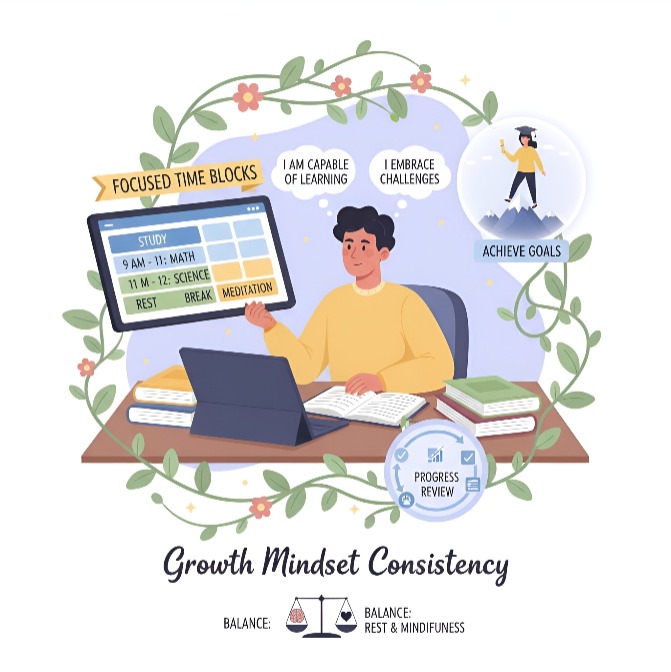
Consistency is key to harnessing the full potential of a growth mindset and transforming latent potential into tangible progress. To ensure that growth mindset techniques become ingrained in daily life, one effective strategy is to incorporate affirmations that reinforce beliefs in growth and capability. By repeatedly affirming statements like “I am capable of learning and improving,” individuals can gradually shift their mindset towards a more positive outlook.
Visualization is another powerful tool that can contribute to a growth mindset. By mentally picturing oneself achieving long-term goals, individuals create a mental blueprint that informs their actions and decisions. Additionally, employing time-blocking strategies—dedicating specific hours each day to focused tasks—can help build discipline and consistency in pursuing goals.
Regular progress reviews are also crucial for maintaining momentum. Setting aside time each week to assess achievements, identify setbacks, and refine strategies fosters a culture of continuous improvement. Equally important is the need to balance effort with rest; a growth mindset recognizes that recovery is an integral part of progress. Without adequate rest, burnout can easily undermine resilience.
For instance, a student preparing for a competitive civil services examination can cultivate consistency by integrating structured study hours with mindfulness exercises, physical activity, and reflective journaling. This balanced approach promotes sustained productivity while prioritizing mental well-being.
Frequently Asked Questions (FAQs)
1. What is a growth mindset?
A growth mindset is the belief that skills, intelligence, and abilities can be developed over time through effort, learning, and persistence. It emphasizes progress rather than perfection.
2. How does a growth mindset help build resilience?
A growth mindset encourages you to see setbacks as opportunities to learn rather than failures. This perspective helps you recover faster from challenges and stay motivated in the long run.
3. Can a growth mindset really help me achieve long-term goals?
Yes. By focusing on continuous improvement, valuing effort, and learning from mistakes, a growth mindset equips you with the persistence and adaptability needed to achieve long-term goals.
4. What are some practical techniques to develop a growth mindset?
Some proven techniques include embracing challenges, reframing failures, practicing mindfulness, journaling progress, surrounding yourself with positivity, and celebrating small wins.
5. Is a growth mindset important only for career success?
No. A growth mindset is valuable in every area of life—personal growth, relationships, academics, health, and professional development. It helps you grow holistically.
Conclusion
In conclusion, a growth mindset stands as the ultimate catalyst for resilience, motivation, and enduring success. Without this empowering perspective, setbacks may appear as dead ends; but with it, they transform into essential stepping stones on the path to progress. By practicing the seven proven techniques—embracing challenges, reframing failures, valuing effort, journaling, practicing mindfulness, surrounding yourself with positivity, and celebrating small wins—you lay down a strong foundation for achieving your long-term goals. Each of these methods does not work in isolation but complements one another, creating a cycle of growth, confidence, and determination.
A growth mindset is not about quick fixes or seeking overnight success; instead, it embodies the principle of continuous, steady progress. Every action you take, no matter how small, adds to your journey. Over time, these actions compound into meaningful achievements that shape your path. Whether your aspirations lie in academics, professional growth, entrepreneurship, or personal development, cultivating a growth mindset provides you with the emotional strength and mental clarity to keep moving forward even when challenges arise.
Moreover, building resilience through a growth mindset fosters a deeper sense of purpose. You begin to see obstacles not as threats but as opportunities for personal evolution. Failures no longer carry the weight of defeat but instead hold valuable lessons that guide you toward better strategies. This shift in perspective is what separates those who merely dream from those who turn their dreams into reality. It is not talent or luck that ensures long-term success—it is the mindset you bring to every situation.
Ultimately, success is not defined by perfection from the outset; it is about cultivating the strength, intelligence, and resilience to grow with each challenge encountered. A growth mindset nurtures patience, self-belief, and perseverance—all of which are essential qualities in today’s fast-paced, unpredictable world. By embracing this mindset as a lifestyle, you open doors to endless opportunities and unlock your true potential.
As you move forward, remember that growth is a lifelong process. Celebrate every milestone, however small, and never stop learning. With a growth mindset at the core of your being, you not only build resilience and achieve goals but also create a life of purpose, fulfillment, and lasting success. The journey may not always be easy, but with the right mindset, it will always be worthwhile.