
Table of Contents
1. Introduction – Understanding the Art of Self-Focus
How to stop comparing yourself to others is one of the most transformative questions you can ask for personal growth and emotional wellness. In today’s hyper-connected world, where social media highlights only the best moments of others’ lives, it is easy to fall into the trap of comparison. Constantly measuring yourself against peers, colleagues, or influencers can create feelings of inadequacy, envy, and self-doubt.
Comparison is a mental habit that keeps you from fully appreciating your own journey. It shifts focus away from your personal goals, your unique talents, and the progress you’ve made. Instead of celebrating achievements, your mind becomes preoccupied with what others have that you don’t. This cycle can erode self-confidence and hinder emotional balance.
Learning how to stop comparing yourself to others is essential for building resilience, maintaining mental clarity, and fostering self-worth. When you free yourself from comparison, you open space for gratitude, self-reflection, and genuine inner satisfaction. MindQuora emphasizes that this is not about ego or competitiveness—it’s about reclaiming your mental energy, prioritizing your growth, and embracing your individuality.
Comparison also affects relationships, creativity, and personal development. When your attention is fixated on what others are doing, you may neglect your own passions, ignore personal strengths, or experience unnecessary stress. By understanding how to stop comparing yourself to others, you begin the journey toward self-compassion, emotional freedom, and lasting confidence.
2. Why We Compare Ourselves to Others
How to stop comparing yourself to others starts with understanding why humans engage in this habit in the first place. From a psychological perspective, comparison is deeply rooted in evolution and social survival instincts. Being aware of where you stand in a group could historically mean safety, status, or access to resources. Although survival pressures have changed, the instinct to compare remains active in modern life.
Social media platforms amplify this tendency. Highlight reels of friends, celebrities, and influencers can trigger feelings of inadequacy and self-criticism. Our brains naturally engage in social comparison to assess progress or status, but in digital contexts, it often becomes distorted and unrealistic.
Fear of inadequacy is another reason we compare ourselves. Many people subconsciously measure their worth through the lens of others’ achievements, beauty, or lifestyle. This external validation creates an unstable foundation for self-esteem. Emotional triggers—such as insecurity, stress, or envy—intensify this habit, making it difficult to focus on personal growth.
Furthermore, cultural and societal pressures play a role. Societies often set benchmarks for success—career milestones, wealth, relationships—which can make individuals feel perpetually “behind.” Recognizing these influences is crucial for learning how to stop comparing yourself to others. Awareness is the first step toward reclaiming autonomy over your self-perception.
3. The Impact of Comparison on Self-Worth and Emotional Balance
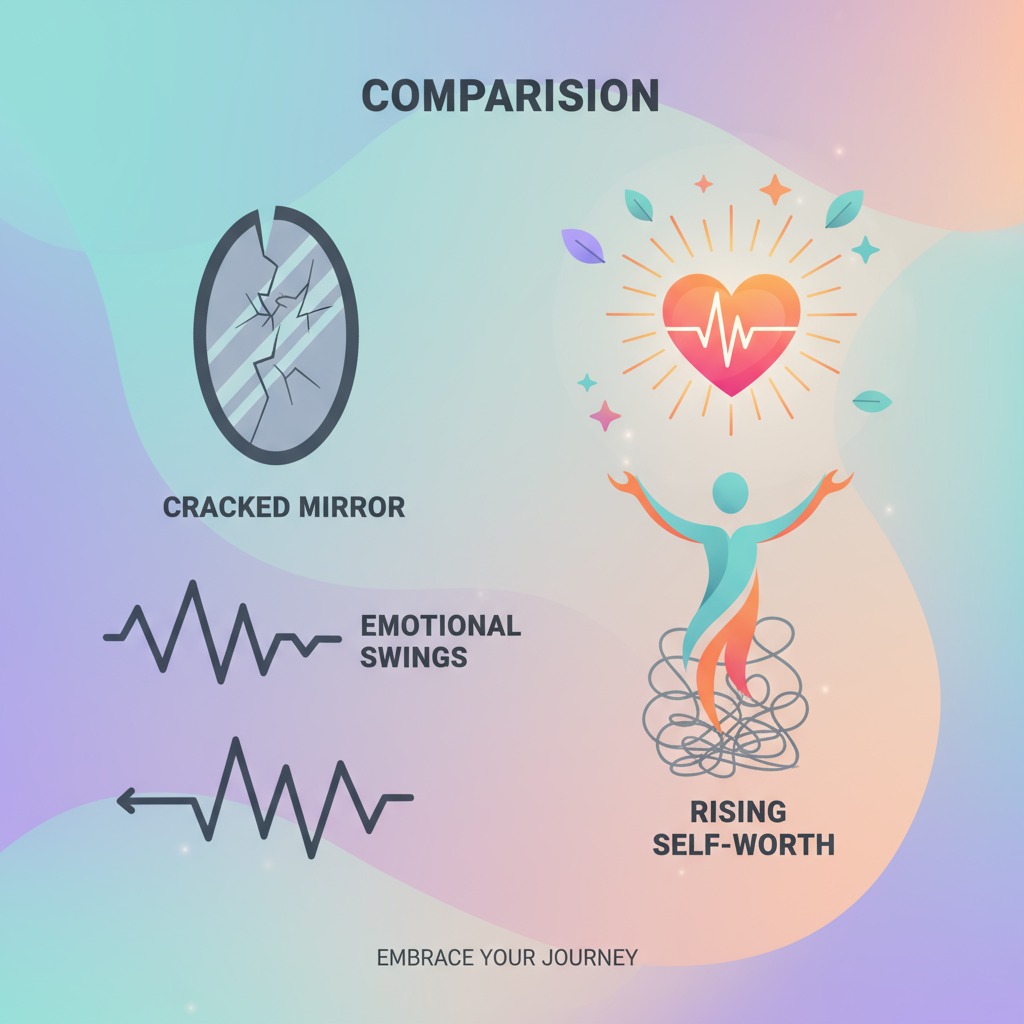
How to stop comparing yourself to others is directly tied to self-worth building and emotional balance. Constant comparison creates a distorted self-image, leading to feelings of insufficiency, anxiety, and even depression. Every time you measure your life against someone else’s, you undervalue your own accomplishments.
Comparison can also erode emotional balance. When your mood fluctuates based on others’ successes or failures, it becomes difficult to maintain inner calm. Emotional balance requires self-awareness and self-regulation, both of which are disrupted when attention is perpetually outward.
Chronic comparison can hinder personal growth as well. Energy spent on envy or self-doubt is energy diverted from productive activities, learning, and skill development. It creates a mental drain that prevents you from embracing opportunities, taking risks, or celebrating your own milestones.
By learning how to stop comparing yourself to others, you allow yourself to reclaim emotional energy. Self-worth building strengthens confidence, making you less reliant on external validation. Emotional balance ensures that you remain grounded, calm, and present, regardless of what others achieve. This combination fosters resilience, joy, and genuine self-assurance.
4. Recognizing Your Comparison Triggers
How to stop comparing yourself to others begins with identifying your triggers. These triggers can be external, like scrolling through social media, hearing news about peers’ achievements, or attending social events. Internal triggers include self-doubt, perfectionism, and negative thought patterns.
Once triggers are recognized, you can develop strategies to minimize their impact. For example, noticing feelings of inadequacy when browsing Instagram can prompt you to take a break, curate your feed, or reflect on personal achievements instead. Emotional awareness is key to disrupting the automatic habit of comparison.
It is also essential to examine the root of these triggers. Do they stem from past experiences, fear of failure, or societal expectations? Understanding the origin allows you to address them effectively rather than reacting impulsively. By mapping triggers, you gain control over how you respond, which is a critical step in learning how to stop comparing yourself to others.
Another effective approach in learning how to stop comparing yourself to others is to observe the patterns in your comparisons over time. Notice the situations, people, or environments that consistently spark self-critical thoughts. By keeping a brief journal of these moments, you can identify recurring triggers and the emotions they evoke.
This practice not only increases self-awareness but also empowers you to anticipate and manage triggers before they affect your mood or behavior. Over time, this proactive approach strengthens your ability to respond thoughtfully rather than reactively, making it easier to break the cycle of comparison and maintain emotional balance.
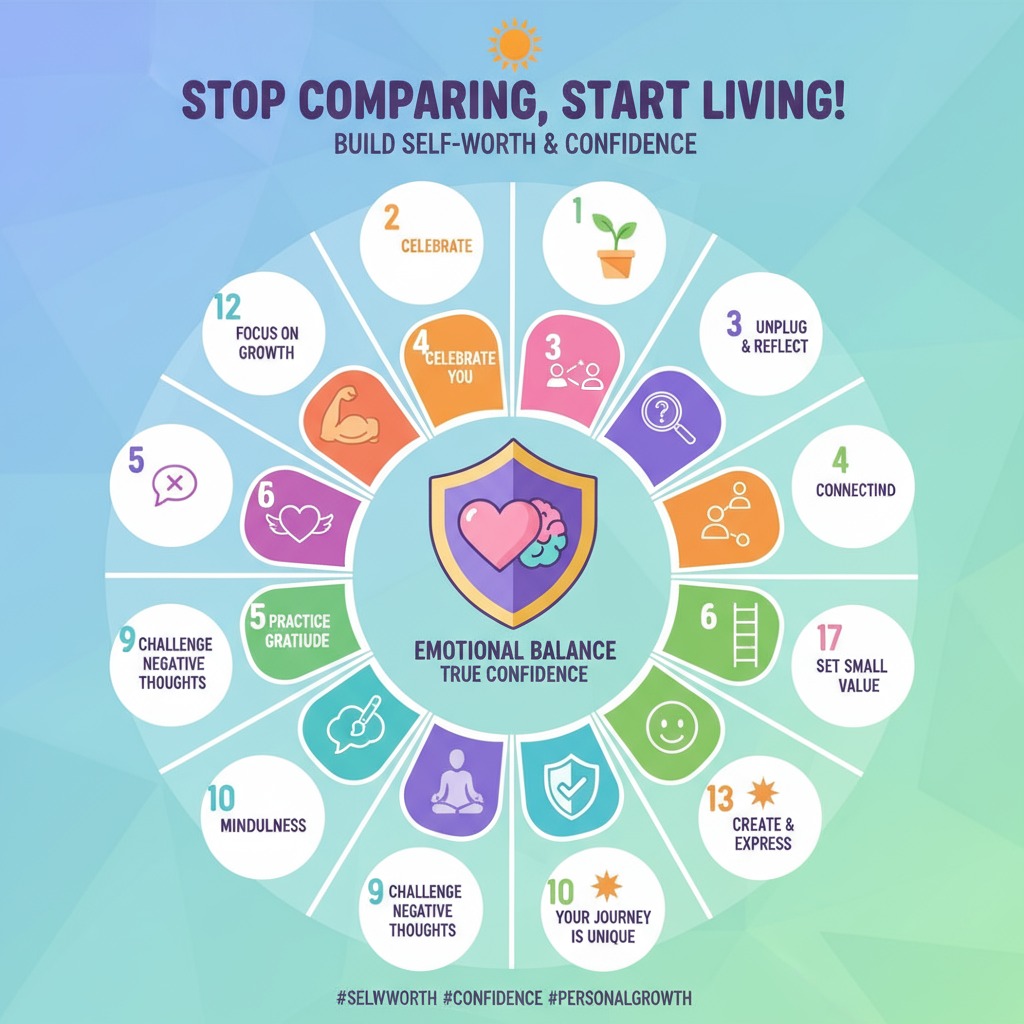
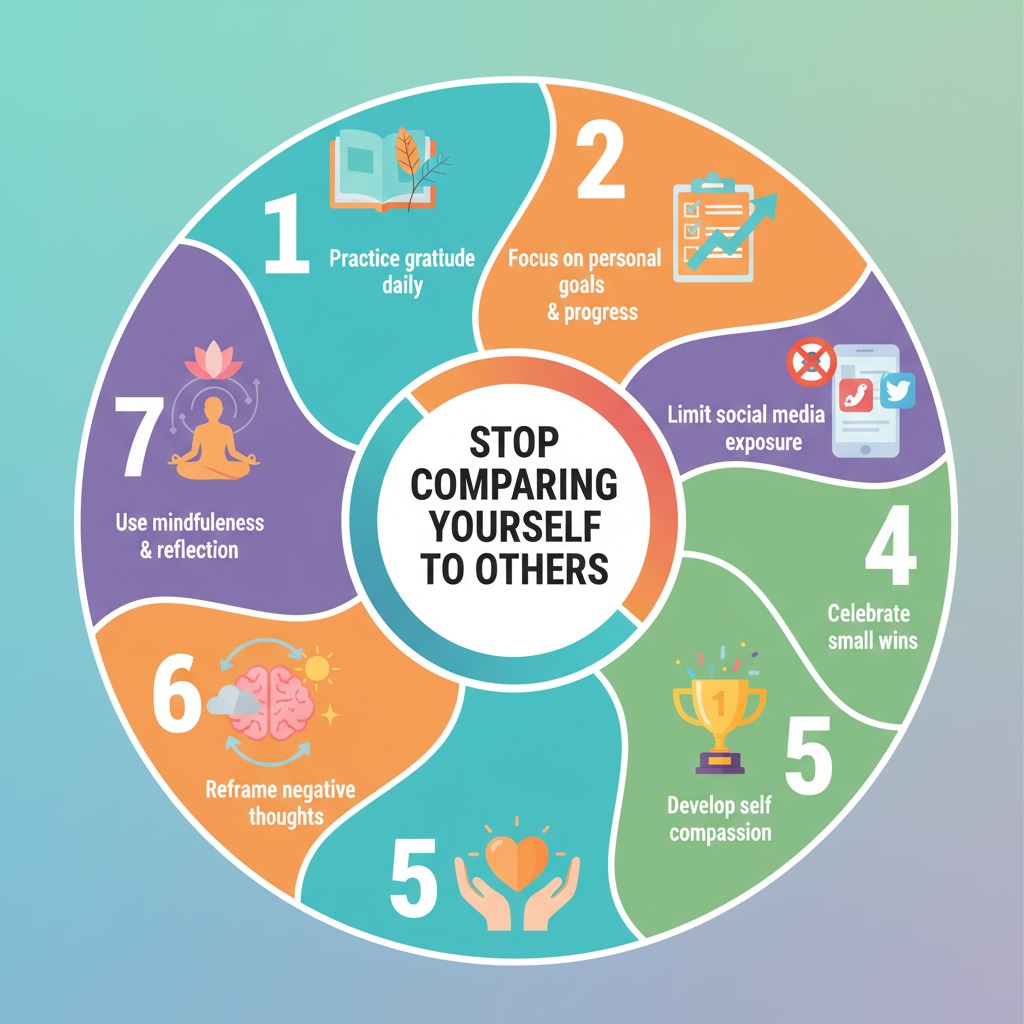
5. 12 Powerful Ways to Stop Comparing Yourself to Others
How to stop comparing yourself to others is a vital skill for cultivating self-worth, emotional balance, and authentic confidence. Constantly measuring your life against others’ successes, appearances, or achievements can erode mental well-being and stunt personal growth. Fortunately, by implementing actionable strategies, you can retrain your mind to focus on your unique path, celebrate progress, and foster inner peace. Here are twelve powerful ways to achieve this:
- Practice Gratitude Daily
How to stop comparing yourself to others begins with appreciating your own life. Gratitude shifts focus from external benchmarks to internal satisfaction. Maintaining a daily gratitude journal helps you recognize small joys, accomplishments, and meaningful relationships. For example, noting things like completing a work project, spending quality time with family, or learning something new reinforces self-worth. Over time, this habit rewires your brain to notice abundance rather than lack, decreasing envy and promoting emotional balance.
Additionally, practicing gratitude can extend beyond journaling. You can verbally express appreciation to friends, colleagues, or mentors, or even silently acknowledge the positive aspects of your day during reflection. These small rituals reinforce a mindset of abundance, train your brain to focus on what is present and meaningful, and help you feel grounded in your own journey rather than distracted by comparisons.
- Focus on Personal Goals and Progress
How to stop comparing yourself to others includes setting clear personal goals and monitoring your own progress. Tracking your development allows you to celebrate achievements without measuring against others’ milestones. For instance, instead of envying a colleague’s promotion, notice your consistent skill growth, completed tasks, or new certifications. This approach nurtures self-esteem, persistence, and resilience, making your journey personally fulfilling.
Breaking long-term goals into smaller, measurable steps further strengthens focus. By reviewing weekly or monthly accomplishments, you reinforce self-efficacy and recognize that your progress is valid, irrespective of others’ successes. Over time, this habit reduces the mental energy spent on comparison and enhances motivation to keep improving at your own pace.
- Limit Social Media Exposure
How to stop comparing yourself to others effectively involves curating your digital environment. Social media often presents highlight reels, not reality, which can amplify feelings of inadequacy. Unfollow accounts that trigger envy and follow content that inspires growth or positivity. Setting time limits for scrolling, scheduling digital detox periods, or using apps that track screen time can help you regain control over your attention.
Moreover, actively reflecting on how social media makes you feel encourages mindfulness. For example, before and after scrolling, ask yourself whether you feel motivated or diminished. This awareness allows you to consciously choose healthier engagement, focusing on your goals and accomplishments rather than comparing with filtered representations of others’ lives.
- Celebrate Small Wins
How to stop comparing yourself to others can be reinforced by celebrating even minor victories. Completing a challenging task, sticking to a routine, learning a new skill, or handling a difficult situation successfully all count as progress. Recognizing these wins reinforces self-worth, boosts confidence, and maintains emotional balance.
You can enhance this by creating a “win list” at the end of each day or week. Writing down achievements, no matter how small, trains your mind to notice personal growth and discourages the habit of minimizing your efforts in favor of others’ accomplishments. Celebrating small wins creates momentum, making larger goals feel more attainable without comparison.
- Develop Self-Compassion
How to stop comparing yourself to others involves treating yourself with empathy and understanding. Mistakes, setbacks, or imperfections should not trigger harsh self-criticism. For example, if you fail at a task, acknowledge what went wrong, what you learned, and how you can improve next time. This compassionate mindset supports emotional resilience and reduces feelings of inadequacy.
Self-compassion also includes managing expectations. Understand that growth is gradual and non-linear. Treating yourself kindly encourages experimentation, creativity, and risk-taking without fear of judgment or comparison. Over time, this approach strengthens your emotional balance and reinforces confidence in your unique abilities.
- Reframe Negative Thoughts
How to stop comparing yourself to others begins with identifying self-critical or envious thoughts. Consciously reframe these thoughts into constructive statements. For instance, replace “They are so much better than me” with “I am developing my own skills, and my path is unique.” Using positive affirmations or reflective journaling solidifies this habit.
Additionally, cognitive techniques like “thought stopping” or creating a mental pause before reacting to comparison triggers can be helpful. Each time a negative thought arises, pause, acknowledge it, and redirect attention to personal strengths or past achievements. This practice gradually reduces automatic comparison responses and fosters emotional stability.
- Embrace Your Unique Strengths
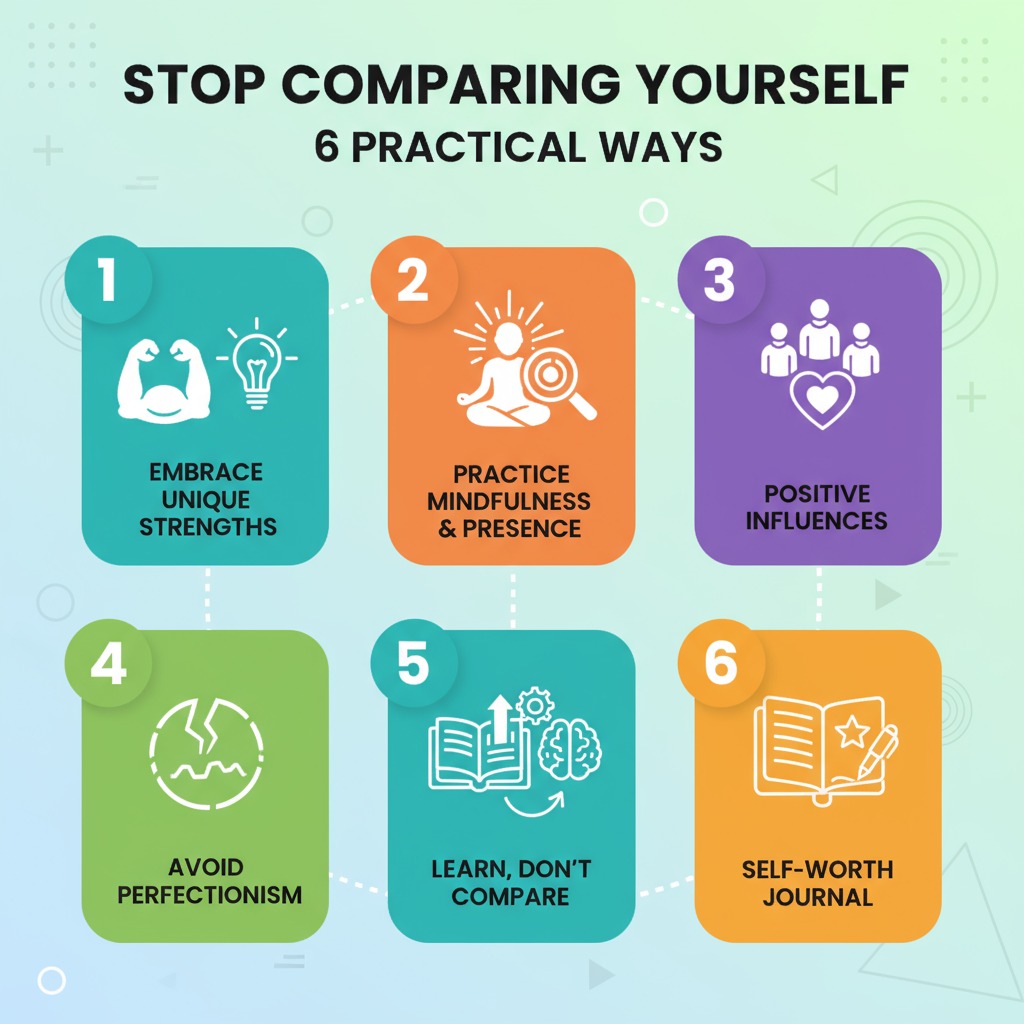
How to stop comparing yourself to others requires recognizing what sets you apart—your skills, talents, perspectives, and experiences. Focus on developing these instead of imitating others. For example, if you excel in problem-solving while someone else excels in networking, prioritize enhancing your analytical abilities.
Documenting your strengths in a “personal strengths list” or sharing achievements with trusted friends or mentors reinforces confidence. This self-awareness encourages authenticity, reduces the need for external validation, and builds emotional resilience against envy or self-doubt.
- Practice Mindfulness and Presence
How to stop comparing yourself to others can be cultivated by practicing mindfulness. Being fully present during conversations, work, or daily activities prevents mental drift toward others’ achievements. Techniques such as deep breathing, meditation, or body scans help anchor attention in the present moment.
Mindfulness also includes observing thoughts without judgment. When comparison arises, acknowledge it, then gently redirect focus to your current activity or personal progress. Over time, this practice increases self-awareness, reduces stress, and reinforces emotional balance, making you less dependent on external metrics for validation.
- Surround Yourself with Positive Influences
How to stop comparing yourself to others involves surrounding yourself with supportive, uplifting individuals. Seek relationships that encourage growth, celebrate your achievements, and provide constructive feedback. Limit interactions with people who foster competition, judgment, or self-doubt.
Additionally, joining communities or groups aligned with your interests and values can provide positive reinforcement. Being in a nurturing environment fosters confidence, motivates personal development, and minimizes the urge to compare yourself to others.
- Avoid Perfectionism
How to stop comparing yourself to others involves letting go of the need for flawlessness. Perfectionism fuels self-criticism, envy, and unrealistic comparisons. Accept that mistakes and imperfections are part of growth.
Focus on progress rather than outcomes. Celebrate effort, learning, and resilience. This mindset reduces stress, encourages experimentation, and nurtures emotional balance, allowing you to appreciate your journey without feeling inferior to others.
- Learn from Others, Don’t Compare
How to stop comparing yourself to others can be achieved by turning observation into learning. Rather than measuring yourself against someone else, ask, “What can I learn from their approach?” or “Which habits can I adapt for my growth?”
This approach transforms envy into curiosity and motivation. By focusing on lessons rather than judgment, you gain inspiration and practical strategies without diminishing your self-worth. Learning from others strengthens personal development and emotional resilience.
- Keep a Self-Worth Journal
How to stop comparing yourself to others can be supported by maintaining a self-worth journal. Record achievements, moments of confidence, positive feedback, or personal reflections. Reviewing these entries reinforces awareness of your growth and accomplishments.
A self-worth journal also helps identify recurring comparison triggers and patterns. By reflecting on your journey, you strengthen emotional balance, recognize progress, and develop a sustainable habit of self-affirmation, reducing the impulse to measure yourself against others.
6. The Role of Self-Worth Building in Overcoming Comparison
How to stop comparing yourself to others is closely tied to self-worth building. Self-worth is the deep understanding that your value is inherent, not dependent on external achievements or approval. When you cultivate self-worth, comparison loses its emotional grip, allowing you to feel confident in your abilities and choices.
Practical techniques for building self-worth include daily affirmations, skill development, and celebrating personal achievements. For example, affirming, “I am capable and deserving of success,” reinforces internal validation. Skill development, whether learning a new language, improving professional expertise, or exploring a creative hobby, provides tangible evidence of personal growth. Celebrating achievements, even small ones like completing a challenging task or maintaining a healthy routine, strengthens your emotional foundation.
Self-worth building also creates resilience against external pressures. When you value yourself intrinsically, the opinions, successes, or failures of others have less influence over your mood. Emotional energy is preserved for pursuing goals, nurturing relationships, and meaningful experiences. By prioritizing self-worth, you establish a stable foundation for personal growth, making it easier to stop unhealthy comparison and focus on authentic fulfillment.
Furthermore, self-worth encourages a mindset of self-compassion. Recognizing your progress, forgiving your mistakes, and valuing your journey empowers you to appreciate your unique strengths rather than feeling inferior to others. Over time, these habits create a virtuous cycle of confidence and emotional stability.
7. Emotional Balance as a Foundation for Confidence
How to stop comparing yourself to others requires cultivating emotional balance, the ability to regulate your thoughts, feelings, and reactions even in the face of triggers. Without this stability, minor setbacks or exposure to others’ successes can spiral into self-criticism, envy, or anxiety.
Techniques for maintaining emotional balance include mindfulness practices, journaling, meditation, and conscious breathing. Mindfulness, for instance, allows you to notice comparison thoughts without judgment, observe them, and redirect attention to your own progress. Journaling helps process emotions, track patterns, and reflect on achievements, reducing reactive responses to perceived social pressures.
Emotional balance also strengthens decision-making and clarity. Instead of reacting impulsively—feeling frustrated or demotivated when someone else succeeds—you can calmly assess your path, acknowledge growth opportunities, and stay aligned with personal goals. Pausing before responding to triggers, whether in professional or social settings, minimizes stress and fosters self-confidence.
Moreover, emotional balance supports resilience. Life is unpredictable, and setbacks are inevitable. When you are emotionally grounded, comparison loses its power to derail motivation. Practicing strategies like mindful reflection and breathing exercises during challenging moments creates a stable foundation, reinforcing self-worth and the ability to celebrate your achievements without envy.
8. The Importance of Mindset Shifts
How to stop comparing yourself to others is heavily influenced by your mindset. Shifting your mental perspective from competition to growth transforms how you perceive success and challenges. A growth mindset, which prioritizes learning and self-improvement, encourages viewing others’ achievements as inspiration rather than a threat.
Positive thinking plays a crucial role. Reframing setbacks as lessons and challenges as opportunities allows you to focus on actionable solutions instead of envying outcomes. For instance, if a peer receives a promotion, a growth-oriented mindset might ask, “What skills did they leverage, and how can I develop mine further?” rather than, “Why didn’t I get that?”
Accepting imperfection is another essential mindset shift. Life is not a linear competition; everyone has strengths, weaknesses, and unique journeys. How to stop comparing yourself to others includes embracing your path, acknowledging mistakes, and valuing effort over outcomes. Combining these mindset shifts with self-worth building and emotional balance establishes a robust mental framework where comparison naturally diminishes.
Additionally, cultivating gratitude within your mindset reinforces this process. Recognizing personal achievements, relationships, and learning experiences fosters contentment, reduces envy, and strengthens confidence. Over time, mindset shifts transform your thought patterns, allowing you to celebrate others’ successes while remaining focused on your own growth.
9. Maintaining Consistency and Daily Practices
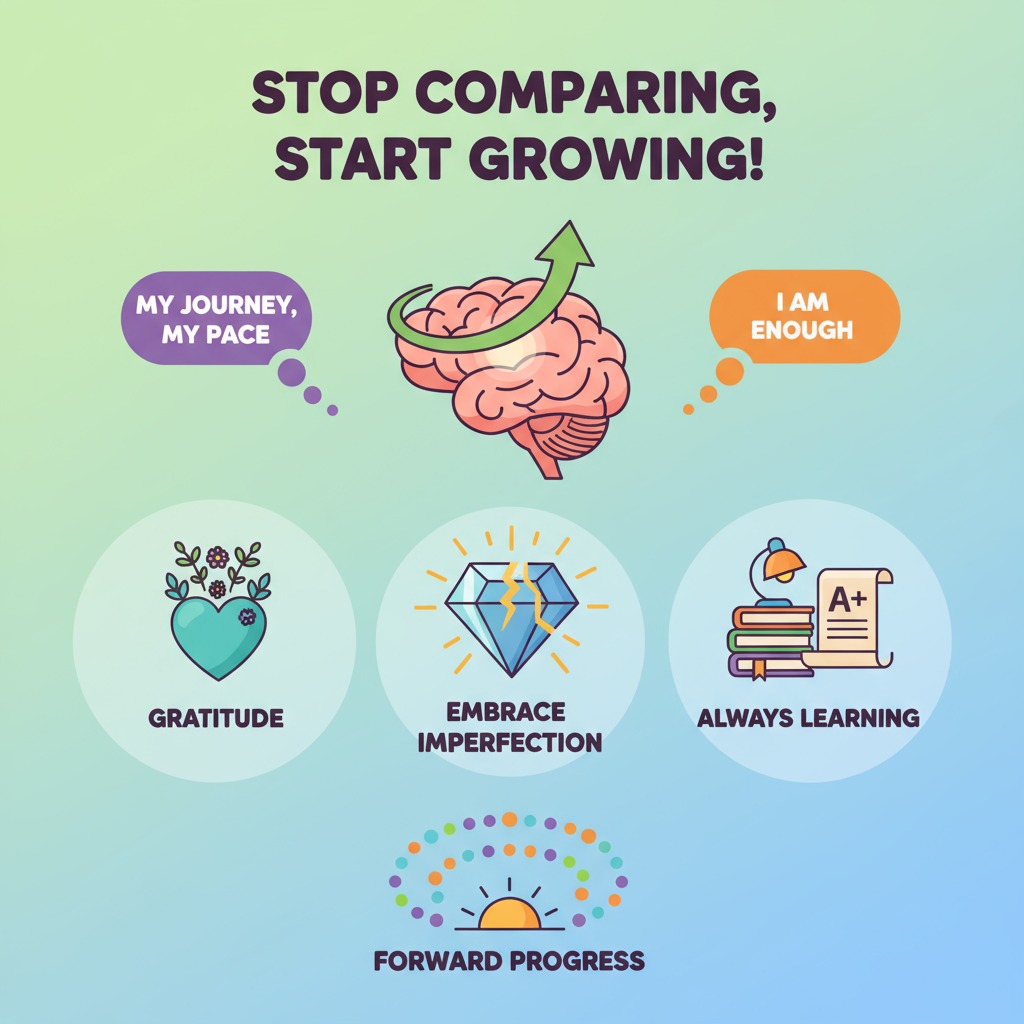
How to stop comparing yourself to others requires consistent practice. Changing deep-seated habits of comparison demands repeated, intentional effort. Daily routines provide the structure needed to reinforce self-worth, emotional balance, and mindful awareness.
Morning affirmations, gratitude journaling, or meditation set a positive tone for the day, reminding you of your value and progress how to stop comparing yourself to others. Evening reflections allow you to review accomplishments, recognize lessons learned, and identify moments when comparison arose. This dual approach keeps self-awareness and emotional regulation active throughout your day.
Consistency also involves proactive check-ins. Ask yourself: “Am I focusing on my goals or measuring against others?” Identifying lapses early allows timely correction. Over time, this disciplined practice rewires thought patterns, making self-validation and personal growth the default mindset instead of comparison.
Additionally, integrating supportive habits—like celebrating small wins, limiting social media exposure, and surrounding yourself with positive influences—ensures reinforcement. Maintaining daily practices consistently anchors your confidence and helps internalize the principle that your journey is valuable on its own, independent of others’ achievements.
10. Real-Life Stories and Examples
How to stop comparing yourself to others is illustrated vividly in real-life examples. Entrepreneurs often focus on their personal growth instead of obsessing over competitors’ achievements, resulting in innovation and steady progress. For instance, startup founders may observe competitors’ strategies but use them as lessons rather than benchmarks, maintaining confidence in their unique path.
how to stop comparing yourself to others students who track personal improvement through goal-setting and journaling experience higher academic and personal success. By acknowledging incremental progress, they reduce anxiety associated with peer performance and develop emotional balance. Similarly, athletes who focus on personal bests rather than comparing to teammates cultivate resilience and motivation.
Celebrities and thought leaders often advocate mindfulness and self-worth as strategies to combat comparison. Public figures may follow routines that include meditation, gratitude journaling, or skill enhancement, demonstrating that even high-achieving individuals prioritize internal validation over external competition. Real-life stories highlight that stopping comparison is less about eliminating awareness of others and more about redirecting focus to one’s growth, emotional balance, and consistent effort.
Furthermore, sharing your own journey with others can inspire both yourself and your community. When people see tangible examples of self-focus, resilience, and personal achievement, it normalizes the practice of valuing one’s progress, reinforcing the principles of self-worth and emotional balance.
11. Common Pitfalls and How to Avoid Them
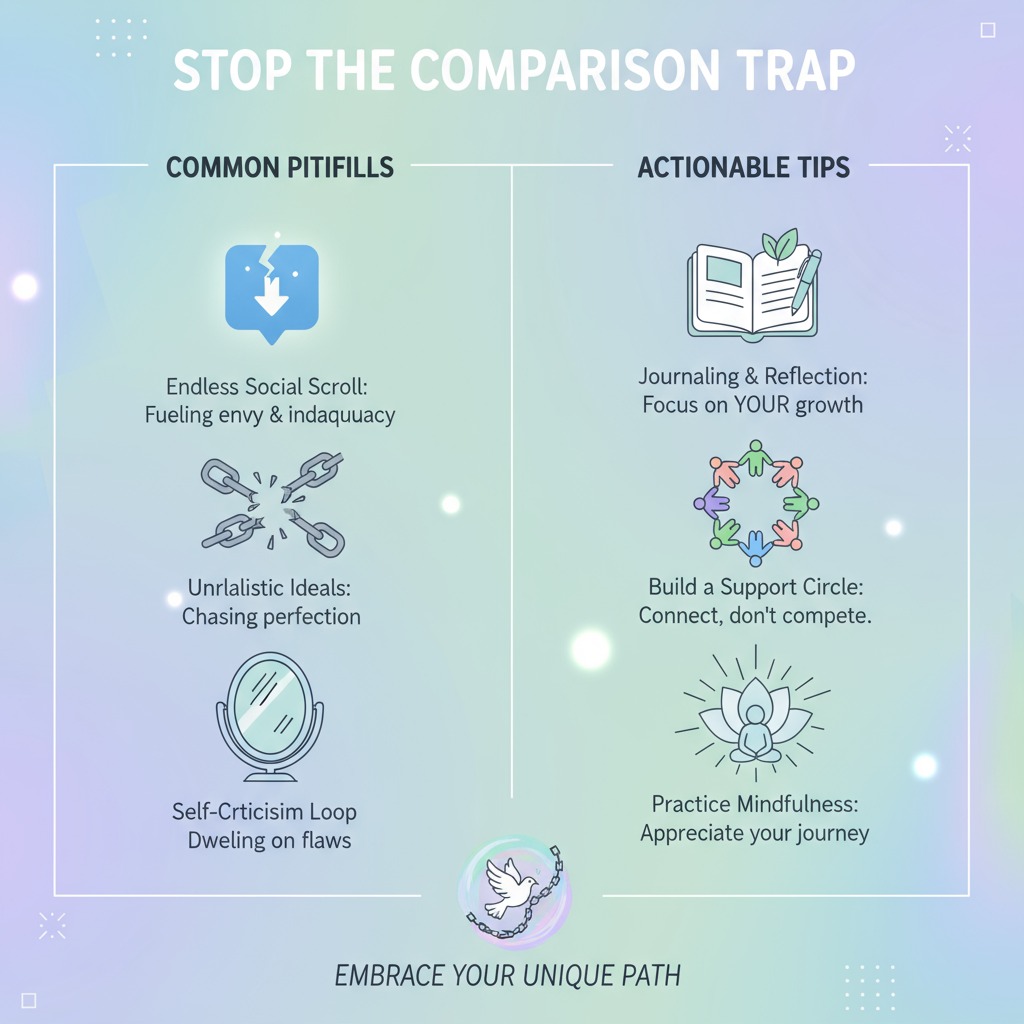
How to stop comparing yourself to others can be derailed by common pitfalls. Over-reliance on social media, inconsistent practices, negative self-talk, and perfectionism often trigger relapse into comparison. Ignoring personal milestones or undervaluing small achievements also undermines self-worth building.
Avoiding these pitfalls requires deliberate strategies. Limit exposure to triggers by curating digital content and creating intentional offline time. Maintain a self-worth journal to track growth and achievements, reinforcing emotional balance. Practice gratitude and daily reflection to recognize progress and counter negative self-talk.
how to stop comparing yourself to others it’s also important to approach setbacks without judgment. If you find yourself slipping into comparison, pause and redirect focus to your own journey. Embracing a mindset of curiosity and learning rather than self-criticism ensures long-term resilience. Recognize that stopping comparison is a continuous process requiring patience, self-compassion, and a commitment to consistent personal growth.
How to stop comparing yourself to others also involves being mindful of the people and environments you engage with regularly. Surrounding yourself with supportive, uplifting individuals who celebrate your successes and encourage growth can significantly reduce the tendency to compare. Conversely, spending time with overly critical or competitive people can trigger feelings of inadequacy. By consciously choosing relationships and spaces that foster positivity, you create an external environment that reinforces your internal self-worth, making it easier to maintain emotional balance and stay focused on your personal journey.
12. Conclusion
How to stop comparing yourself to others is not just a strategy—it is a transformative approach to life that nurtures emotional well-being, strengthens self-worth, and builds enduring confidence. By consistently applying these 12 strategies, you gain the ability to reclaim control over your thoughts, emotions, and personal development. This conscious effort allows you to break free from the constant need for external validation and societal benchmarks, creating a life guided by your own values and aspirations.
How to stop comparing yourself to others begins with embracing your unique journey. Focusing on personal strengths, acknowledging achievements, and maintaining emotional balance allows you to celebrate progress on your own terms. Self-worth building becomes a lived practice, woven into daily routines such as journaling, gratitude exercises, and mindful reflection. As you internalize these habits, your confidence strengthens, reducing the influence of others’ successes on your emotional state.
Mind Quora emphasizes that learning how to stop comparing yourself to others is not about superiority or competition; it is about honoring your individuality, accepting imperfection, and prioritizing emotional wellness. By releasing the habit of measuring your value against others, you cultivate authentic confidence, freedom, and fulfillment—qualities that no external comparison can provide. The process fosters a mindset where self-compassion, curiosity, and resilience guide your decisions, relationships, and personal growth.
Moreover, how to stop comparing yourself to others is reinforced through lifestyle integration. Consistently practicing mindfulness, engaging in daily reflection, and actively pursuing personal development ensures that comparison gradually loses its hold. Over time, each conscious choice to value your journey, celebrate small wins, and maintain emotional balance strengthens a foundation of self-worth that supports long-term happiness and mental clarity. This approach transforms comparison from a limiting habit into an opportunity for self-awareness, empowerment, and profound emotional freedom.