
Table of Contents
1. Introduction
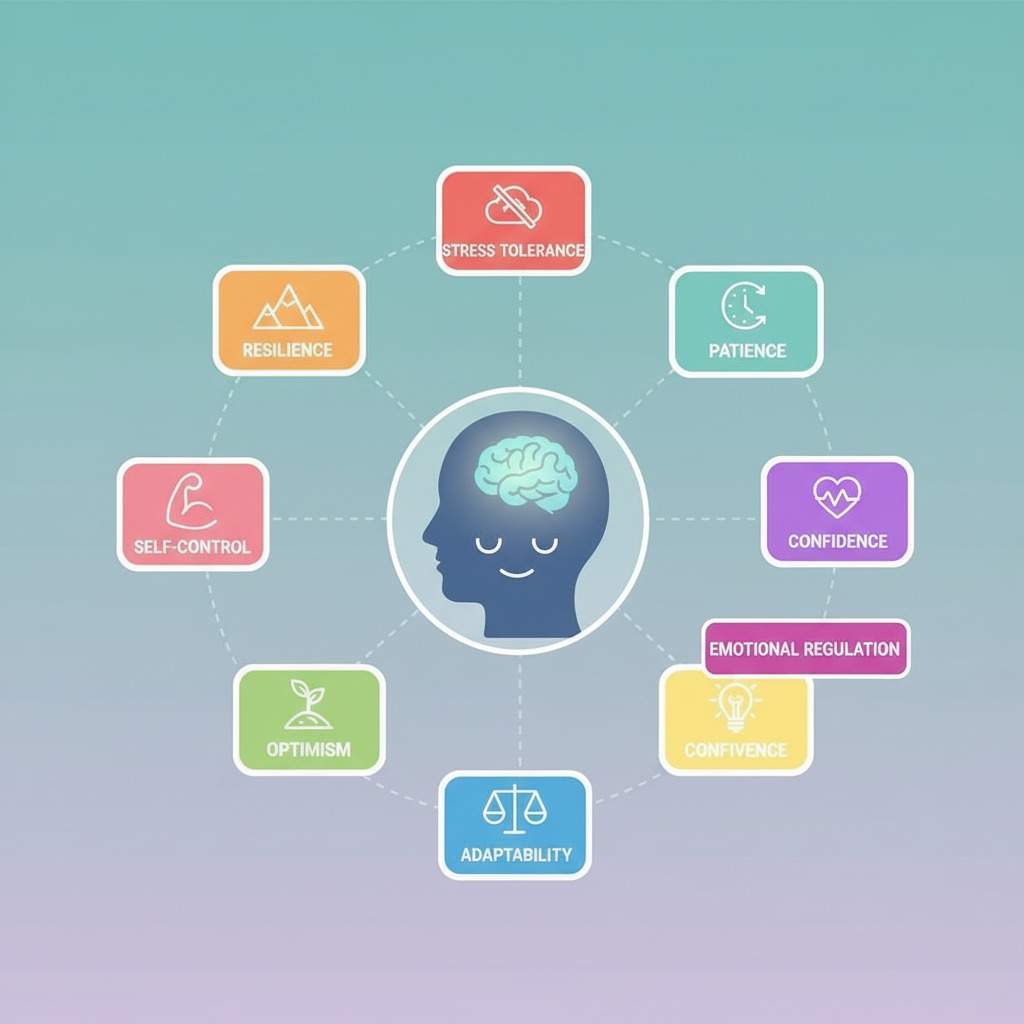
Mental toughness is one of the most important yet misunderstood skills in modern life. In a world filled with pressure, uncertainty, comparison, and constant stimulation, the ability to stay emotionally steady has become essential for mental wellness. It is not about being emotionally cold or forcing yourself to be strong all the time. Instead, it is the inner ability to remain balanced, focused, and resilient even when life feels overwhelming. It allows you to stay grounded when situations feel unstable and demanding.
Mental toughness plays a crucial role in how we handle stress, failure, criticism, and emotional discomfort. Some people break down under pressure, while others adapt, learn, and move forward. The difference lies not in intelligence or talent but in emotional strength and mindset. A mentally tough person experiences fear, sadness, and frustration like everyone else, but they do not let these emotions control their decisions or identity. They understand emotions without becoming trapped in them.
From a mental wellness perspective, It acts as emotional armor. It protects the mind from negative spirals, overthinking, and emotional exhaustion. When it is developed, individuals are better equipped to manage anxiety, maintain clarity, and respond calmly instead of reacting impulsively. This ability reduces mental fatigue and helps the mind recover faster from emotional stress.
In everyday life, mental toughness shows up in small but powerful ways. It appears when you stay calm during conflict, continue efforts after failure, manage negative thoughts, and choose discipline over emotional impulses. These daily choices may seem small, but they compound over time. Gradually, they shape confidence, resilience, and inner peace that last through challenges.
This article explores the psychology behind mental toughness and explains eight powerful traits that build emotional strength, control negativity, and support a positive mindset. By understanding and practicing these traits, anyone can strengthen their mental resilience and improve overall well being. It is not fixed and it can be developed with awareness and consistency.
2. What Is Mental Toughness and Why It Matters
Mental toughness is the ability to manage thoughts, emotions, and behaviors effectively during stress, uncertainty, or adversity. It does not mean suppressing emotions or pretending to be unaffected by situations. Instead, it involves acknowledging emotions honestly while maintaining control over how you respond. Mentally tough individuals feel emotions deeply, but they choose actions that align with clarity and long term well being rather than impulsive reactions.
Mental toughness is often misunderstood as emotional rigidity, but in reality it is about emotional flexibility. It allows a person to bend without breaking and to adapt instead of collapsing under pressure. This flexibility helps individuals adjust to change, accept uncertainty, and remain stable in difficult situations. Emotional strength grows when the mind learns to stay open rather than defensive.
Mental toughness matters because life is unpredictable and full of challenges. Failure, rejection, pressure, and stress are unavoidable parts of growth. Without mental toughness, these experiences can lead to anxiety, self doubt, burnout, or emotional shutdown. With mental toughness, the same experiences become lessons, growth points, and opportunities to develop inner strength and confidence.
Mental toughness plays an important role in mental wellness by reducing vulnerability to negative thinking patterns. It helps regulate stress responses, improves decision making, and strengthens emotional control. Psychological research shows that people with higher mental resilience experience lower levels of chronic stress and greater life satisfaction. A stable mind supports healthier emotional balance over time.
Mental toughness also supports healthier and more meaningful relationships. When individuals can manage emotions, communicate calmly, and respond thoughtfully, conflicts are handled in a constructive way. Emotional maturity increases and trust deepens naturally. In this way, mental toughness influences not only personal well being but also social harmony and relationship stability.
3. The Psychology Behind Emotional Strength and Mental Control
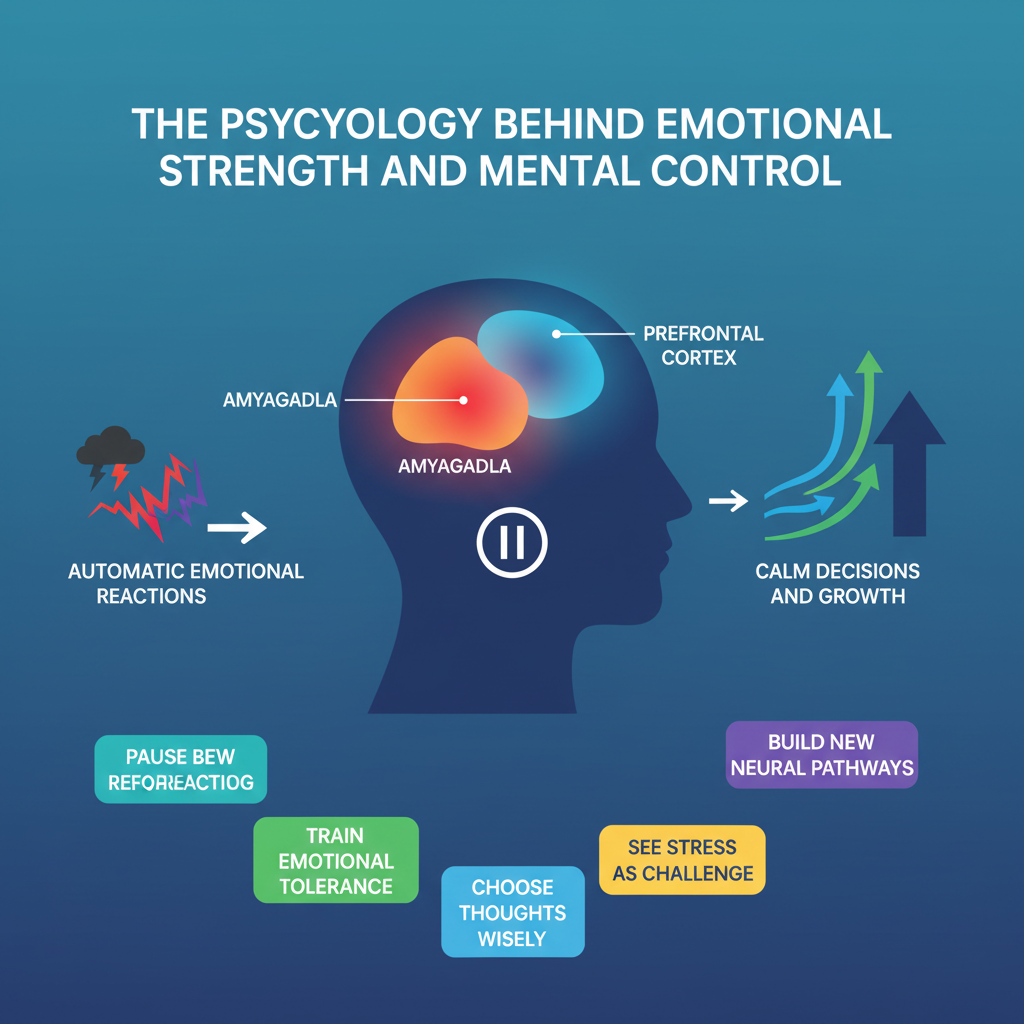
Mental toughness is deeply rooted in how the brain processes stress and emotion. When a person faces a challenging situation, the brain’s emotional center reacts first and often triggers fear, anger, or anxiety. These reactions are automatic and meant for survival, but without emotional strength they take control of behavior. This is why people sometimes react impulsively and later regret their actions. Understanding this process helps you realize that reactions are learned and can be retrained.
Mental toughness develops when the brain learns to pause before reacting. This pause allows the rational part of the brain to engage and create space for thoughtful decision making. With practice, this pause becomes stronger and more natural. Over time, repeated emotional regulation strengthens neural pathways linked to self control and resilience. This makes it easier to stay calm and think clearly even under pressure.
Mental toughness is also explained by psychologists as the ability to tolerate discomfort without escaping or reacting destructively. This tolerance builds mental endurance and inner strength. Instead of avoiding difficult emotions, mentally tough individuals observe them and allow them to pass. By processing emotions instead of fighting them, they prevent emotional buildup and long term stress.
Mental toughness does not mean controlling every thought that appears in the mind. The human brain naturally produces both positive and negative thoughts. Emotional strength lies in choosing which thoughts deserve attention and which should be ignored. This selective focus reduces emotional overload and stops negative thinking loops before they grow stronger. It gives the mind more clarity and balance.
Mental toughness grows through consistent practice and gradually retrains the brain to view stress as a challenge rather than a threat. This shift lowers anxiety responses and improves emotional balance. Over time, emotional strength becomes automatic and creates a calm and grounded mental state. Even in demanding situations, the mind remains steady and controlled.
4. The Role of Mental Toughness in Building a Positive Mindset
Mental toughness plays a central role in developing and maintaining a positive mindset. Positivity does not mean ignoring problems or pretending everything is fine. It means facing challenges with clarity, optimism, and emotional stability. A mentally tough mind stays realistic while still believing in growth and improvement.
Mental toughness allows individuals to see setbacks as temporary and solvable rather than permanent failures. Instead of magnifying problems, mentally strong people analyze situations calmly and focus on solutions. This approach reduces feelings of helplessness and builds confidence over time. Each challenge becomes a learning experience instead of a setback.
Mental toughness also protects the mind from negativity bias, which is the natural tendency to focus more on negative experiences. By consciously shifting attention toward progress, effort, and lessons learned, emotional balance is maintained. This helps prevent emotional exhaustion and keeps motivation steady even during difficult phases.
Mental toughness acts like a mental filter in stressful environments. Negative comments, criticism, or pressure do not deeply affect self worth because emotional boundaries are strong. This allows individuals to stay focused, motivated, and confident without being emotionally drained by external opinions or situations.
Mental toughness supports overall well being by strengthening motivation, emotional stability, and mental clarity. Over time, this positive mindset becomes the default way of thinking. Emotional resilience becomes natural, helping individuals navigate daily life with confidence, calmness, and inner strength.
5. 8 Powerful Traits of Mental Toughness Skills
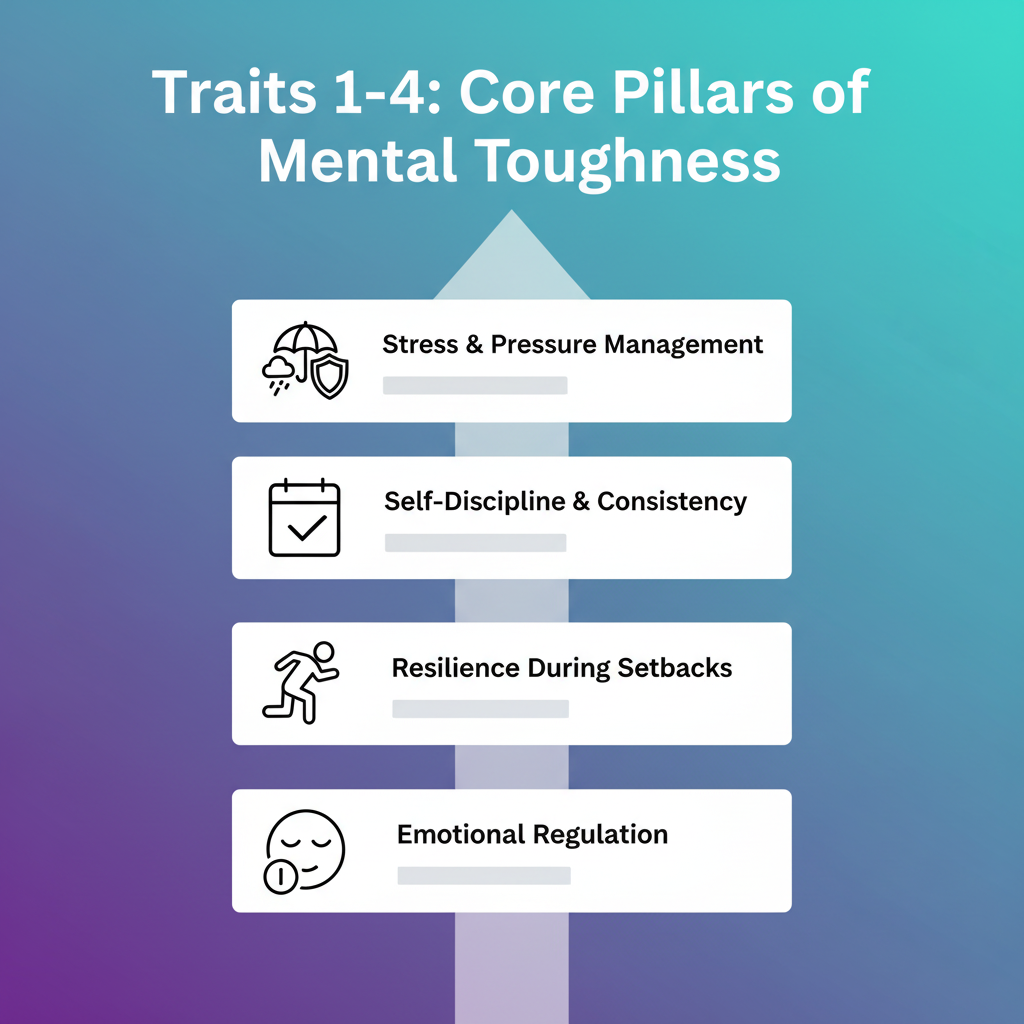
Trait 1: Emotional Regulation
Mental toughness begins with emotional regulation, which is the ability to experience emotions without being controlled by them. Instead of suppressing feelings, emotionally regulated individuals acknowledge emotions calmly and honestly. This awareness helps them understand why they feel a certain way and what triggered that emotion. Over time, this self awareness becomes a powerful tool for emotional control.
Mental toughness helps people pause before responding in emotionally charged situations. This pause gives the brain time to shift from emotional reaction to logical thinking. As a result, impulsive reactions such as anger, withdrawal, or overthinking reduce significantly. With regular practice, this pause becomes natural and automatic.
Mental toughness through emotional regulation allows stress, frustration, and anxiety to be handled constructively. Anger turns into clear communication, anxiety becomes focused action, and emotional balance improves. This skill also reduces regret after emotional reactions and supports long term emotional stability and peace of mind.
Trait 2: Resilience During Setbacks
Mental toughness strengthens resilience, the ability to recover emotionally after setbacks. Failure, rejection, and disappointment are unavoidable parts of life, but resilient individuals do not let these experiences damage their self worth. They understand that setbacks are part of growth, not signs of weakness.
Mental toughness helps individuals process setbacks as temporary events rather than permanent outcomes. Instead of feeling stuck in disappointment, they reflect, learn, and adjust their approach. This mindset prevents emotional breakdown, hopelessness, and long periods of discouragement.
Mental toughness turns challenges into growth experiences. Each setback builds emotional strength, patience, and confidence. Over time, resilience becomes automatic, allowing faster emotional recovery, stronger motivation, and a more optimistic outlook on future challenges.
Trait 3: Self-Discipline and Consistency
Mental toughness relies on self discipline, which is the ability to act according to values rather than emotions. Discipline helps individuals stay committed even when they feel tired, distracted, or unmotivated. This creates inner stability and reliability in daily behavior.
Mental toughness supports daily routines and structured habits. Consistent actions reduce mental chaos, procrastination, and decision fatigue. When habits are clear, the mind feels less stressed and more organized.
Mental toughness through consistency strengthens confidence. When individuals keep commitments to themselves, trust in their abilities increases. This self trust becomes a strong foundation for long term success, emotional balance, and personal growth.
Trait 4: Stress and Pressure Management
Mental toughness improves the ability to handle stress without emotional overload. Stressful situations no longer feel overwhelming because emotional reactions are controlled and understood. This prevents panic, anxiety spikes, and mental exhaustion.
Mental toughness allows individuals to stay calm under pressure. Instead of reacting emotionally, they focus on priorities and practical solutions. This clarity improves performance, decision making, and problem solving in difficult situations.
Mental toughness reduces burnout by helping the mind recover faster. Stress is released through awareness and reflection rather than stored emotionally. This leads to better energy management, emotional resilience, and long term mental health.
Trait 5: Focus and Mental Clarity
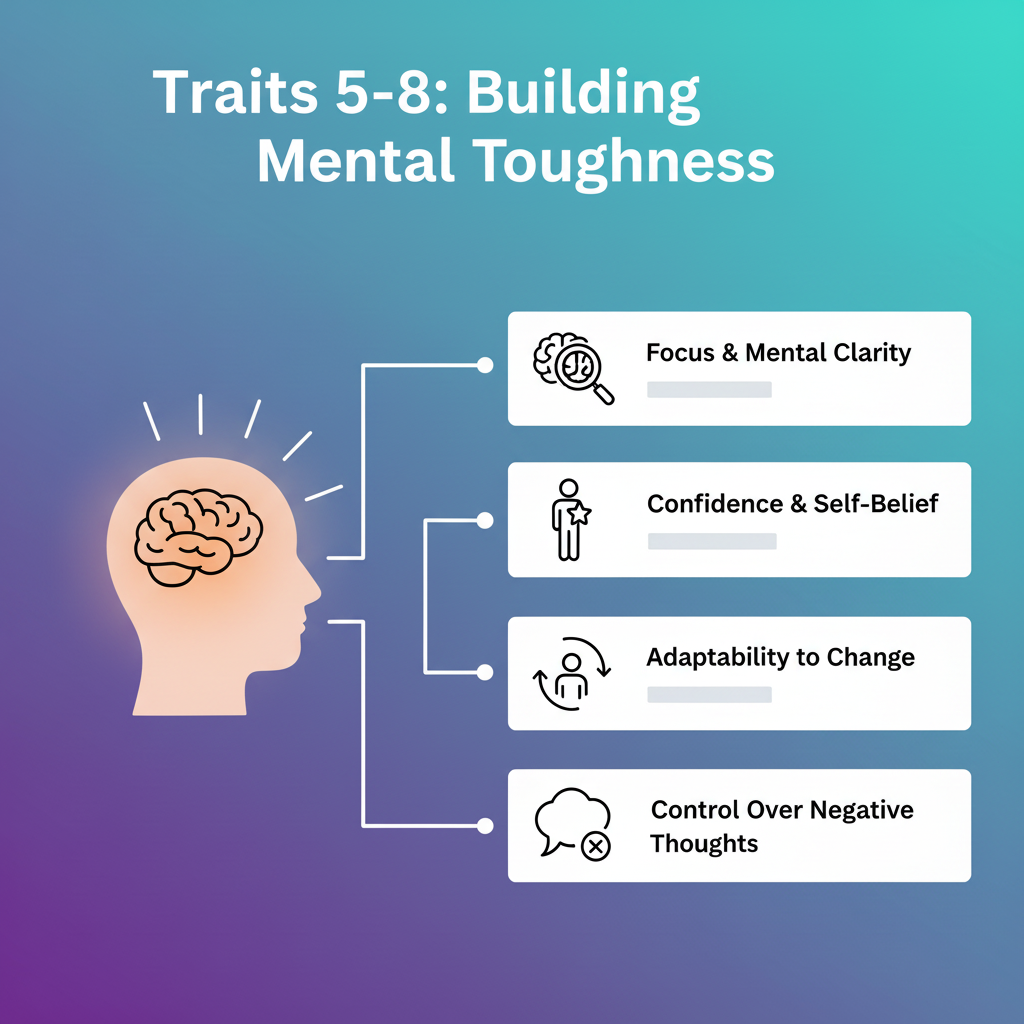
Mental toughness sharpens focus by reducing overthinking and mental noise. When emotional control is strong, distractions lose their power over attention, and the mind stops jumping between worries and tasks. This allows individuals to stay fully present in what they are doing instead of feeling mentally scattered or overwhelmed.
Mental toughness helps direct attention toward what truly matters. Worry about outcomes, other people’s opinions, and past mistakes gradually decreases. As mental energy is no longer wasted on unnecessary thoughts, concentration deepens and time is used more effectively. This improves productivity and creates a sense of mental order.
Mental toughness creates mental clarity that supports emotional calm. Clear thinking leads to better choices, improved planning, and fewer rushed decisions. Over time, focus becomes a natural and stable mental state, reducing anxiety and increasing confidence in daily actions.
Trait 6: Confidence and Self-Belief
Mental toughness strengthens confidence through self belief rather than external validation. Confidence grows from knowing you can face challenges and recover from difficulties, not from constant success or approval. This creates emotional independence and inner stability.
Mental toughness helps individuals trust their abilities during uncertainty. Fear of failure decreases because challenges are seen as manageable and meaningful learning experiences. This mindset encourages personal growth, skill development, and healthy risk taking without emotional fear.
Mental toughness builds quiet confidence that remains steady under pressure. Even when outcomes are unclear, self belief stays strong. This emotional security reduces self doubt and supports long term mental wellness and inner balance.
Trait 7: Adaptability to Change
Mental toughness supports adaptability by reducing resistance to change. Change often triggers fear and uncertainty, but emotionally strong individuals remain flexible and open minded. They understand that change is a natural part of growth and progress.
Mental toughness helps individuals adjust mentally instead of fighting reality. This acceptance lowers emotional stress, frustration, and anxiety caused by unexpected situations. Adaptability allows smoother transitions and clearer thinking during uncertain times.
Mental toughness makes growth possible in changing situations. Learning, adjustment, and emotional balance develop together, strengthening resilience. This trait is essential for long term success, emotional stability, and confidence in both personal and professional life.
Trait 8: Control Over Negative Thoughts
Mental toughness provides control over negative thinking patterns. The mind naturally produces negative thoughts, but mentally tough individuals do not believe every thought they have. They observe thoughts without reacting emotionally.
Mental toughness reduces self criticism and catastrophic thinking. Instead of emotional spirals, individuals challenge negative ideas and replace them with realistic perspectives. This protects emotional health.
Mental toughness supports a healthier inner dialogue. When the mind becomes supportive rather than critical, emotional stability improves. Over time, negative thinking loses its influence, strengthening long term mental wellness and inner peace.
6. How Mental Toughness Helps Control Negative Thoughts
Mental toughness helps control negative thoughts by training the mind to respond with awareness instead of fear. Instead of immediately believing every negative thought, the mind learns to observe it calmly. Thoughts are understood as temporary mental events, not facts or permanent truths. This awareness reduces panic, self doubt, and emotional reactions. Over time, this habit creates a sense of inner control and mental balance.
Mental toughness creates a pause between a thought and a reaction. When negative thoughts appear, emotionally strong individuals do not fight or suppress them. They simply notice what the mind is saying and allow the thought to pass naturally. This pause lowers emotional intensity and prevents impulsive reactions. As a result, thinking becomes clearer and more balanced even in stressful situations.
Mental toughness helps build psychological distance from negative thinking patterns. By observing thoughts without reacting, the mind stops identifying with every worry or fear. This distance allows rational evaluation instead of emotional overwhelm. You begin to ask whether a thought is useful or harmful. This simple shift strengthens mental clarity and emotional stability.
Mental toughness slowly rewires habitual thought patterns through repetition. When negative thoughts are not fed with attention or fear, they lose their emotional charge. The brain learns new responses that are calmer and more supportive. Over time, positive and balanced thinking becomes more natural. This reduces overthinking and improves focus.
Mental toughness supports long term mental calm by making thought control a daily practice. With consistent awareness, the mind becomes less reactive and more disciplined. Negative thoughts may still appear, but they no longer dominate emotions or behavior. This creates a calmer inner environment where focus, confidence, and emotional strength continue to grow.
7. Practical Ways to Build Mental Toughness Daily
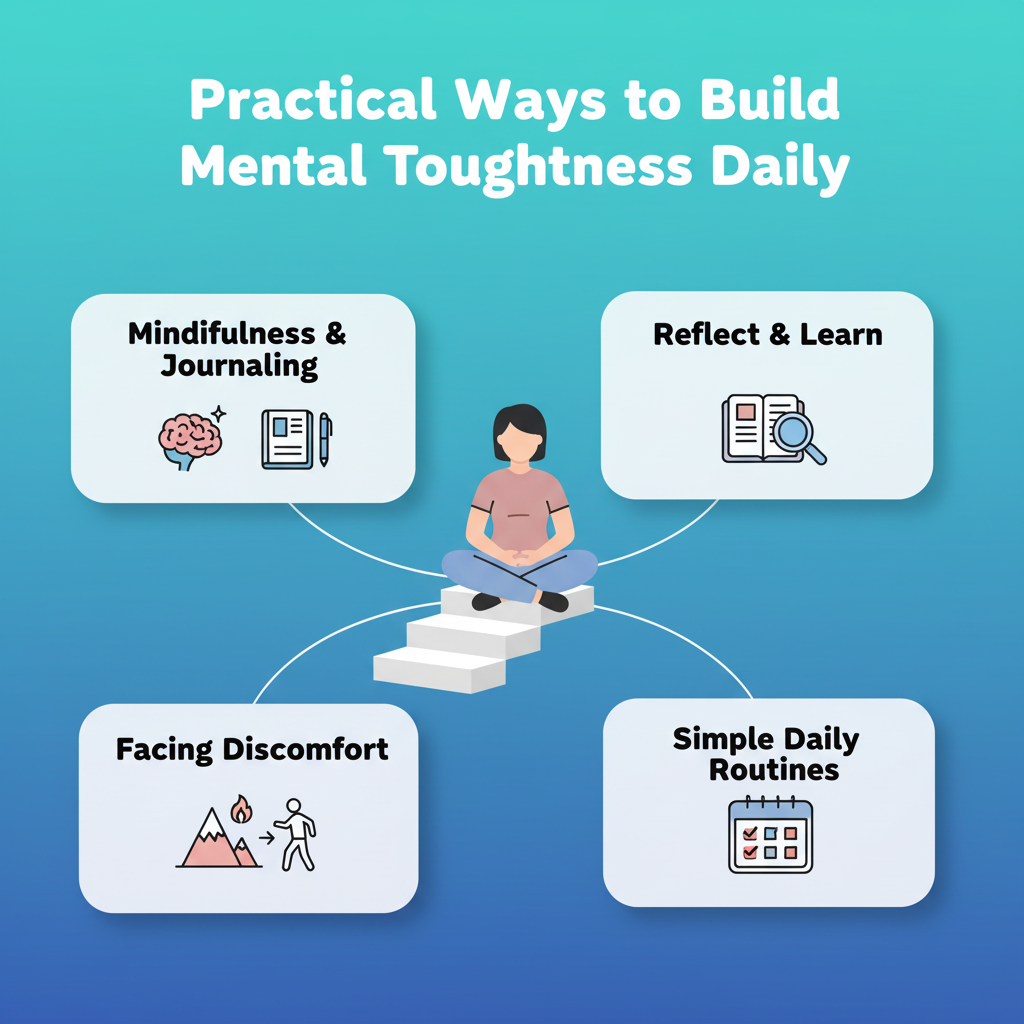
Mental toughness develops through small daily habits rather than sudden or extreme changes. Simple practices like mindfulness, journaling, emotional reflection, and following basic routines train the mind to stay stable. These habits improve emotional control and reduce impulsive reactions. When practiced daily, they slowly strengthen inner discipline and mental balance. Consistency matters more than intensity in this process.
Mental toughness grows when you face discomfort instead of avoiding it. Discomfort can be physical, emotional, or mental, such as doing difficult tasks, handling criticism, or sitting with uncomfortable emotions. Each time you tolerate discomfort calmly, your emotional endurance increases. The mind learns that discomfort is temporary and manageable. This builds confidence and inner strength.
Mental toughness improves through regular self reflection. Taking time to reflect on your thoughts, emotions, and reactions increases self awareness. This awareness helps you understand emotional triggers and patterns. When you understand yourself better, emotional regulation becomes easier. Reflection turns mistakes into learning instead of self criticism.
Mental toughness is strengthened by disciplined routines. Simple routines like waking up on time, limiting distractions, and completing small commitments build self trust. Discipline reduces mental chaos and decision fatigue. Over time, routines create a sense of control and reliability. This structure supports emotional stability and focus.
Mental toughness becomes stronger when these practices are repeated daily. Progress may feel slow at first, but the effects compound over time. Emotional reactions become softer, focus improves, and stress feels easier to handle. Daily practice turns mental toughness into a natural part of life. This steady effort builds long term emotional resilience and inner peace.
8. Conclusion
Mental toughness is not something you are born with or without. Mental toughness is a skill that can be developed by anyone through awareness, discipline, and daily practice. In a world full of pressure, uncertainty, and emotional challenges, mental toughness provides inner stability and clarity. It helps you stay grounded even when situations feel overwhelming. Over time, this strength allows the mind to handle life with calm and confidence.
Mental toughness grows when you learn emotional regulation, resilience, focus, and adaptability. These qualities help you manage negative thoughts instead of being controlled by them. When emotions are handled with awareness, reactions become softer and more thoughtful. This control supports a positive mindset and protects mental wellness in the long run. Emotional balance becomes easier to maintain during stress.
Mental toughness is closely connected to long term emotional strength. A mentally strong mind does not avoid problems but faces them with patience and clarity. Challenges stop feeling threatening and start feeling manageable. This shift reduces fear, anxiety, and emotional exhaustion. With a strong mind, daily life feels more balanced and purposeful.
Mental toughness, is the foundation of a healthy and fulfilling life. When the mind is calm, flexible, and emotionally strong, relationships improve and decisions become clearer. Life’s ups and downs feel less draining. Difficult moments turn into learning experiences instead of emotional burdens. This mental strength supports overall well being.
Mental toughness is a lifelong journey, not a one time achievement. Every small step you take builds emotional power, confidence, and inner peace. With patience and consistent effort, the mind slowly transforms. Instead of working against you, it becomes your strongest support. A mentally tough mind becomes a lifelong ally in growth, success, and emotional wellness