
Table of Contents
1. Introduction
In today’s fast-paced and demanding world, stress has become an almost constant companion for many people. Whether it comes from work pressures, personal responsibilities, academic demands, or digital overload, stress gradually impacts the way we think, feel, and act. Over time, it reduces focus, drains energy, and diminishes productivity, leaving individuals feeling overwhelmed and fatigued. This is why mental wellness is no longer optional; it is essential for a balanced and fulfilling life.
Stress relief methods play a crucial role in helping individuals restore harmony within themselves. By practicing simple but powerful relaxation exercises, one can significantly reduce the negative effects of stress while improving clarity of thought, emotional stability, and physical vitality. These stress relief methods are not complicated medical treatments but practical approaches that can be incorporated into daily life. They not only calm the nervous system but also provide a natural energy boost, ensuring that both mind and body function at their peak. For anyone seeking better focus, enhanced productivity, and sustainable well-being, learning and adopting effective stress relief methods is the first step toward lasting change.
Stress relief methods are also deeply connected to long-term mental wellness because they train the mind and body to respond more positively to pressure. Instead of reacting with tension or fatigue, regular practice of relaxation exercises allows individuals to build resilience, enhance self-awareness, and maintain emotional balance. When applied consistently, these stress relief methods not only reduce immediate anxiety but also cultivate habits that improve focus, increase productivity, and provide a steady energy boost, making life more manageable and fulfilling in the long run.
2. Understanding Stress and Its Impact on Mental Wellness
To truly appreciate the power of stress relief methods, it is important to understand what stress actually is and how it influences our mental wellness. Stress is the body’s natural response to challenges, threats, or pressures. When faced with difficult situations, the brain signals the release of hormones such as cortisol and adrenaline. While these hormones are helpful in short-term situations by preparing the body for quick action, prolonged exposure leads to chronic stress, which can be highly damaging.
Short-term stress, such as preparing for an exam or meeting a work deadline, can sometimes sharpen focus temporarily. However, when stress becomes chronic, it begins to erode the body’s ability to regulate emotions and maintain balance. Chronic stress can cause constant fatigue, poor sleep, irritability, weakened immunity, and even serious health issues like hypertension and anxiety disorders. On the mental wellness side, stress directly reduces one’s ability to concentrate, make decisions, and remain emotionally stable. Over time, this makes daily life more challenging and less fulfilling.
By understanding these negative impacts, it becomes clear why managing stress is not just about comfort but about protecting one’s overall well-being. Stress relief methods are essential tools that help break the cycle of chronic stress, restore balance in the nervous system, and allow individuals to live with greater peace, focus, and energy.
3. The Connection Between Stress Relief and Focus Improvement
Focus is the ability to direct attention toward a specific task or thought without distraction. However, when stress levels are high, focus becomes one of the first casualties. Stress creates a constant state of worry and overthinking, making it difficult for the brain to filter unnecessary information and stay centered on what truly matters. This is why stressed individuals often struggle with procrastination, reduced productivity, and mistakes in their work or studies.
Stress relief methods directly improve focus by calming the mind and reducing the mental clutter caused by anxiety. When relaxation exercises are practiced regularly, they reduce the excessive release of stress hormones and bring the nervous system into a state of balance. This balance allows the brain to function more efficiently, improving memory, concentration, and decision-making ability. For students, this can mean better academic performance. For professionals, it translates into enhanced productivity and sharper problem-solving skills. Even in personal life, improved focus allows for better communication and stronger relationships.
By embracing stress relief methods, individuals create an environment where their mind is free from constant distractions, enabling them to channel their energy toward meaningful goals. This is not just about temporary relief but about cultivating a long-term ability to remain focused even in challenging situations.
4. Why Stress Relief Methods Provide Energy Boost
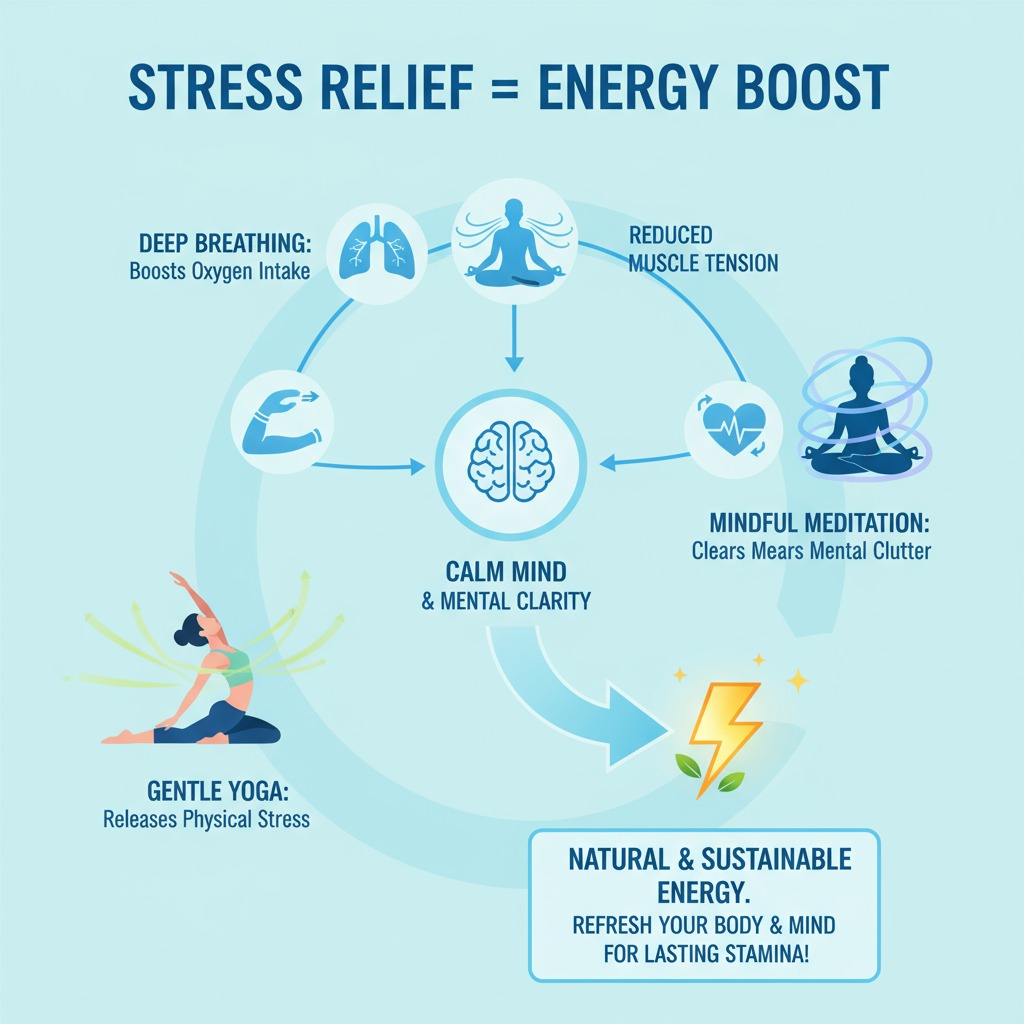
One of the most overlooked benefits of stress relief methods is their ability to naturally enhance energy levels. Stress, particularly when it becomes chronic, is known to drain both physical and mental energy. Constant tension in the muscles, shallow breathing, and restless sleep are just some of the ways stress robs the body of vitality. As a result, individuals often wake up tired, struggle to stay productive throughout the day, and feel exhausted long before the day ends.
Stress relief methods work by resetting the body’s internal systems. Relaxation exercises such as deep breathing and meditation improve oxygen intake, which directly boosts circulation and nourishes the brain and muscles. This improved oxygen flow enhances alertness and energy levels while reducing fatigue. Similarly, practices like yoga and stretching release physical tension trapped in the body, making individuals feel lighter and more energetic.
Moreover, by calming the mind, these methods reduce overthinking and mental fatigue, which are often more exhausting than physical tiredness. The energy boost from stress relief methods is not artificial, like that from caffeine or sugar, but natural and sustainable. It allows individuals to feel refreshed, maintain stamina throughout the day, and enjoy a sense of renewed vitality that supports both work and personal life.
5. 8 Effective Stress Relief Methods for Daily Life
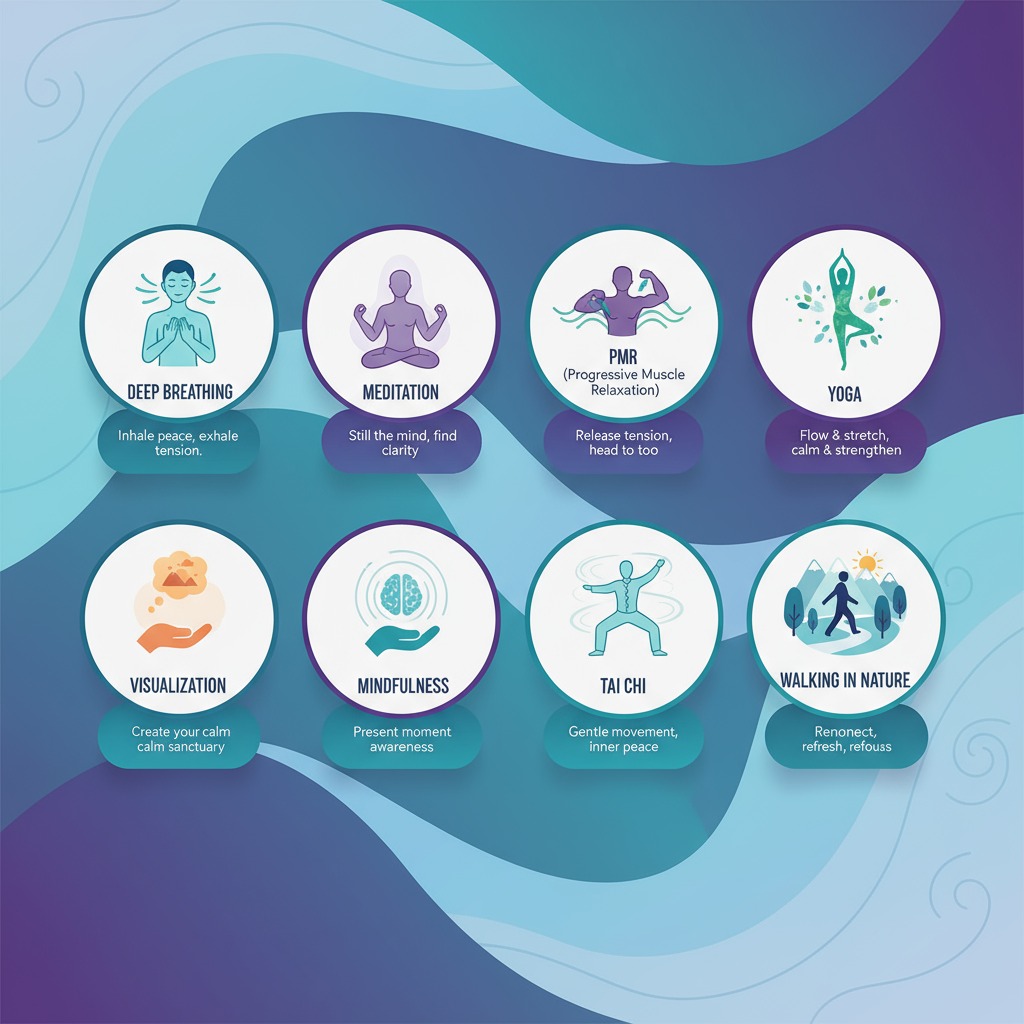
Stress relief is most effective when it becomes a daily practice. The following eight methods are practical, easy to adopt, and highly effective in improving focus and providing an energy boost.
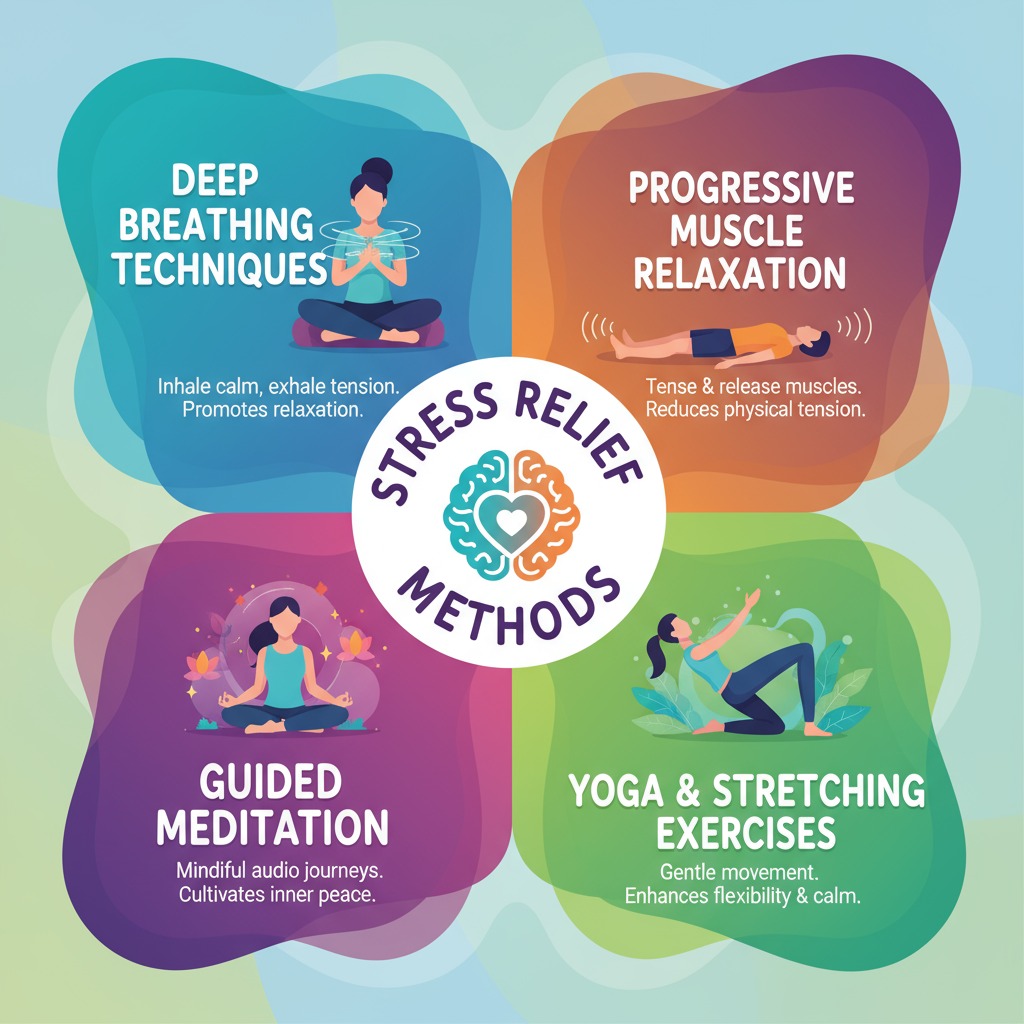
1- Deep Breathing Techniques
Breathing is often overlooked, but conscious deep breathing is one of the most effective stress relief methods for calming the nervous system. Slow, rhythmic breaths activate the parasympathetic system, reducing anxiety, lowering blood pressure, and relaxing tense muscles. Techniques like diaphragmatic breathing, alternate nostril breathing, or box breathing are particularly helpful in moments of panic or overwhelm. Just 5–10 minutes of deep breathing daily can restore clarity, stabilize mood, and ease both physical and emotional stress.
Beyond relaxation, deep breathing also improves oxygen flow to the brain and body, enhancing alertness and energy. Professionals, students, and athletes often rely on this practice before high-pressure situations to stay calm and focused. Over time, it strengthens resilience and builds a natural coping mechanism that supports overall well-being.
2- Progressive Muscle Relaxation
Progressive muscle relaxation is another powerful stress relief method that involves tensing and slowly releasing different muscle groups. This process helps identify hidden areas of tension and provides a full-body sense of calm. It reduces physical discomfort, eases headaches, and lowers fatigue, which are often linked to long-term stress. Many therapists recommend this technique to manage anxiety, insomnia, and chronic pain.
With regular practice, progressive muscle relaxation conditions the body to respond more effectively to stress. It also improves sleep patterns and mental focus by calming both the body and mind. Practicing before bedtime or during breaks at work can create a deep sense of relaxation and balance.
3- Guided Meditation
Meditation is one of the most recognized stress relief methods for inner peace and emotional stability. Guided meditation, where an instructor or audio recording provides direction, is especially helpful for beginners who struggle to quiet their minds. It reduces racing thoughts, enhances awareness, and lowers stress hormones. Even a short 10–15 minute session can make a noticeable difference in mood and focus.
Consistent practice builds resilience, sharpens memory, and promotes better decision-making in stressful situations. Guided meditation apps and online resources make it easy to integrate into daily routines. Over time, it rewires the brain for calmness, helping individuals manage challenges without being easily overwhelmed.
4- Yoga and Stretching Exercises
Yoga is a holistic practice that combines physical postures, mindful breathing, and meditation, making it one of the most versatile stress relief methods. It enhances flexibility, relieves muscle stiffness, and strengthens the body while promoting emotional balance. Stretching exercises complement yoga by improving circulation, correcting posture, and releasing physical stress caused by long hours of inactivity.
Regular practice of yoga and stretching also reduces cortisol levels, boosts energy, and improves overall wellness. It supports restful sleep, strengthens immunity, and fosters a stronger mind-body connection. Even 15–20 minutes daily can lead to long-lasting physical and emotional benefits.
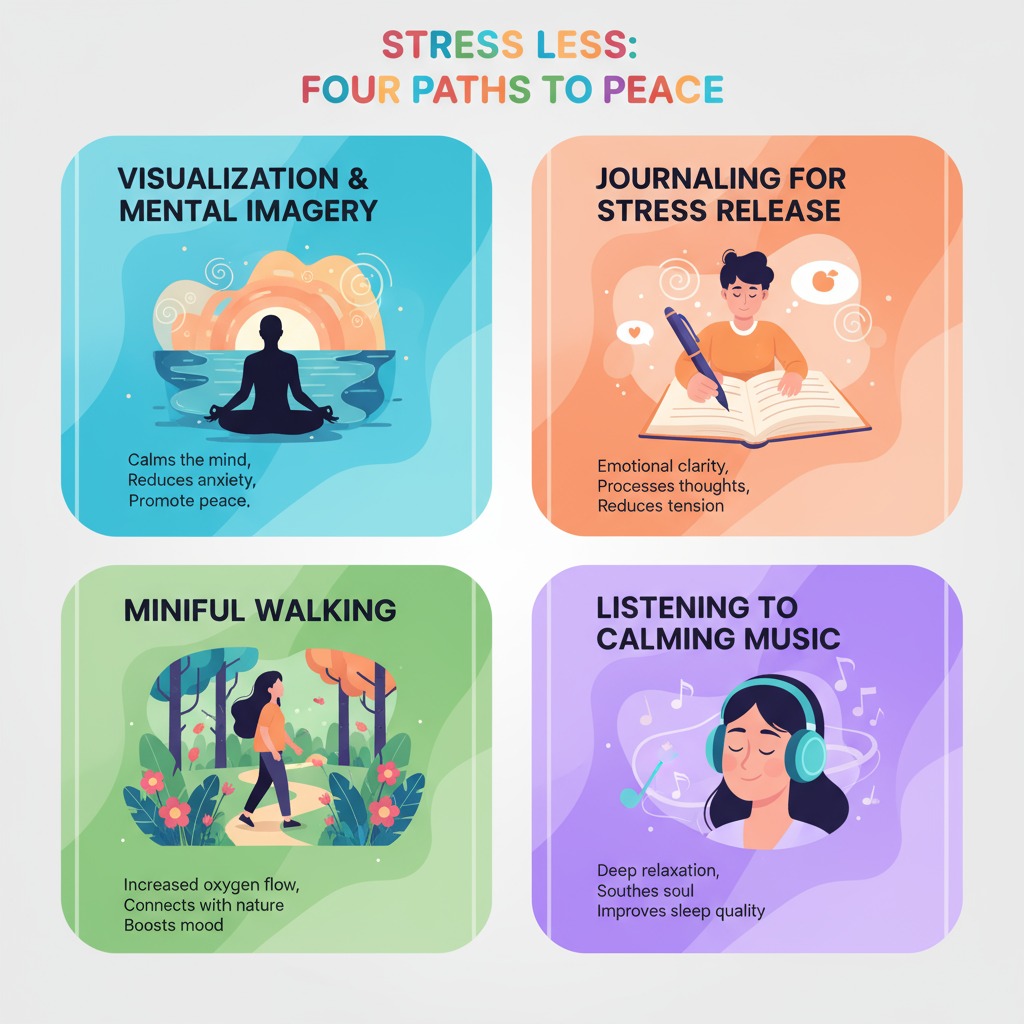
5- Visualization and Mental Imagery
Visualization is a relaxation technique that uses mental imagery to create calming scenarios, such as sitting by the ocean or walking through a forest. As one of the most creative stress relief methods, it helps shift the brain into a relaxed state, reducing stress hormones and creating a sense of peace. It also allows individuals to escape from negative thought cycles and focus on positive outcomes.
Athletes, performers, and professionals use visualization to build confidence and improve performance. When paired with deep breathing, it becomes even more effective in calming nerves before important events. Practicing regularly trains the mind to remain positive and solution-oriented during stressful times.
6- Journaling for Stress Release
Journaling is a simple yet highly effective stress relief method for emotional clarity. Writing down thoughts, feelings, and daily experiences provides a healthy outlet for stress. It helps individuals release negative emotions, reflect on challenges, and organize their thoughts. This mental cleansing process reduces anxiety and builds resilience over time.
Keeping a gratitude journal is another form of journaling that shifts focus toward positivity and personal growth. By recording daily blessings, individuals cultivate optimism and reduce stress levels. Journaling before bedtime also promotes better sleep, as it clears the mind of worries and creates space for calmness.
7- Mindful Walking
Mindful walking transforms an ordinary activity into one of the most refreshing stress relief methods. By paying attention to each step, breath, and movement, walking becomes a meditative practice that reduces overthinking and mental fatigue. It also improves blood circulation, increases oxygen flow, and provides a natural energy boost.
Walking in natural surroundings enhances the calming effect even further. Parks, gardens, or riversides provide a soothing environment that reduces stress and uplifts mood. Mindful walking is easy to practice anywhere, making it a practical method for daily relaxation.
8- Listening to Calming Music
Listening to music is among the easiest and most enjoyable stress relief methods. Gentle instrumental sounds, classical tunes, or nature-inspired music lower heart rate, reduce anxiety, and promote a sense of relaxation. It can be used during work, study, or downtime to create focus and emotional balance.
Creating a personal playlist of calming music makes stress management more accessible. When paired with activities like journaling or stretching, its benefits multiply. Research also shows that calming music before bedtime enhances sleep quality, while uplifting tunes in the morning boost motivation and energy.
6. Daily Practices to Make Stress Relief Habits Sustainable
While learning stress relief methods is essential, the real transformation comes when these techniques are practiced regularly and naturally woven into daily life. Many people try relaxation exercises once or twice but fail to see lasting benefits because they lack consistency. Just like building physical strength through regular exercise, stress relief is a skill that requires repetition and practice. By committing to small daily rituals, stress relief methods become second nature, creating a stable foundation for focus, energy, and mental wellness.
One of the simplest ways to build sustainability is to pair stress relief methods with existing routines. For example, starting the morning with deep breathing exercises while still in bed can set a calm and positive tone for the day ahead. Journaling before sleep can help release accumulated tension, allowing the mind to rest. Incorporating these practices into daily habits, such as mindful walking during lunch breaks or listening to calming music on the commute, ensures they do not feel like “extra tasks” but instead become a natural part of life.
Combining multiple stress relief methods enhances their impact. A short yoga session followed by guided meditation not only relaxes the body but also sharpens mental focus. Similarly, pairing gratitude journaling with calming music in the evening allows individuals to release negative thoughts and cultivate positivity before rest. To stay consistent, using tools such as journals, planners, habit trackers, or mobile wellness apps can serve as reminders and motivators. Even small digital nudges, like a reminder to take five deep breaths every hour, can reinforce the habit.
Most importantly, sustainability comes from keeping the process simple and manageable. Many people overcomplicate stress relief by trying to do too much at once, which often leads to inconsistency. Instead, dedicating just ten minutes a day to relaxation exercises can create profound changes over time. With regular practice, stress relief methods stop being “remedies” and instead become a lifestyle choice that maintains balance, strengthens focus, and ensures a steady flow of energy throughout the day.
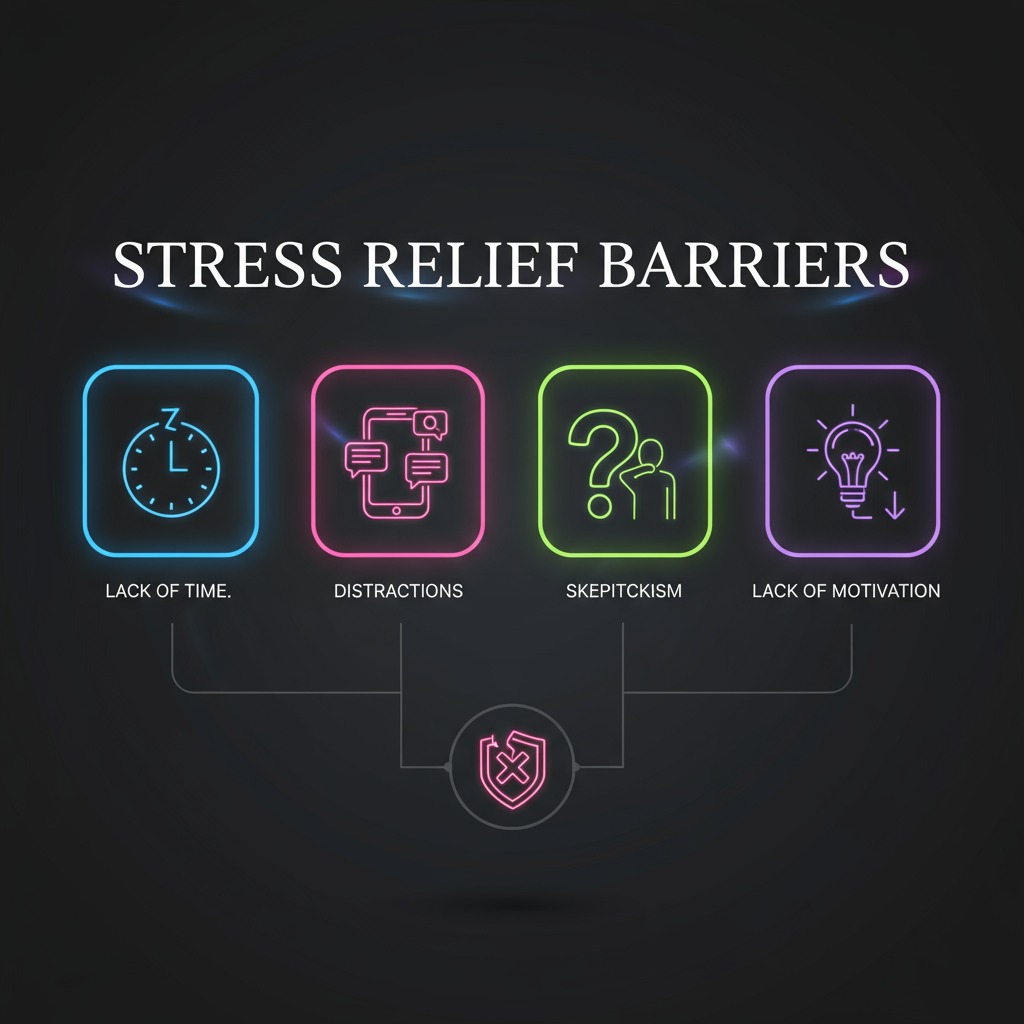
7. Common Barriers to Practicing Stress Relief Methods
Although stress relief methods are simple and accessible, many individuals face obstacles when trying to adopt them consistently. One of the biggest barriers is the perception of not having enough time. In today’s fast-paced world, people are often caught in the cycle of work, family, and personal responsibilities, making it difficult to set aside moments for self-care. However, this belief can be misleading, as even a short five-minute breathing exercise can significantly reduce stress levels, sharpen focus, and increase productivity. In reality, investing a few minutes in stress relief saves much more time by improving efficiency and reducing burnout.
Another common barrier is distractions, especially from the digital environment. Constant notifications, social media, and information overload make it difficult for individuals to stay present during relaxation exercises. This often results in people abandoning stress relief methods prematurely, believing they “don’t work.” Creating a dedicated environment, such as a quiet room or even a small corner with calming elements like soft lighting, plants, or soothing music, can minimize distractions. Using features like “Do Not Disturb” on mobile devices during practice also enhances focus and ensures that the time is fully dedicated to wellness.
Skepticism is another challenge that prevents people from embracing stress relief methods. Some individuals believe that relaxation exercises are too simple to make a real difference or that results should be immediate. This impatience often leads to frustration. It is important to remember that the effects of stress relief are cumulative—just like regular exercise builds physical health over time, consistent use of relaxation techniques strengthens mental resilience gradually. Research shows that people who practice stress relief methods daily for even a few weeks report noticeable improvements in emotional stability, energy, and overall mental wellness.
Lastly, lack of motivation can be a barrier, especially during busy or stressful times when relief is needed most. To overcome this, individuals can find accountability partners, join group classes, or use guided apps that provide structure. Over time, once the benefits—such as reduced anxiety, improved concentration, and a natural energy boost—are experienced, motivation grows on its own. By addressing these barriers and making small adjustments, stress relief methods can become a lasting part of a healthier, more balanced lifestyle.
8. Conclusion
Stress is an unavoidable reality of modern life, but it does not have to control our thoughts, emotions, or energy. With the consistent use of effective stress relief methods, individuals can take back control of their mental wellness, transform the way they handle challenges, and experience greater focus, clarity, and vitality. The key is to view these methods not as occasional fixes but as essential habits that nurture the mind and body every single day.
The eight relaxation exercises explored—deep breathing, progressive muscle relaxation, guided meditation, yoga and stretching, visualization, journaling, mindful walking, and calming music—are simple, practical, and highly effective. They require no expensive tools or complicated techniques, making them accessible to anyone, regardless of age or lifestyle. When practiced consistently, these stress relief methods not only reduce anxiety and tension but also sharpen concentration, boost creativity, and fuel long-lasting energy throughout the day.
The journey begins with small steps. Start with just one or two methods that resonate with you, such as a five-minute morning breathing routine or a short journaling practice before bed. As these practices become habits, gradually introduce more techniques into your routine. Over time, these small efforts will accumulate, leading to profound changes in how you feel, think, and perform. Stress may always be present in some form, but by building resilience through effective stress relief methods, you will learn to manage it gracefully and use it as a stepping stone toward personal growth.
Ultimately, mental wellness is a lifelong journey, and the tools you choose today will shape your tomorrow. By committing to these practices, you are not only improving your current well-being but also building a foundation for a calmer, more energized, and more focused life. Stress will come and go, but with the right stress relief methods, you will always have the strength and clarity to rise above it.