

Table of Contents
1. Introduction – Understanding The Science of Self-Discipline
The science of self-discipline is a fascinating study of how human behavior, motivation, and psychology interact to shape success and personal growth. It is not merely about suppressing desires or forcing yourself into rigid routines—it is about mastering your mind’s mechanisms to achieve long-term goals with clarity and purpose. Self-discipline represents the invisible force that transforms dreams into reality. It is what allows individuals to push through discomfort, stay consistent with their values, and make progress even when motivation fades.
In the modern era, where distractions surround us from every corner, maintaining focus has become a rare skill. From social media notifications to the constant influx of entertainment, our brains are trained for instant gratification. The science of self-discipline teaches us to resist these temptations by rewiring our mental habits and focusing on what truly matters. It enables us to shift attention from temporary pleasure to meaningful, goal-oriented action—an essential shift for achieving sustainable success.
Researchers in achievement psychology have found that self-discipline often predicts success more accurately than intelligence or raw talent. While intelligence can give someone an initial advantage, self-discipline determines how that potential is utilized. A student who studies regularly, an athlete who trains daily, or a professional who maintains consistency in work performance—these individuals succeed not because they are extraordinary, but because they have cultivated the science of self-discipline.
True self-discipline is not about being overly strict with oneself; it is about balance. It involves aligning your thoughts, emotions, and actions with your larger vision. This alignment ensures that every small daily effort contributes to your long-term success. Once you understand that discipline is a learnable skill—not a natural trait—you unlock a new level of personal freedom. The science of self-discipline empowers you to take control of your mind, overcome distractions, and create a lifestyle that reflects your true potential.
Ultimately, self-discipline is the bridge between goals and accomplishment. When developed through mindful practice and consistent effort, it allows you to lead a life of fulfillment, focus, and resilience. It’s not about perfection—it’s about progress, persistence, and purpose.
2. The Psychology Behind Self-Discipline
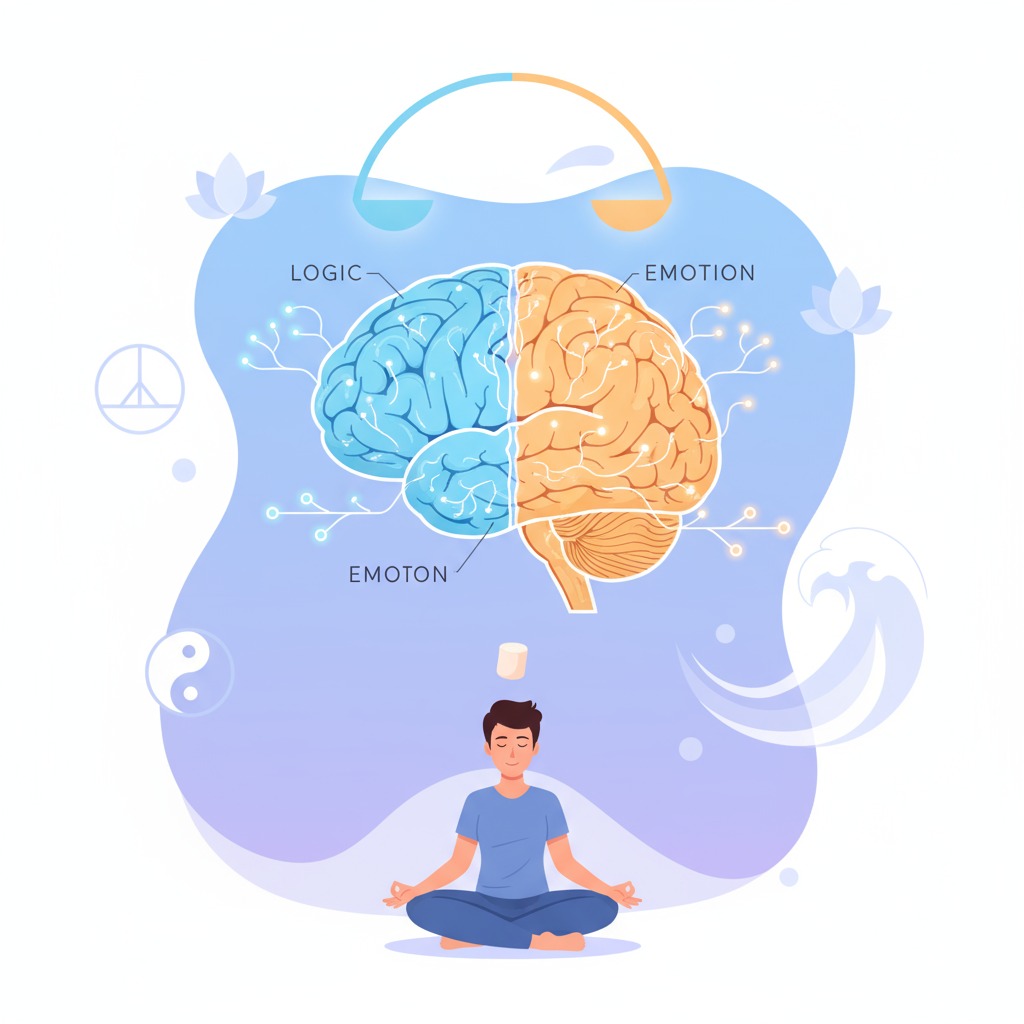
The science of self-discipline begins with understanding the psychological mechanisms that govern human behavior. At its foundation, self-discipline is the ability to regulate impulses, delay gratification, and make rational decisions even in the face of emotional temptation. The brain plays a central role in this process—specifically, the interaction between two key regions: the prefrontal cortex and the limbic system.
The prefrontal cortex, located at the front of the brain, is responsible for logic, planning, and decision-making. It acts as the command center for long-term goals and rational thinking. On the other hand, the limbic system governs emotions, pleasure, and immediate rewards. When your limbic system dominates, you are driven by impulse—like choosing to watch TV instead of working on an important project. But when the prefrontal cortex takes charge, you prioritize discipline and long-term rewards over short-term gratification.
This constant internal struggle between logic and emotion is the essence of self-discipline. The science of self-discipline teaches you to strengthen your prefrontal cortex through intentional habits and mindfulness. For instance, choosing to exercise instead of scrolling through social media strengthens neural pathways that promote self-control. Over time, this repeated behavior becomes automatic, making discipline a part of your identity.
Achievement psychology further supports this concept through studies like Walter Mischel’s “Marshmallow Test,” which demonstrated the power of delayed gratification. Children who resisted the temptation of eating one marshmallow immediately in exchange for two later showed greater success in academics, relationships, and careers years down the line. This experiment proved that the ability to delay gratification—one of the core principles of self-discipline—correlates strongly with long-term achievement and emotional resilience.
Moreover, neuroscience reveals that the brain’s ability to change and adapt—known as neuroplasticity—plays a critical role in habit control. Every time you make a disciplined choice, you reinforce specific neural pathways. Over time, these pathways become stronger, turning disciplined behavior into effortless routines. This biological process explains why self-discipline feels hard at first but becomes easier with consistent practice.
In addition, emotional regulation is another psychological aspect of self-discipline. The science of self-discipline shows that emotionally balanced individuals are more capable of managing stress and making rational decisions. Rather than reacting impulsively to challenges, they pause, reflect, and respond with intention. This mindset not only enhances productivity but also promotes overall mental wellness.
Ultimately, the psychology behind self-discipline reveals that it’s not about depriving yourself—it’s about empowering your mind. By understanding how your brain and emotions work, you can build systems that support your goals, strengthen your resilience, and cultivate the habits necessary for lasting success. Self-discipline, therefore, is both a mental skill and a psychological advantage—one that enables you to design the life you truly want.
3. 5 Psychological Hacks for Habit Control and Achievement Psychology
The science of self-discipline can be turned into a daily reality by applying specific psychological hacks that enhance motivation, habit control, and mental focus. These methods are not abstract theories—they are practical tools grounded in modern achievement psychology that can help you build consistency, reduce procrastination, and align your actions with long-term goals. The beauty of these hacks lies in their simplicity and effectiveness; they work with how your brain naturally operates, allowing you to reprogram your habits for lasting success.
Below are five proven techniques that bring the science of self-discipline to life, empowering you to take charge of your behavior, mindset, and results.
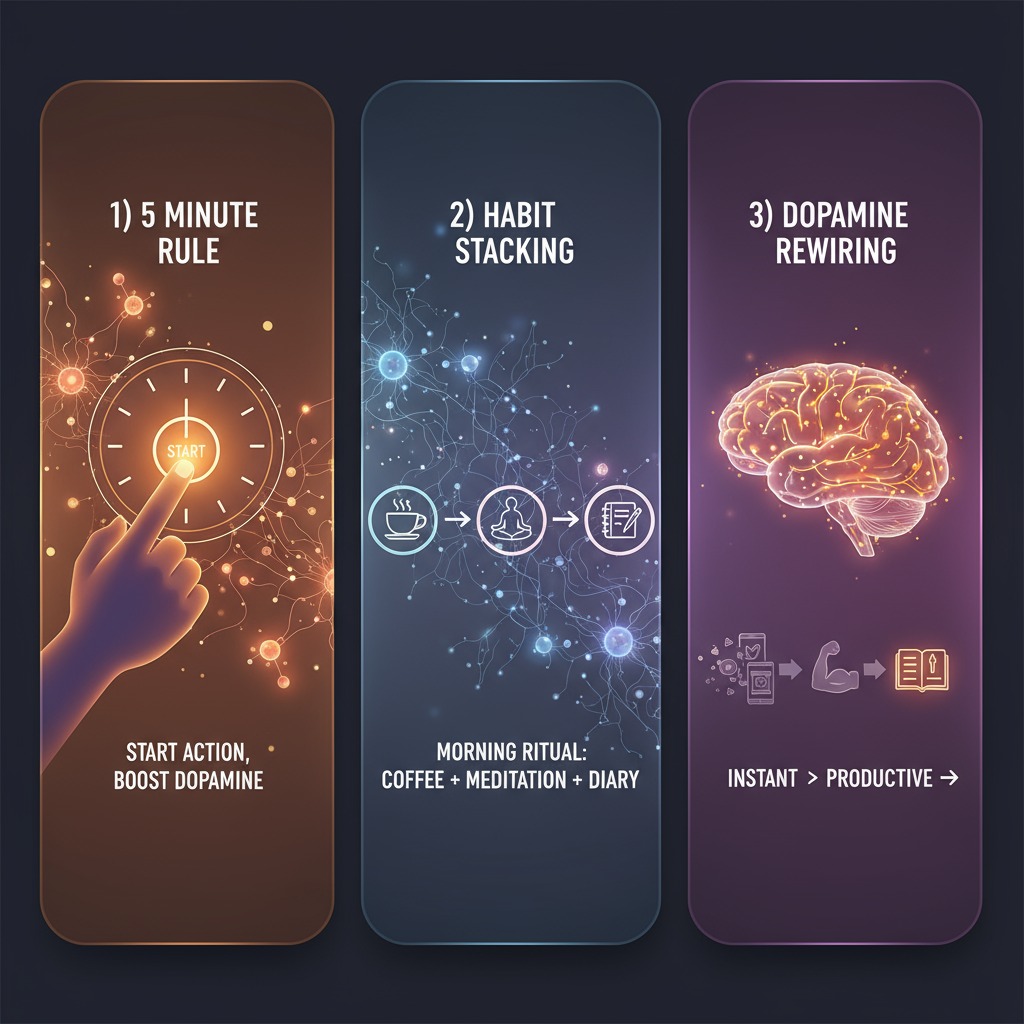
1. The 5-Minute Rule – Overcome Procrastination Instantly
The science of self-discipline begins with taking the first step, and one of the greatest obstacles to that step is procrastination. The 5-Minute Rule is a simple but powerful technique to overcome hesitation and mental resistance. The idea is to commit to any task for just five minutes—nothing more. By doing so, you bypass the psychological barrier of starting and allow action to create momentum.
This works because your brain resists large, undefined tasks but accepts small, manageable ones. Once you begin, your brain’s reward system starts producing dopamine, reinforcing the behavior and encouraging you to keep going. For example, if you’re avoiding studying or exercising, just promise to do it for five minutes. Most often, once the first five minutes pass, you naturally continue, sometimes completing the entire task.
This hack utilizes what psychologists call “behavioral activation.” It breaks the cycle of overthinking and replaces it with movement, which triggers motivation. The science of self-discipline teaches that action precedes motivation—not the other way around. The 5-Minute Rule transforms self-discipline from a struggle into a series of small, doable actions that strengthen your consistency and willpower over time.
In essence, this method builds momentum and confidence by focusing on progress rather than perfection. The more you practice it, the more your brain learns to associate action with reward—turning effort into a natural, automatic habit.
2. Habit Stacking – Linking New Behaviors to Existing Routines
The science of self-discipline also relies heavily on routine design. Habit stacking, a method introduced by behavioral expert James Clear, is one of the most effective tools for creating sustainable discipline. It involves pairing a new behavior with an already existing habit, forming a mental connection that makes it easier to remember and execute the new task consistently.
For instance:
– After brushing your teeth → meditate for two minutes.
– After pouring your morning coffee → write three goals for the day.
– After finishing dinner → review your progress for 10 minutes.
This process works because your brain thrives on patterns and associations. The science of self-discipline explains that the brain’s neural circuits are more likely to adopt a new habit if it’s attached to a familiar one. By linking habits together, you eliminate the need for constant motivation or reminders—your existing habits become triggers for new ones.
Over time, habit stacking helps integrate discipline into your daily routine without resistance. It shifts your mindset from “I have to remember to be disciplined” to “this is just what I do.” This seamless integration of behavior makes the pursuit of long-term goals far more natural and sustainable. Through consistent practice, you condition your brain to respond automatically to positive cues, strengthening your foundation of self-control and focus.
Ultimately, habit stacking transforms discipline from a conscious effort into an effortless lifestyle—making it one of the most practical tools within the science of self-discipline.
3. Dopamine Rewiring – Training Your Brain for Long-Term Reward
In today’s fast-paced world, where instant gratification is just a click away, the science of self-discipline becomes even more important. Our brains are naturally wired to seek short-term pleasure through activities like scrolling social media, binge-watching, or snacking on junk food. This constant stimulation floods the brain with dopamine, creating a reward loop that undermines long-term goals.
Dopamine rewiring involves consciously reshaping these reward patterns. Instead of indulging in fleeting pleasures, you train your brain to associate dopamine with productive and meaningful actions. For example, reward yourself for completing a workout, writing a page of your journal, or learning a new skill. Over time, your brain starts releasing dopamine in response to achievement rather than distraction.
The science of self-discipline explains that this shift from short-term to long-term gratification strengthens emotional resilience and willpower. Psychologists refer to this process as “reward substitution.” You replace destructive dopamine triggers with constructive ones, making your brain crave progress and consistency instead of laziness or avoidance.
You can also use “micro-rewards” to reinforce small wins—like listening to your favorite song after finishing a study session. Each reward conditions your mind to connect satisfaction with disciplined effort, not with procrastination. This neurological rewiring creates a strong feedback loop, turning self-control into an emotionally rewarding experience.
In short, dopamine rewiring aligns your pleasure system with your purpose, allowing you to sustain motivation effortlessly. It transforms discipline from something you force into something you enjoy—a key insight from the science of self-discipline that leads to long-term achievement and inner balance.
4. Implementation Intentions – Turn Goals into Automatic Actions
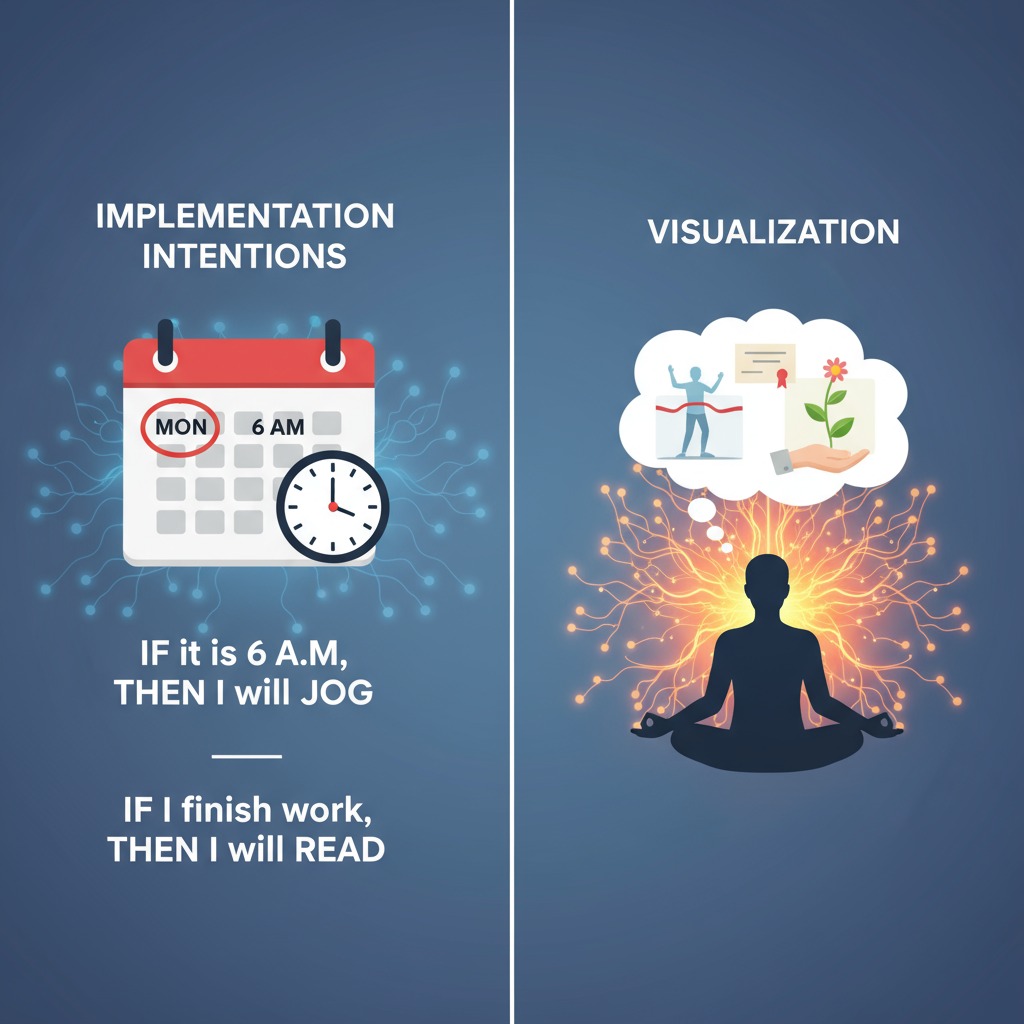
The science of self-discipline thrives on structure, not just motivation. Implementation intentions are a proven method for turning vague goals into specific, actionable plans. This psychological technique involves creating “if-then” statements that define when, where, and how you’ll perform a task.
For example:
– “If it’s 6 a.m., then I will go for a jog in the park.”
– “If I finish my lunch, then I will read for 15 minutes.”
– “If I sit at my desk after dinner, then I will study for 30 minutes.”
This method programs your brain to treat the desired behavior as an automatic response to a specific trigger. It removes uncertainty, reduces decision fatigue, and helps your brain transition from thought to action seamlessly. The science of self-discipline emphasizes that clarity eliminates hesitation—when you know exactly what to do and when to do it, your brain doesn’t need to negotiate with procrastination.
Implementation intentions work because they shift discipline from a willpower-based effort to a cue-based routine. When an action becomes a reflex triggered by a specific context, your mind no longer wastes energy debating whether to act. This leads to greater consistency and reliability in achieving goals.
Achievement psychology supports this approach, highlighting that clear intentions create stronger neural patterns and enhance self-regulation. Over time, disciplined actions become automatic behaviors that define your daily rhythm. In this way, implementation intentions convert ambition into action and transform disciplined living into second nature.
5. The Power of Visualization – Reprogram Your Subconscious Mind
Visualization is one of the most underrated tools within the science of self-discipline and achievement psychology. It involves mentally rehearsing success before it happens, which helps align your subconscious mind with your conscious goals. When you vividly imagine yourself executing a disciplined behavior—like waking up early, focusing during study sessions, or finishing a project—your brain activates the same neural pathways as it would during the actual activity.
This mental practice conditions your brain to expect success, reducing anxiety and hesitation when you face real-life challenges. For instance, elite athletes often visualize their performance before competitions. They see themselves winning, feeling confident, and maintaining composure under pressure. This visualization not only boosts performance but also strengthens belief in their ability to succeed.
The science of self-discipline explains that what you consistently imagine, you begin to embody. Visualization serves as a form of mental programming—it builds familiarity with success and strengthens self-confidence. The more you visualize disciplined action, the more natural it feels to execute it in reality.
To make visualization more effective, include emotional intensity and sensory detail. Don’t just imagine achieving a goal—feel the satisfaction, pride, and calm that comes with it. This emotional engagement signals your brain that the goal is already attainable, motivating you to act accordingly.
By integrating visualization into your daily routine, you strengthen both your mindset and motivation. It bridges the gap between thought and behavior, turning discipline from a conscious struggle into an instinctive response. In achievement psychology, this mental rehearsal is known to enhance performance, reduce stress, and promote long-term focus.
4. The Long-Term Benefits of Mastering Self-Discipline
The science of self-discipline goes far beyond boosting productivity or achieving short-term goals—it profoundly transforms your overall mental, emotional, and physical well-being. When you learn to master discipline, you develop control over your impulses, gain clarity in your decision-making, and cultivate a sense of purpose in your actions. It is not merely about controlling behavior; it’s about reshaping your mindset and aligning your daily habits with your long-term aspirations. The ability to remain consistent and focused, despite distractions or difficulties, is one of the strongest predictors of personal and professional success.
One of the most powerful outcomes of practicing the science of self-discipline is improved emotional regulation. Emotionally disciplined individuals learn how to pause before reacting, evaluate their emotions, and choose responses that align with their values rather than temporary impulses. This kind of emotional control reduces stress, enhances emotional intelligence, and strengthens relationships. Instead of being ruled by moods or circumstances, you become the master of your emotional world. As your emotional awareness grows, you start responding calmly to challenges, seeing setbacks not as failures but as opportunities to learn and evolve. This emotional maturity, powered by self-discipline, becomes a cornerstone of resilience and peace of mind.
The science of self-discipline also enhances focus and mental clarity. In a world full of constant distractions, the ability to concentrate on what truly matters is a superpower. Discipline trains your brain to prioritize meaningful goals over instant gratification, allowing you to channel your time and energy efficiently. You become more deliberate with your choices, aware of what adds value to your life, and less likely to be swayed by fleeting desires or external pressures. Over time, this clarity of mind leads to improved creativity, deeper learning, and a stronger sense of purpose—all essential components of achievement psychology.
Another profound benefit of mastering self-discipline is the development of stronger self-confidence. Confidence doesn’t come from external praise—it grows from within, through the consistent act of keeping promises to yourself. Every time you commit to a task and follow through, you build trust in your abilities. This inner reliability becomes a silent source of strength, helping you face challenges without fear or hesitation. The science of self-discipline teaches you that confidence is built one small action at a time, through consistency and accountability. When you honor your commitments, you not only achieve your goals but also strengthen your self-belief—an essential ingredient for lasting success.
Incorporating achievement psychology into your routine leads to greater achievement and personal fulfillment. Disciplined individuals don’t chase results impulsively; they create structured systems that lead to steady progress. Success then becomes a natural by-product of your daily discipline. This sense of fulfillment doesn’t come solely from reaching the finish line but from appreciating the journey—each disciplined choice, each moment of focus, each act of self-control becomes a victory in itself. You learn to find joy in the process, realizing that sustainable achievement arises not from bursts of effort but from consistency over time.
Ultimately, the science of self-discipline leads to lasting inner peace. When your actions reflect your values and your habits align with your purpose, life begins to feel harmonious. You no longer experience the constant tug of guilt, distraction, or self-doubt. Instead, you live with integrity and balance, knowing that your daily actions are leading you toward meaningful goals. Over time, discipline evolves from an external effort into an internal rhythm—a way of life rooted in mindfulness, purpose, and strength. You begin to move through life with calm confidence, unshaken by challenges and motivated by growth.
The long-term benefits of mastering self-discipline are cumulative. Each act of control strengthens your character; each moment of focus sharpens your vision. Discipline eventually becomes second nature—an empowering force that guides your choices, elevates your performance, and nurtures your well-being. The more you practice it, the freer you become—free from the chaos of procrastination, the weight of self-doubt, and the limitations of fear. Through the lens of the science of self-discipline, every moment becomes an opportunity to create balance, purpose, and lifelong success.

5. Conclusion
The science of self-discipline is far more than a strategy for success—it’s a profound philosophy for intentional and conscious living. It teaches that real achievement doesn’t come from bursts of motivation but from consistency, focus, and emotional strength built over time. By understanding habit control and integrating achievement psychology into your daily life, you gain the power to steer your thoughts, emotions, and actions toward meaningful outcomes. At MindQuora, we believe that mastering self-discipline is the foundation of mental wellness and sustainable growth—it’s what separates those who dream from those who achieve.
Through the principles of the science of self-discipline, you learn that discipline is not about limitation—it’s about liberation. It frees you from the endless cycle of procrastination, self-sabotage, and emotional turmoil. It allows you to rise above external distractions and focus on what truly matters: your purpose, your growth, and your inner peace. The journey to mastering self-discipline begins with awareness, continues through practice, and matures into wisdom. Each day that you choose focus over distraction, effort over excuses, and progress over comfort, you redefine your capabilities and expand your potential.
The MindQuora philosophy emphasizes that discipline is an act of self-respect. It is the daily commitment to your goals, values, and dreams. You don’t have to be perfect—what matters is consistency. Every small step taken with intention reshapes your habits, rewires your brain, and transforms your life. Through this process, you begin to realize that discipline isn’t external pressure; it’s internal power. It’s the silent force that turns potential into progress and ambition into achievement.
As you walk the path of the science of self-discipline, you also nurture your mental well-being. The clarity that comes from a disciplined mind brings calmness; the control over habits brings freedom; and the sense of achievement brings fulfillment. Over time, these elements work together to create balance, confidence, and peace—qualities that sustain you through every challenge life presents. The science of self-discipline becomes not just a habit but a way of living with authenticity, purpose, and self-awareness.
In conclusion, embracing the science of self-discipline is the key to unlocking your highest potential. It is the bridge between who you are and who you aspire to become. By mastering it, you gain not only success but also serenity—the kind of inner strength that empowers you to live fully, purposefully, and joyfully. Through lens, self-discipline isn’t just about doing more—it’s about becoming more. It’s about aligning your actions with your purpose, building resilience through mindful habits, and creating a life defined by growth, balance, and enduring happiness.