
Table of Contents

1. Introduction – Unlock Productivity with Time Blocking
Time blocking is a productivity method that allows individuals to allocate specific periods for focused work, meetings, or personal activities. Unlike traditional to-do lists that can feel overwhelming or unstructured, time blocking provides a clear roadmap for your day, helping you prioritize high-impact tasks and manage your time with precision.
By assigning set time slots to activities, time blocking improves task scheduling and ensures better time control. Instead of reacting to incoming emails, notifications, or urgent requests, you proactively define when and how you work, which reduces stress and prevents mental overload. The method also promotes a sense of accomplishment as you complete tasks within dedicated blocks, boosting motivation and reinforcing positive habits.
For mental wellness, time blocking offers significant benefits. Structured schedules reduce cognitive clutter, prevent decision fatigue, and create a rhythm that supports deep focus. By integrating short breaks and downtime, you protect your energy and maintain emotional balance. Moreover, time blocking allows for a healthier work-life balance, as tasks are clearly separated from personal time, ensuring that productivity does not come at the expense of relaxation or relationships.
With time blocking, every day becomes intentional. Rather than drifting between tasks or feeling overwhelmed by competing priorities, you gain control over your schedule, enhance concentration, and create a sustainable system that supports both professional success and mental well-being.
2. Understanding the Time Blocking Method
Time blocking is a structured approach to planning your day, where each task, activity, or responsibility is assigned a fixed time slot. Unlike simple task lists that leave you guessing which task to tackle next, time blocking provides clear boundaries and defined priorities. It differs from traditional calendar planning because it emphasizes dedicated focus periods for specific work types, rather than loosely scheduled meetings or reminders.
The effectiveness of time blocking lies in its ability to enhance focus and reduce procrastination. By limiting distractions during dedicated blocks, you train your mind to work with intensity and clarity. This method also aligns with psychological principles of attention management: humans can sustain deep focus only for limited periods. By intentionally breaking your day into intervals for different tasks, you maximize productivity while respecting your cognitive limits.
Additionally, time blocking leverages the principle of Parkinson’s Law, which states that work expands to fill the time available. By assigning fixed durations to tasks, you create urgency and reduce the tendency to overcomplicate or procrastinate. Whether for deep work, administrative tasks, or creative brainstorming, the method ensures that every minute of your day is purposeful, leading to better task scheduling and improved time control.
Ultimately, understanding time blocking involves recognizing it as both a planning tool and a behavioral habit. Its structured nature supports sustained attention, encourages mindful task completion, and builds the discipline necessary to maintain long-term productivity.
3. Benefits of Time Blocking for Productivity and Mental Wellness
Time blocking delivers multiple benefits that extend beyond simply organizing tasks. One of its most immediate advantages is improved concentration. By dedicating specific intervals to a single task, you minimize distractions and multitasking, which enhances cognitive clarity and efficiency. This focus translates into higher-quality work completed in less time, freeing up mental energy for other important responsibilities.
Another key benefit is enhanced prioritization. Time blocking forces you to identify high-impact activities and schedule them strategically, ensuring that your energy is directed toward tasks that truly matter. This improves decision-making regarding what to tackle first and reduces the risk of spending time on low-value or reactive activities.
Effective time control is another major outcome. When tasks are pre-scheduled, you gain a clear sense of how your day is structured, allowing you to anticipate workloads, manage deadlines, and avoid feeling overwhelmed. This control reduces stress and supports mental wellness, as unpredictability and last-minute pressures are minimized.
Time blocking also cultivates a sense of accomplishment. Completing each scheduled block provides tangible progress, reinforcing motivation and confidence. Additionally, when blocks include breaks and self-care periods, energy management improves, preventing burnout and promoting sustainable performance.
By implementing time blocking, individuals experience better work-life balance. Personal time becomes protected, focused work becomes more productive, and mental clarity improves. Over time, this method transforms daily routines, creating a structured yet flexible system that benefits both professional output and overall well-being.
4. 10 Proven Ways to Master Time Blocking
Structured scheduling can be mastered through consistent practice, self-awareness, and thoughtful strategies. Implemented effectively, it transforms your daily routine into a system where every task has a purpose, focus is maximized, and mental energy is preserved. By integrating these methods into your workflow, you can improve task organization, gain better control over your day, and reduce overwhelm. Below are ten proven ways to make this method a natural part of your productivity routine.
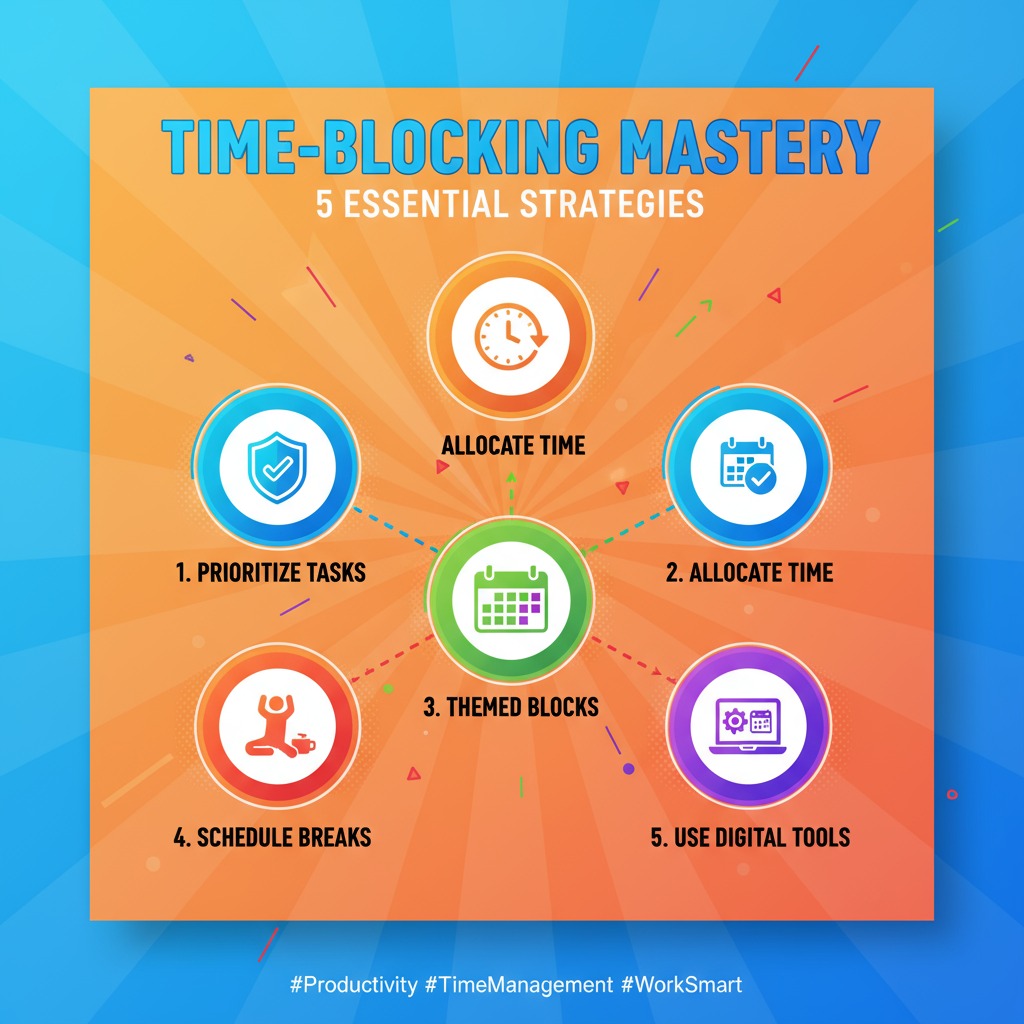
1. Identify and Prioritize High-Impact Tasks
The foundation of effective scheduling lies in understanding which tasks truly move the needle. Begin by listing all your responsibilities, projects, and personal commitments, then identify the ones with the highest impact on your long-term goals. Activities such as strategic planning, client projects, or skill development deserve prime time slots when your energy and focus are at their peak.
Strategic prioritization ensures that your day is not consumed by reactive or low-value tasks like minor emails or routine social media updates. One practical method is the ABC approach, where tasks are categorized as A (high impact), B (moderate impact), and C (low impact). Focus your key time slots mainly on A-level tasks, while delegating or batching B and C tasks later. This ensures that your schedule is not just about filling hours, but actively advancing your objectives.
2. Allocate Specific Time Blocks for Each Activity
Assigning precise durations to each task is central to productive scheduling. Instead of vaguely planning to “work on reports in the morning,” schedule a dedicated slot from 9:00 AM to 11:00 AM and treat it as a non-negotiable appointment with yourself.
Clear start and end times create accountability, reduce procrastination, and encourage a disciplined approach to work. For larger projects, consider breaking them into smaller, consecutive sessions spread over several days. This keeps tasks manageable, prevents overwhelm, and allows for consistent progress. Digital calendars with notifications can further reinforce adherence and support habit formation.
3. Use Themed Days or Time Zones for Similar Tasks
Grouping similar activities together reduces context switching, which drains mental energy and slows productivity. For instance, dedicate Mondays to strategic planning, Tuesdays to creative work, and Fridays to administrative tasks. Another approach is dividing your day into “time zones,” such as mornings for deep focus, afternoons for meetings, and evenings for review or reflection.
Structured days and time zones allow your brain to enter a flow state more easily, as it does not have to constantly shift between different types of thinking. Over time, this practice strengthens mental clarity, increases efficiency, and ensures that each session aligns with the type of work your mind is best suited for at that moment.
4. Incorporate Regular Breaks and Downtime
No schedule is sustainable without proper breaks. Integrating short pauses between sessions prevents mental fatigue and maintains productivity throughout the day. Even five to ten minutes of stretching, walking, or deep breathing can significantly enhance focus and energy levels.
Longer breaks, such as a lunch hour or mid-afternoon recharge, provide full cognitive restoration. Treat these pauses as essential components of your routine rather than optional gaps. Neglecting downtime can lead to burnout, reduce task efficiency, and compromise overall control of your day. Consider breaks as strategic investments in mental energy, allowing you to approach each session with clarity and focus.
5. Leverage Digital Tools, Calendars, and Reminders
Modern technology makes structured scheduling far easier to implement consistently. Platforms like Google Calendar, Notion, Trello, or Microsoft Outlook allow you to visually organize your day, set notifications, and color-code tasks for clarity.
These tools also support recurring events, such as daily meetings or weekly reports, reducing the cognitive load of remembering tasks. Visual representations of your schedule improve accountability, while reminders gently prompt you to stay on track. Incorporating technology ensures that your system remains practical and manageable even when life gets busy.
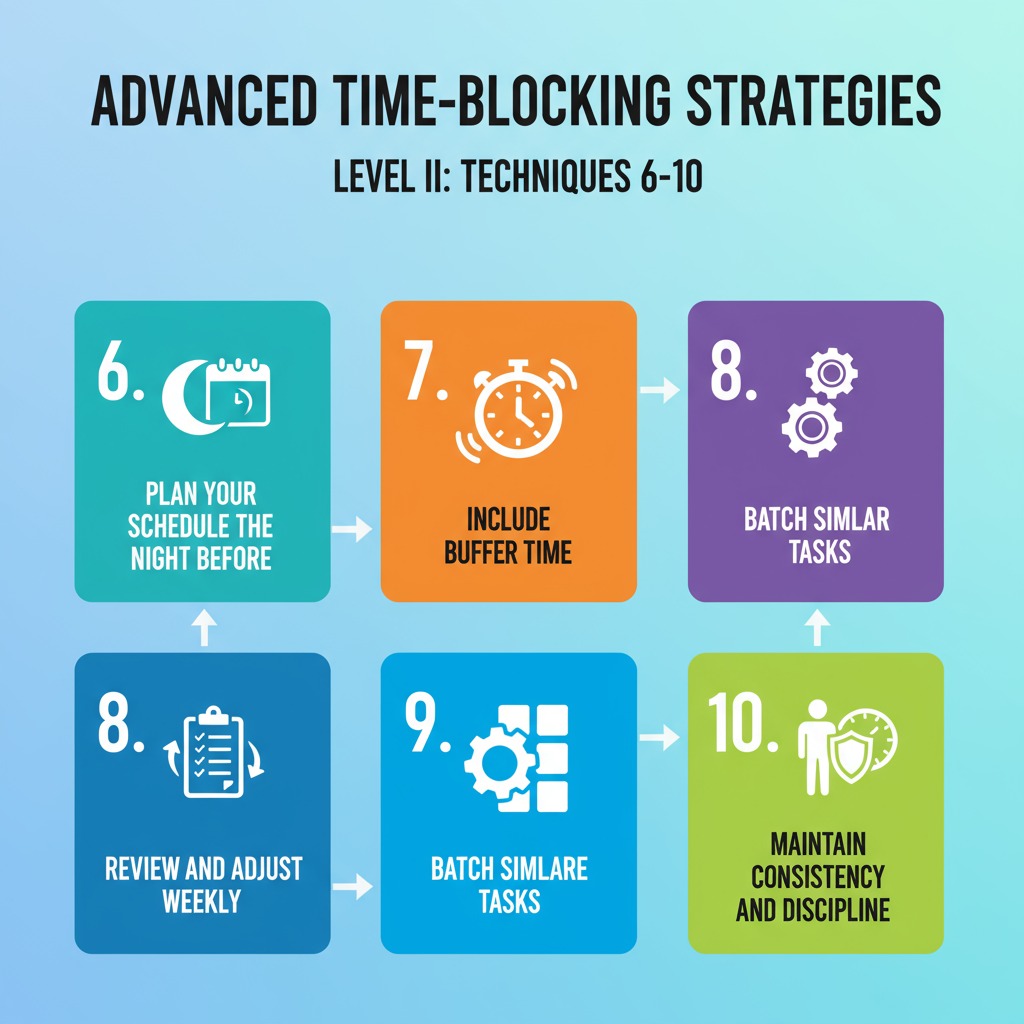
6. Plan Your Schedule the Night Before
Preparing your schedule the evening prior is a habit of highly productive individuals. Reviewing tasks and assigning slots in advance primes your mind for focused work the following day. This preparation reduces morning decision fatigue, ensures smoother task transitions, and prevents last-minute stress.
Consider your natural energy patterns when planning. Place deep-focus work during peak alertness and routine tasks when your energy dips. Nightly planning also allows flexibility to adjust for new priorities, ensuring your day remains realistic and effective.
7. Include Buffer Time to Accommodate Unexpected Events
Life is unpredictable, and even the best-laid plans can face interruptions. By incorporating small buffer periods between sessions, you create space for urgent calls, impromptu meetings, or delays without derailing your entire day.
These buffers also allow flexibility for tasks that may take longer than expected, maintaining realistic control over your schedule. Without them, any disruption can cause stress and reduce overall productivity. Including buffer time makes structured scheduling practical, adaptable, and resilient.
8. Batch Similar Tasks to Reduce Context Switching
Batching repetitive or related tasks conserves mental energy and enhances focus. Instead of checking emails intermittently throughout the day, dedicate a single block solely for email management. Similarly, combine calls, report reviews, or routine administrative work into one session.
This strategy minimizes the cognitive cost of constantly switching between unrelated tasks and allows your mind to fully engage with each category of work. Over time, your brain adapts to these patterns, making productivity more automatic and reinforcing disciplined control over your time.
9. Review and Adjust Your Time Slots Weekly
Even the most carefully planned schedule requires regular assessment. At the end of each week, analyze how your sessions performed. Identify tasks that overran, periods that caused stress, or areas where flexibility was insufficient.
Regular reflection allows you to fine-tune your system, ensuring it remains aligned with your goals and energy patterns. Adjusting sessions for efficiency is a crucial step in mastering structured scheduling. It prevents frustration, enhances performance, and ensures your productivity system is both realistic and sustainable.
10. Maintain Consistency and Discipline in Sticking to Your Schedule
Structured scheduling is only effective when applied consistently. Daily discipline ensures that your routine becomes second nature. Treat each slot as a commitment rather than a suggestion.
Consistency strengthens focus, builds mental resilience, and reinforces productivity habits. Over time, disciplined adherence transforms how you manage work, enhances control over your day, and allows you to accomplish more while reducing stress and overwhelm.
5. Overcoming Common Barriers in Time Blocking
Even with the best intentions, implementing structured scheduling can come with challenges. Common barriers include distractions, underestimating task durations, and feeling overly rigid with your schedule. Recognizing these obstacles is the first step toward addressing them and ensuring that time-blocked routines remain practical and empowering.
Distractions are one of the most frequent hurdles. Notifications, emails, social media, or unexpected calls can easily interrupt a focused block, breaking your concentration and reducing productivity. Practicing mindfulness, turning off non-essential alerts, and using techniques like the Pomodoro method—where focused work alternates with short breaks—can significantly mitigate interruptions. These small adjustments help protect your high-value time and maintain focus.
Underestimating the time tasks require is another common issue. Many tasks take longer than anticipated, creating stress and forcing a reshuffle of the entire schedule. To overcome this, track how long tasks actually take, include buffer periods for adjustments, and reflect on past performance to make more accurate estimates. This approach ensures your schedule remains realistic, reducing overwhelm and frustration.
Rigidity is a psychological challenge that can make scheduling feel restrictive rather than supportive. The solution lies in maintaining flexibility within the structure. Adjust blocks when necessary while keeping the overall plan intact. Reinforce discipline through habit formation, reflection, and small rewards for sticking to your schedule. By overcoming these barriers, structured scheduling becomes a tool for empowerment, allowing better control over your day, improved focus, and sustained mental wellness.
6. Integrating Time Blocking into Daily Life
Time blocking is most effective when seamlessly embedded into your daily routines. Begin by allocating blocks for high-priority work, such as deep-focus tasks, strategic projects, or creative work, while leaving space for meetings, calls, and personal activities. Dedicated time for emails, administrative duties, or repetitive tasks ensures that essential yet less critical responsibilities do not intrude on periods requiring concentrated effort.
Integration extends to personal routines as well. Scheduling exercise, mindfulness practices, relaxation, or hobbies within blocks supports mental wellness and energy management. These scheduled pauses prevent burnout and provide balance, so your workflow feels structured without being restrictive. By blending work and personal activities, time blocking becomes a supportive framework rather than a rigid constraint.
Consistency is crucial for integration. When applied daily, this method trains your brain to anticipate tasks, reduces procrastination, and establishes a natural rhythm for productivity. Over time, the brain associates each block with specific activities, creating smooth transitions and reducing cognitive load. Combining structure with flexibility allows the schedule to adapt to real-world interruptions while preserving focus, reducing overwhelm, and promoting overall well-being.
Flexibility is critical. Life is unpredictable, and rigid adherence to time blocks can feel restrictive. Adjust your schedule when necessary while keeping the overall structure intact. Over time, consistent integration trains your brain to anticipate tasks, reduces procrastination, and develops a natural rhythm for accomplishing goals. By combining structure with adaptability, you ensure that structured scheduling enhances focus, improves time control, and sustains overall well-being.

7. Advanced Strategies to Enhance Time Blocking Efficiency
Once the basics of time blocking are in place, advanced strategies can elevate its effectiveness. Using a priority matrix, such as the Eisenhower Box, helps classify tasks by urgency and importance. This ensures that blocks are allocated to high-impact activities first, preventing lower-value tasks from consuming critical mental energy. By clearly distinguishing between urgent, important, and non-essential tasks, you can design your time blocks to focus on what truly drives results, improving both efficiency and task scheduling.
The Pomodoro technique can further enhance efficiency within time blocks. Working in short, focused intervals followed by brief breaks encourages sustained attention, prevents fatigue, and reinforces discipline. This approach is particularly useful for long or complex projects where maintaining consistent concentration is challenging. By combining the Pomodoro method with time blocking, you train your mind to maximize focus during active work periods while fully recharging during breaks, leading to improved mental clarity and better time control.
Analyzing your time usage is another powerful strategy. Tracking how long tasks actually take, where interruptions occur, and which blocks yield the highest productivity allows for continuous improvement. Analytics help identify patterns, optimize future scheduling, and ensure that every block contributes meaningfully to overall productivity. With digital tools like Google Calendar, Notion, or Toggl, you can visually review and assess your blocked schedule, making adjustments that align with your workflow and energy levels.
Additionally, integrating time blocking with reflective review sessions can significantly boost its efficiency. At the end of each week, evaluate which blocks were most productive, which tasks consistently overran their allotted time, and where distractions were most frequent. This ongoing assessment allows you to fine-tune your schedule, adjust block durations, and optimize task sequencing. By combining advanced strategies with consistent time blocking, you create a dynamic system that evolves with your workload and energy patterns, ensuring sustained focus, improved time control, and long-term productivity gains.
8. Real-Life Examples of Time Blocking in Action
Time blocking is widely adopted by individuals seeking tangible improvements in productivity. Entrepreneurs, professionals, and students have successfully used structured scheduling to gain better control over their days. For example, Elon Musk famously organizes his day in five-minute increments to manage multiple high-priority projects simultaneously. This extreme precision allows him to maximize output, maintain clarity, and reduce decision fatigue. Time blocking, in this context, is not just about scheduling—it becomes a tool for maintaining high efficiency under intense workload pressure.
Professionals in various fields apply time blocks to protect periods of deep work from distractions. By reserving dedicated time for creative or analytical tasks, they achieve higher-quality outcomes in less time. Similarly, students who practice structured scheduling report better focus, improved learning efficiency, and a more balanced approach to study, leisure, and personal development. Time blocking empowers them to allocate energy where it matters most, transforming routine schedules into structured pathways for success.
Organizations that encourage time blocking observe measurable benefits as well. Teams become more aligned with strategic goals, burnout is reduced, and overall efficiency improves. By embedding time-blocked schedules into team workflows, businesses ensure that employees spend focused time on value-generating activities while maintaining flexibility for collaborative or unexpected tasks.
Additionally, many creative professionals and freelancers rely on time blocking to manage multiple clients or projects. By assigning blocks for different responsibilities, they maintain consistent productivity without feeling overwhelmed. Time blocking allows them to set clear boundaries between work and personal life, fostering both professional growth and mental wellness. These real-life examples illustrate that structured scheduling is not merely a productivity technique—it is a practical approach to mastering time control, enhancing focus, and achieving sustained results.

9. Common Mistakes to Avoid in Time Blocking
Despite its effectiveness, structured scheduling can fail if not applied thoughtfully. One common mistake is overloading your schedule without including breaks. Without downtime, mental fatigue sets in, productivity declines, and the risk of burnout increases. Another frequent error is ignoring the need for flexibility. Tasks often take longer than anticipated, and failing to adjust your schedule accordingly can create stress and frustration.
Improper prioritization is also a critical mistake. Spending time on low-impact tasks reduces the benefits of structured scheduling and undermines time control. To avoid these pitfalls, regularly review your blocks, adjust based on actual performance, and incorporate buffer periods for unforeseen interruptions. Time blocking should be a tool that supports your workflow, not a source of additional pressure. By maintaining balance and flexibility, you ensure that your schedule enhances efficiency while sustaining mental wellness.
Another mistake is inconsistent adherence to scheduled blocks. Some people create detailed time-blocked plans but fail to follow them consistently, which diminishes the effectiveness of the method. Time blocking works best when treated as a commitment rather than a suggestion. Establishing routines, setting reminders, and using visual calendars can reinforce consistent practice, gradually turning structured scheduling into a natural habit.
Finally, underestimating the importance of reflection can limit the benefits of time blocking. Without reviewing your performance and evaluating how your blocks are working, inefficiencies go unnoticed, and opportunities for improvement are lost. Regularly reflecting on completed tasks, energy levels, and productivity patterns ensures that time blocking evolves to match your real-world needs. By avoiding these common mistakes, you can fully leverage time blocking to achieve better time control, improved focus, and a sustainable, balanced workflow.
10. Conclusion
Time blocking is more than a productivity method—it is a structured approach that allows you to take full control of your day. By consistently using time blocking for focused work, breaks, and personal activities, you create a clear and organized schedule that promotes mental wellness and reduces stress. The practice of time blocking helps minimize multitasking, improves task scheduling, and ensures that every activity receives the attention it deserves, leading to more effective time control.
Adopting time blocking encourages discipline while maintaining flexibility. Unexpected tasks and interruptions are inevitable, but when incorporated into a time-blocked schedule, they become manageable rather than disruptive. Over time, regular use of time blocking strengthens your ability to prioritize high-impact tasks, develop consistent habits, and maintain focus across both professional and personal responsibilities.
Moreover, time blocking fosters a deeper sense of accomplishment. By allocating specific periods for work, rest, and self-care, you can track progress more effectively and experience the satisfaction of completing tasks within dedicated blocks. This method not only enhances productivity but also supports a balanced lifestyle, preventing burnout and promoting long-term mental clarity.
Finally, committing to time blocking transforms the way you approach each day. The consistent practice of scheduling blocks empowers you to anticipate demands, make intentional decisions, and manage energy efficiently. Over time, time blocking becomes a natural rhythm, allowing you to achieve more in less time, maintain focus, and enjoy the benefits of organized, purposeful living. By embracing time blocking fully, you unlock the potential for sustained productivity, enhanced time control, and overall well-being.